
 0
0
 0
0
Pause before reaching for a payday loan to fund your sustainable wardrobe. These high-interest loans—often carrying APRs exceeding 400%—can trap you in cycles of debt that contradict the very values driving your ethical fashion choices. If you need quick funds, visit for $500 options first, but understand the full cost before committing.
The intersection of payday lending and sustainable fashion presents a troubling paradox: using predatory financial products to support ethical consumption ultimately undermines your economic sustainability. A $300 organic cotton outfit purchased with a two-week payday loan could cost you $400-$450 after fees and interest—money that could have built a more robust sustainable wardrobe over time.
This guide examines the hidden costs of financing eco-friendly fashion through short-term loans while offering practical alternatives that honor both your environmental commitments and financial health. We’ll explore why the urgency to buy sustainable pieces right now often conflicts with long-term financial stability, and provide actionable strategies for building an ethical wardrobe without compromising your economic wellbeing.
You deserve fashion that reflects your values without sacrificing your financial future. Let’s find sustainable solutions for both your closet and your wallet—because true sustainability extends beyond the clothes you wear to encompass the financial decisions you make.
The Real Cost of Fast Fashion vs. Sustainable Investment
Why Sustainable Fashion Demands a Higher Price Tag
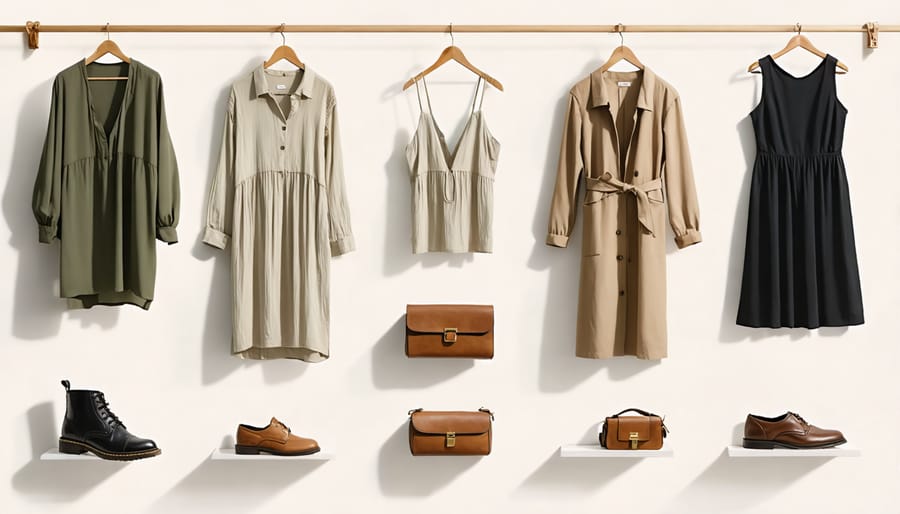
Sustainable fashion comes with a higher price tag for legitimate reasons that reflect true production costs—ones that fast fashion has historically hidden or externalized. When you invest in ethically-made clothing, you’re paying fair wages to garment workers who deserve safe conditions and living compensation. The difference is stark: while fast fashion workers often earn pennies per garment, ethical brands ensure their artisans receive dignified pay.
The materials themselves cost more too. Organic cotton requires careful cultivation without harmful pesticides, and innovative fabrics like Tencel or recycled polyester involve more complex manufacturing processes. These choices protect both environmental health and the people handling these materials daily.
Transparent supply chains add another layer of cost. Brands committed to slow fashion principles invest in traceability systems, third-party certifications, and regular audits to verify their claims. This transparency requires resources but builds the trust eco-conscious consumers deserve.
Finally, smaller production runs mean economies of scale don’t apply. Rather than churning out thousands of identical items, sustainable brands often create limited quantities, reducing waste but increasing per-unit costs.
Here’s the empowering truth: that higher price reflects actual value. A well-made sustainable piece worn fifty times costs less per wear than a cheap item discarded after three uses. You’re not just buying clothing—you’re investing in quality that lasts, supporting dignified work, and voting with your wallet for the fashion industry you want to see exist.
The Hidden Costs Fast Fashion Doesn’t Show You
That $15 t-shirt might seem like a bargain, but the true price tag tells a different story. Fast fashion’s rock-bottom prices hide devastating environmental costs—from polluted waterways to overflowing landfills where synthetic fabrics will sit for centuries. The human cost is equally staggering: garment workers earning poverty wages in unsafe conditions, often working 14-hour days to produce clothing that falls apart after a few washes.
Here’s the financial reality many shoppers discover too late: when you’re replacing cheaply-made items every few months, you’re actually spending more than if you’d invested in quality pieces from the start. That “affordable” wardrobe becomes an expensive treadmill of constant replacement purchases.
The good news? Breaking this cycle doesn’t require wealth—it requires a shift in perspective. By embracing a circular economy approach and choosing fewer, better-made items, you’ll actually save money over time while supporting ethical production. Quality sustainable fashion pieces often last five to ten times longer than fast fashion equivalents, making them the genuine bargain. The math is simple: durability equals savings.
Understanding $500 Payday Loans: What You’re Actually Signing Up For

The True Cost of Borrowing $500
Let’s examine what actually happens when you borrow $500 through a payday loan—because the real numbers might surprise you.
A typical payday loan charges around $15 to $20 per $100 borrowed. If you take out a $500 loan with a $15 fee per $100, you’ll owe $575 in just two weeks. That seemingly small $75 fee translates to an Annual Percentage Rate (APR) of approximately 391%—far exceeding credit card rates, which typically range from 15% to 30%.
Here’s where it gets concerning: most borrowers can’t repay the full amount by the due date. When you roll over that $500 loan just once, you’re paying another $75 fee. Now you’ve paid $150 in fees alone, and you still owe the original $500. After three rollovers—which happens to many borrowers—you’ve paid $225 in fees just to borrow $500 for six weeks.
Consider this scenario: you’re purchasing a $500 sustainable coat made from organic materials. If you use a payday loan and roll it over twice, that coat effectively costs you $650. That additional $150 could have funded alterations to extend your existing wardrobe’s lifespan, purchased quality secondhand pieces, or been saved toward your purchase.
The math reveals an uncomfortable truth: payday loans make sustainable fashion significantly less sustainable for your financial wellbeing. Understanding these concrete costs helps us explore smarter alternatives that honor both your values and your wallet.
When Payday Loans Make Sense (And When They Don’t)
Let’s be clear about when payday loans serve their intended purpose—and when they become problematic.
Payday loans exist for genuine financial emergencies: unexpected medical bills, urgent car repairs needed to get to work, or avoiding homelessness when rent is due. These are situations where the immediate cost of borrowing may be less damaging than the consequences of not having funds.
Sustainable fashion purchases, however desirable, rarely fall into this category. A new organic cotton jacket or eco-friendly sneakers—no matter how ethically produced—aren’t emergencies. The financial cost of a payday loan (often 400% APR or higher) fundamentally contradicts the values of sustainability. You’re creating personal financial instability to purchase items designed to promote long-term thinking and responsibility.
Ask yourself these questions: Will not making this purchase immediately cause harm? Could I wait two weeks and save for it instead? Am I confusing “wanting” with “needing”?
If you’re experiencing genuine clothing emergencies—your only work-appropriate shoes have fallen apart, or you need weather-appropriate gear for safety—consider thrift stores, clothing swaps, or community assistance programs first. These options align better with both sustainability principles and financial health.
The harsh reality: if you need a payday loan to afford sustainable fashion, you can’t actually afford it yet. Building your sustainable wardrobe gradually through savings respects both your financial future and the slow fashion movement’s core philosophy of intentional, mindful consumption.
The Sustainable Fashion Dilemma: Ethics vs. Financial Reality
The impulse to support ethical fashion brands comes from a genuine place—you want your purchases to reflect your values and contribute to a better world. But here’s where things get complicated: sustainable fashion often carries premium price tags that reflect fair wages, eco-friendly materials, and transparent supply chains. When your budget doesn’t align with these higher costs, payday loans might seem like a bridge between your current finances and your ethical aspirations.
Let’s be direct about the contradiction at hand. Sustainable living encompasses more than environmental consciousness—it’s about creating systems that endure without causing harm. When we apply this lens to personal finances, high-interest debt fundamentally conflicts with sustainability principles. Payday loans typically carry annual percentage rates between 300% and 400%, creating a cycle that can quickly destabilize your financial foundation. Using predatory lending to fund ethical purchases means potentially sacrificing your own economic wellbeing for consumer goods, regardless of how responsibly they’re produced.
This isn’t about judgment. Your desire to shop ethically demonstrates thoughtfulness and commitment to positive change. The fashion industry remains one of the world’s most polluting sectors, and supporting brands that prioritize people and planet matters deeply. However, true sustainability requires considering all dimensions of a decision—including the impact on your financial health.
Think of it this way: sustainable fashion brands build their reputations on rejecting exploitative practices. They refuse to compromise worker welfare for profit margins. Shouldn’t you extend that same protective philosophy to yourself? Accumulating debt that charges exorbitant interest rates creates a form of financial exploitation that undermines the very ethics you’re trying to support through your purchases.
The good news? This dilemma has solutions that honor both your values and your financial reality. You don’t have to choose between ethical shopping and financial stability—there’s a middle path forward.
Smarter Alternatives to Payday Loans for Building Your Ethical Wardrobe
Buy Now, Pay Later Services with Lower (or No) Interest
Many sustainable fashion brands now partner with Buy Now, Pay Later (BNPL) services like Afterpay, Klarna, and Sezzle, offering a significantly safer alternative to payday loans. These platforms split your purchase into interest-free installments—typically four payments over six weeks—without the predatory rates that make payday loans so dangerous.
The advantages are clear: no interest charges if you pay on time, instant approval for most shoppers, and automatic payment schedules that prevent missed deadlines. Unlike payday loans that can trap you in cycles of debt with 400% APR or higher, BNPL services align better with responsible budgeting for sustainable fashion purchases.
However, approach these services mindfully. Late fees can accumulate quickly, and the ease of checkout may encourage overspending on items you don’t truly need. Multiple BNPL accounts can strain your budget just as severely as a payday loan if mismanaged. Before using these services, ensure the payment schedule fits comfortably within your regular income. The goal isn’t just ethical fashion—it’s maintaining financial wellness while supporting sustainability. If four biweekly payments feel tight, consider saving up instead, allowing your values and finances to work in harmony.
The Sustainable Capsule Wardrobe Savings Strategy
Building a sustainable wardrobe doesn’t require going into debt—it requires a strategic saving approach. Start by auditing your current closet to identify genuine gaps versus impulse desires. Create a priority list ranking pieces by versatility and need, focusing on foundational items like quality denim, neutral tops, or a well-made coat that will serve you for years.
Set up a dedicated “sustainable fashion fund” by automating small weekly transfers—even $10-15 weekly adds up to $520-780 annually. This methodical approach transforms what feels impossible into achievable. Break down larger purchases into monthly savings goals: if that $200 ethical jacket seems out of reach, saving $50 monthly makes it yours in four months, debt-free.
Consider the “cost per wear” calculation when prioritizing purchases. A $150 organic cotton shirt worn 100 times costs $1.50 per wear, while a $30 fast fashion piece worn five times costs $6 per wear. Quality pieces also last longer when you’re caring for quality pieces properly, maximizing your investment without borrowing against future income.
Secondhand and Rental Options That Don’t Break the Bank
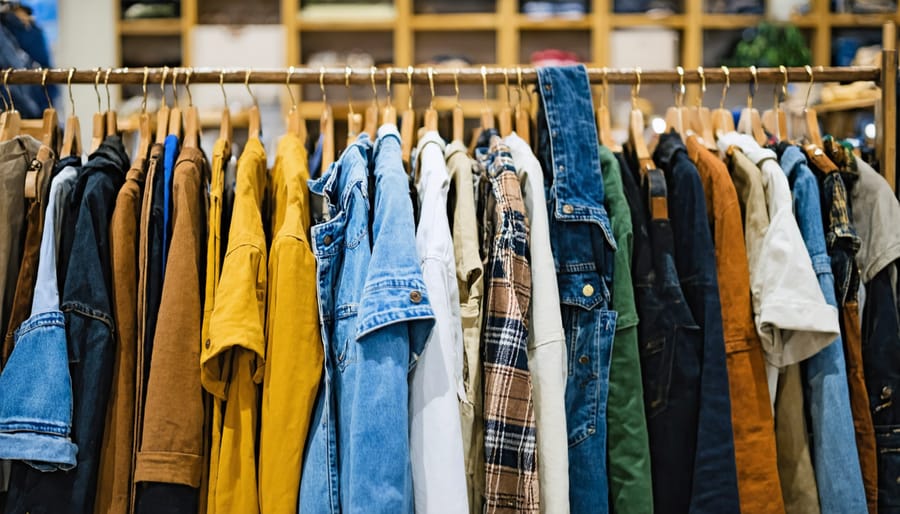
Sustainable fashion doesn’t require loans when you explore budget-friendly alternatives already within reach. Thrift stores and consignment shops offer secondhand and recycled clothing at fraction-of-retail prices, extending garments’ lifecycles while reducing waste. Clothing swaps with friends or community groups cost nothing but create meaningful connections while refreshing wardrobes. Rental services like Nuuly and Rent the Runway provide access to designer sustainable pieces for special occasions without ownership commitments. These options prove that embracing ethical fashion isn’t about affording the newest eco-brand—it’s about making thoughtful choices with existing resources. By starting here, you’ll build sustainable habits without financial stress, creating a foundation for future conscious purchases when your budget allows.
Sustainable Brands with Built-In Payment Plans
Several ethical fashion brands recognize that upfront costs shouldn’t prevent conscious choices. **Reformation** offers Afterpay and Klarna at checkout, splitting purchases into four interest-free installments. **Eileen Fisher** partners with Affirm for longer payment terms on their timeless, durable pieces—investments that truly last.
**For All** integrates Shop Pay Installments directly into their sustainable denim purchases, while **Patagonia’s Worn Wear** program accepts Klarna for pre-loved items at reduced prices. These options charge zero interest when paid on schedule, unlike payday loans.
Many upcycled and recycled brands also work with ethical buy-now-pay-later services. Fashion Upended evaluates each brand’s financing partners for transparent terms and consumer protections. Before committing, verify there are no hidden fees and confirm the payment schedule fits your actual budget—not just what feels manageable today.
If You’re Considering a Payday Loan: A Practical Decision Framework
Before proceeding with a payday loan for sustainable fashion purchases, work through this honest evaluation framework to protect your financial wellbeing while honoring your values.
**Assess Your Repayment Capacity**
Can you genuinely repay the full loan amount plus fees from your next paycheck without falling short on essential expenses? Write down your monthly income, subtract all fixed costs (rent, utilities, food, transportation), and see what remains. If repaying the loan would leave you unable to cover necessities, you’ll likely need another payday loan the following month—creating a debt cycle that contradicts the sustainability principles you’re trying to support.
**Evaluate the Purchase Necessity**
Ask yourself: Is this a genuine need or a want dressed up as urgency? Sustainable fashion isn’t about quick consumption—it’s about thoughtful choices. If you’re considering this loan for a specific event or season, could renting, borrowing, or shopping secondhand serve the same purpose without debt?
**Explore Every Alternative First**
Have you exhausted safer options? Consider payment plans offered directly by sustainable brands, which often come interest-free. Check if your employer offers salary advances. Reach out to local buy-nothing groups or clothing swaps. Even saving $20 weekly for two months provides $160 without interest fees.
**Calculate the True Cost**
Payday loans typically charge $15-30 per $100 borrowed. On a $300 loan, you might owe $345-390 within two weeks—turning that organic cotton dress into a luxury-priced item. Is the garment worth that markup?
If your answers reveal significant financial risk, stepping back isn’t abandoning your values—it’s practicing the mindful consumption that sustainable fashion truly represents.
Building a sustainable wardrobe is fundamentally about long-term thinking—considering not just environmental impact and ethical production, but also your financial wellbeing. The contradiction of funding conscious fashion choices through predatory debt undermines the very values you’re working to uphold. True sustainability means making decisions today that won’t compromise your tomorrow.
Remember, an ethical wardrobe doesn’t require perfection or immediate transformation. Small, intentional purchases made within your actual budget will always serve you better than debt-fueled shopping sprees, regardless of how sustainable the brands may be. Your financial health is inseparable from your ability to live according to your values.
Before making your next fashion purchase, explore Fashion Upended’s brand ratings to find options that align with both your ethics and your budget. Sustainable fashion is a journey, not a destination—and it’s one worth taking without the burden of high-interest debt weighing you down.




Average Rating