
 0
0
 0
0
The global fashion industry generates over 92 million tons of textile waste annually, and most of it ends up in landfills or incinerators within the first year of production. Your closet likely holds pieces you’ve worn once or never at all, contributing to a cycle where clothes are treated as disposable commodities rather than valuable resources.
This waste crisis stems from overproduction and overconsumption working in tandem. Fast fashion brands churn out new collections every few weeks, encouraging constant purchasing while garments deteriorate after minimal wear. The average person now buys 60% more clothing than they did fifteen years ago but keeps each item for half as long. Meanwhile, less than 1% of used clothing gets recycled into new garments.
The environmental toll is staggering. Textile production consumes 93 billion cubic meters of water yearly and releases half a million tons of microfibers into oceans. When synthetic fabrics decompose in landfills, they leak toxic chemicals into soil and groundwater for up to 200 years.
But there’s reason for optimism. The circular fashion movement is gaining real traction in 2026, with innovative upcycling techniques, rental platforms, and repair services reshaping how we think about our wardrobes. Consumers are learning to verify sustainability claims, demanding transparency, and choosing quality over quantity.
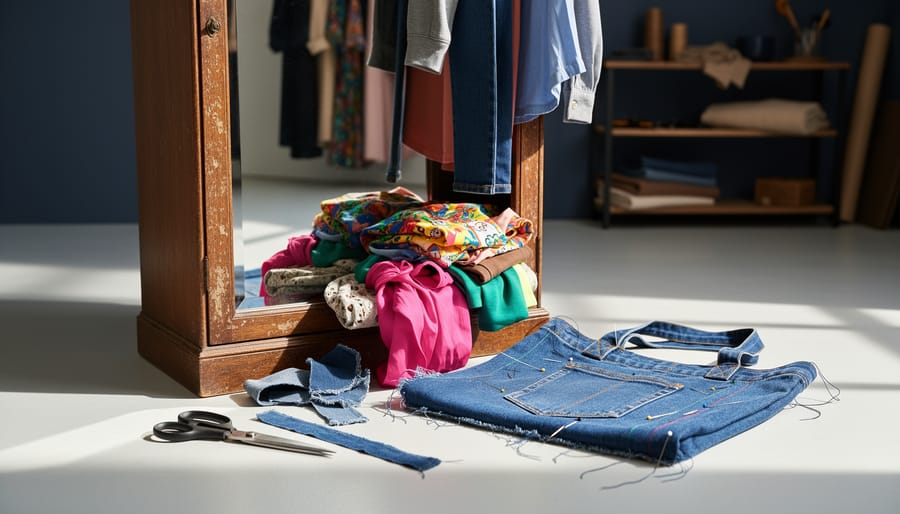
This shift isn’t just about reducing waste. It’s about reclaiming fashion as a creative, intentional practice rather than mindless consumption. Whether you’re ready to transform old jeans into a tote bag or build a capsule wardrobe that lasts years, practical solutions exist right now to break free from the wasted fashion cycle.
What Exactly Is Wasted Fashion?
Wasted fashion encompasses three distinct streams that hemorrhage value and resources across the industry. Pre-consumer waste includes production scraps, fabric offcuts, and overruns that never reach shoppers, materials discarded during manufacturing that represent pure loss. Unsold inventory forms another massive category: clothing produced but never purchased, often destroyed or landfilled by brands clearing warehouse space. Post-consumer waste, the most visible stream, consists of garments discarded by wearers after relatively short use cycles.
Each waste stream creates different challenges. Production scraps are clean and identifiable but rarely collected systematically. Unsold stock represents finished products that brands sometimes incinerate to protect brand equity, turning completed garments into environmental damage. Post-consumer textiles arrive contaminated, blended, and mixed, making material recovery complex.
The scale intensifies with fast fashion’s accelerated production cycles. Brands manufacture 100 billion garments yearly in 2026, yet average wear time before disposal has dropped to seven uses in some markets. This overproduction-overconsumption loop creates waste at every point: factories generate 15% cutting waste, retailers destroy unsold seasonal inventory, and consumers discard 60% of purchases within a year.
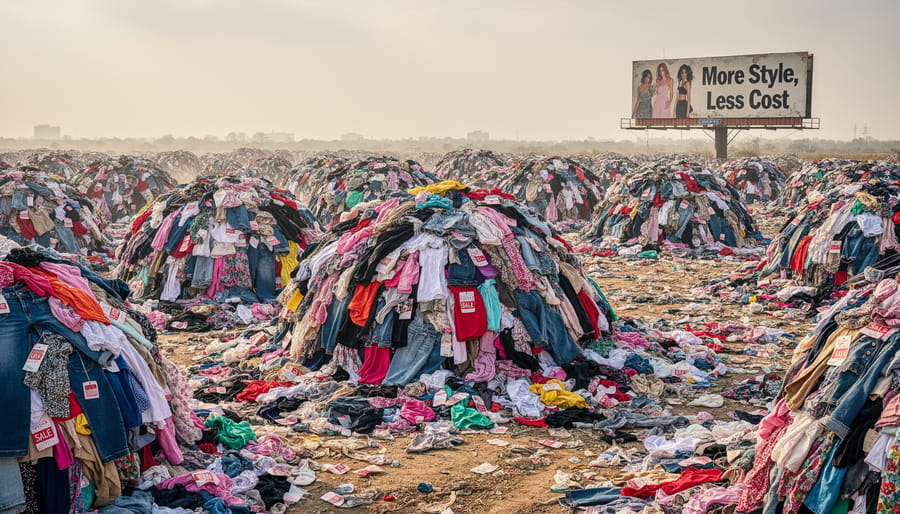
What ties these streams together is their destination. Landfills receive the majority, where synthetic fibers won’t biodegrade for 200 years and natural fibers release methane as they decompose. Incineration converts textiles into greenhouse gases and toxic ash. Less than one percent of discarded clothing gets recycled into new garments, creating a linear system designed for waste rather than circularity.
Why Traditional Recycling Falls Short for Fashion
Most fashion recycling programs sound great on paper, but the reality is far messier. When you drop a worn-out sweater into a textile recycling bin, it rarely becomes a new sweater. Instead, mechanical recycling typically shreds fibers into shorter, weaker strands only suitable for lower-value products like insulation or cleaning rags. This process, called downcycling, doesn’t create a closed loop; it just delays the trip to the landfill by one step.
The fundamental problem is that modern clothing resists recycling by design. A typical garment blends cotton with polyester or adds elastane for stretch, creating material combinations that current technology can’t easily separate. Chemical recycling promises to break down these blends, but the infrastructure remains limited in 2026, processing only a tiny fraction of textile waste. The energy and water required can rival new production, raising questions about genuine environmental benefit.
Sorting adds another layer of difficulty. Recycling facilities struggle to identify fiber content quickly, especially when care labels have been removed or faded. Contamination from zippers, buttons, and attached trims further complicates the process. Many collected textiles simply can’t be processed and end up incinerated or exported to countries with minimal waste management.
This is precisely why upcycling has emerged as a more viable path forward. Rather than breaking materials down to rebuild them, upcycling works with what already exists, transforming unwanted garments into higher-value items without degrading fiber quality or requiring complex industrial processes.
Upcycling Techniques That Transform Wasted Fashion
Design Innovation in Upcycling
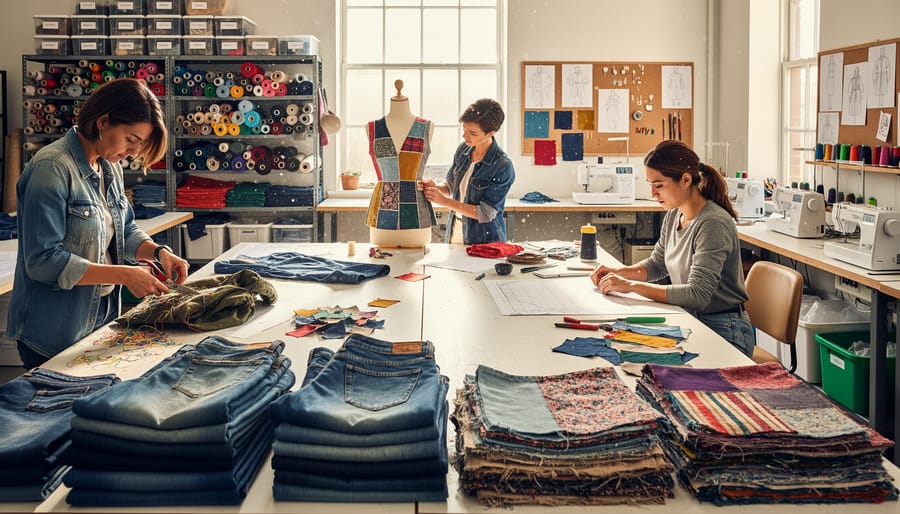
Emerging designers are proving that upcycling isn’t just practical, it’s a fertile ground for creative experimentation. The ReFAB Studio Award for Innovation in Upcycling, presented at New Designers (July 1-4, 2026, Business Design Centre, London), spotlights graduates who are reimagining textile waste as raw material for genuinely novel work. These aren’t simple patchwork garments. Recent projects have deconstructed corporate shirting into furniture, lighting, and sculptural objects, demonstrating how leftover materials can cross categories entirely.
What sets this wave of designers apart is their willingness to treat waste as a constraint that forces ingenuity rather than a limitation. One standout example transformed a single Hugo Boss shirt into a vase, light shades, and a stool for the brand’s Metzingen headquarters, each piece retaining visible traces of its origin while functioning in an entirely new context. This approach challenges the assumption that upcycled goods must look cobbled together or obviously secondhand. Instead, they’re statement pieces that wear their sustainable origins as a design strength.
From Scraps to Statement Pieces
Production offcuts and deadstock fabrics are becoming the foundation for luxury goods that command premium prices. Designers now treat textile scraps not as waste but as finite raw materials with inherent value. A Hugo Boss dress shirt, for example, was completely deconstructed and transformed into a collection of objects for the brand’s Metzingen headquarters, vases, lighting fixtures, and seating alongside experimental material studies. The project proved that corporate waste streams can yield sophisticated, functional pieces without requiring virgin resources.
This shift extends beyond home goods. Fashion brands are launching entire collections built from their own surplus yardage, cutting room remnants, and sample materials. The garments often sell at higher price points than standard lines because each piece is genuinely unique, shaped by whatever scraps were available. What was once an embarrassing sign of poor planning, excess inventory and leftover rolls, now signals creativity and environmental responsibility when handled through deliberate upcycling processes.
Building Your Own Circular Wardrobe
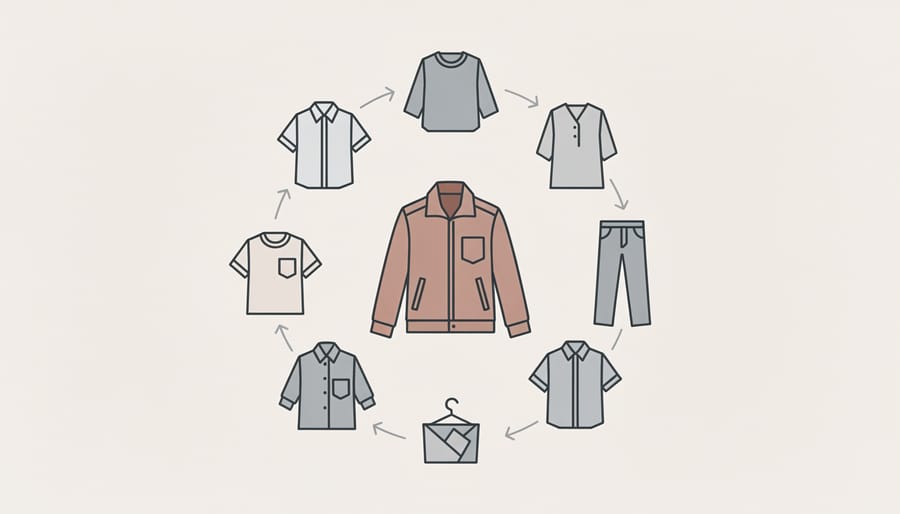
Building a circular economy wardrobe doesn’t require throwing out everything you own and starting fresh. It’s about shifting how you acquire, care for, and retire clothing so nothing becomes waste.
Start by taking inventory. Pull out pieces you haven’t worn in six months and honestly assess why. Is it fit, style, or damage? Quality items worth keeping can be altered or repaired. Everything else becomes a candidate for swapping, donating to textile recovery programs, or upcycling.
When adding new pieces, prioritize upcycled brands that transform waste materials into wearable garments. Look for transparency about their sourcing and production processes. A genuinely circular brand will explain exactly where their materials come from and what happens to products at end-of-life.
Here’s a practical transition framework:
- Audit your current closet and identify items you actually wear versus those collecting dust
- Research brands with verified circular practices and documented material traceability
- Learn basic repair skills like button replacement, simple stitching, and stain treatment
- Establish clothing swap networks with friends or local community groups
- Invest in one or two quality upcycled pieces per season rather than multiple fast fashion items
- Set up proper garment care routines that extend clothing lifespan
Care practices matter as much as purchasing decisions. Following sustainable laundry methods, washing less frequently, using cold water, air-drying, can double or triple a garment’s usable life. That’s the real power of circular thinking: recognizing that the most sustainable piece is the one already in your closet, worn well and maintained properly.
How to Verify Real Sustainability in Upcycled Fashion
Not every brand claiming to upcycle is genuinely keeping textiles out of landfills. Real transparency starts with specifics: look for brands that name their material sources, explain their upcycling process in detail, and show the proportion of upcycled versus virgin materials in each piece. A brand stating “made from recycled materials” without clarifying percentages or origins is a red flag.
Third-party certifications matter. Global Recycled Standard (GRS) and Cradle to Cradle Certified both verify recycled clothing content and responsible production practices. If a brand highlights certifications, check their website or product tags for certification numbers you can verify independently. Unverifiable claims or vague eco-labels often signal greenwashing.
Trace the supply chain. Legitimate upcycling brands typically share where they source waste materials, whether from their own production scraps, post-consumer textiles, or partnering with other manufacturers. Brands hiding these details likely have little to hide behind.
Watch for common greenwashing phrases like “eco-conscious collection” or “sustainable line” without backing data. Genuine circular brands integrate upcycling across their operations, not just in limited capsule collections designed for marketing buzz. Check if the brand’s core business model aligns with waste reduction or if upcycling is merely a side project.
Finally, demand accountability. Brands committed to real sustainability publish annual impact reports with measurable waste diversion figures, material breakdowns, and progress toward circularity goals. If you can’t find hard numbers, you’re probably looking at marketing spin rather than meaningful action.
The Movement Gaining Momentum in 2026
The push against wasted fashion has moved from niche advocacy to mainstream industry conversation. FIT’s 20th Annual Sustainable Business and Design Conference returns April 8-9 under the theme “Your Voice, Our Future: 20 Years of Collective Progress,” featuring hands-on workshops that translate theory into practice. Earlier in the year, Thread Haus hosted a circular fashion conversation at California Market Center on March 11 (3:00-3:45 PM), creating space for brands and consumers to discuss real implementation challenges. The ReFAB Studio Award for Innovation in Upcycling at New Designers (July 1-4 at Business Design Centre, London) recognizes designers turning waste into viable products. These gatherings signal a shift: sustainability conversations now focus less on why we need change and more on how to execute it. When educators, brands, and designers converge around shared solutions rather than isolated protests, the movement gains the institutional weight needed to reshape industry standards.
Wasted fashion isn’t an unsolvable crisis. The upcycling innovations and circular practices gaining ground in 2026 prove that change is already happening, and you can be part of it. Start by scrutinizing the brands you support, asking for transparency, and choosing upcycled pieces when they genuinely meet your needs. Every garment you keep in circulation chips away at the waste problem.
The good news? Sustainable options are becoming easier to find and verify. Workshops, design awards, and industry conversations are building momentum, making circular fashion less niche and more accessible. Your wardrobe choices matter, and the infrastructure to support those choices is growing stronger every day.




Average Rating