
 0
0
 0
0
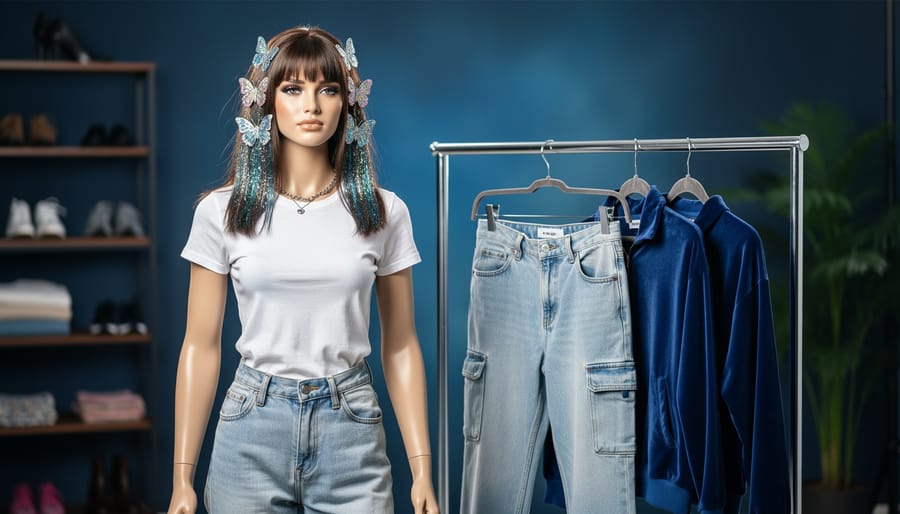
2000’s fashion trends encompass the distinctive style elements that defined the decade from 2000 to 2009, characterized by low-rise jeans, velour tracksuits, cargo pants, butterfly clips, chunky highlights, and heavy logomania. These trends reflected a unique cultural moment when technology was exploding, celebrity culture reached new heights through reality TV and emerging social media, and fast fashion production accelerated at an unprecedented pace.
Understanding 2000’s fashion matters now because we’re experiencing a full-scale Y2K revival in 2026. Gen Z has embraced these looks with enthusiasm, sending searches for terms like “low-rise jeans” and “baby tees” soaring. But this nostalgia wave comes with an important caveat. The original 2000’s fashion era was built on a foundation of disposable clothing, minimal transparency, and rapid trend cycles that wreaked havoc on garment workers and the environment.
The decade introduced many consumers to ultra-cheap, trend-focused shopping. Fast fashion retailers expanded globally during this period, conditioning an entire generation to expect $10 tops and $30 jeans. This model came at a brutal cost: textile waste quadrupled, carbon emissions from fashion production spiked, and labor abuses in supply chains intensified. The environmental legacy of 2000’s fashion is one we’re still grappling with today.
This guide will break down what made 2000’s fashion distinctive, explore the specific trend categories that defined the era, and examine how these styles are resurging in 2026. Critically, we’ll show you how to engage with Y2K aesthetics through a slow fashion lens, whether through secondhand shopping, supporting ethical brands that reinterpret these trends sustainably, or making smarter purchasing decisions that honor both style and responsibility.
What Defined 2000’s Fashion Trends
The 2000’s fashion landscape was defined by an unapologetic “more is more” mentality that celebrated excess in every form. Low-rise jeans sat precariously on hips, velour tracksuits came bedazzled with rhinestones, and visible logos weren’t just accepted, they were the point. This decade rejected the minimalism of the late 90’s in favor of maximum embellishment, mixing textures that previous generations would have considered clashing, and treating fashion as a form of conspicuous display rather than understated elegance.
Pop culture drove these trends with unprecedented force. Britney Spears’ midriff-baring looks, Paris Hilton’s velour tracksuit empire, and Destiny’s Child’s coordinated metallic ensembles created a celebrity-as-style-icon dynamic that hadn’t existed at this scale before. Reality television exploded simultaneously, shows like The Simple Life and Laguna Beach turned everyday activities into fashion showcases, making viewers feel like they needed designer jeans for grocery shopping. Early internet culture amplified these influences through fan sites, AOL Instant Messenger profiles showcasing favorite looks, and the first fashion blogs that documented every red carpet appearance.
Technology shaped silhouettes and accessories in ways that seem quaint now but were groundbreaking then. Flip phones dangled from rhinestone-encrusted lanyards or tucked into tiny going-out bags barely large enough to hold lipgloss. iPods required special pockets, spawning a generation of jeans with small watch pockets repurposed for the iconic white earbuds. Bags got smaller because you didn’t need much, just your Razr phone and a credit card.
The era also marked fashion’s democratization through fast fashion’s explosive growth. Chains like Forever 21 and H&M could replicate runway trends within weeks, making designer-inspired looks accessible at mall prices. This meant everyone could participate in trends simultaneously, creating a visual uniformity that’s striking in retrospect. You could spot low-rise jeans and Von Dutch hats from coast to coast, worn by teenagers and celebrities alike. This accessibility came at a hidden environmental cost that we’re still reckoning with, as the decade normalized buying clothes as disposable items rather than investments, setting patterns that would define fashion consumption for years to come.
The Iconic Trends That Shaped the Decade
Low-Rise Everything and Body-Conscious Fits
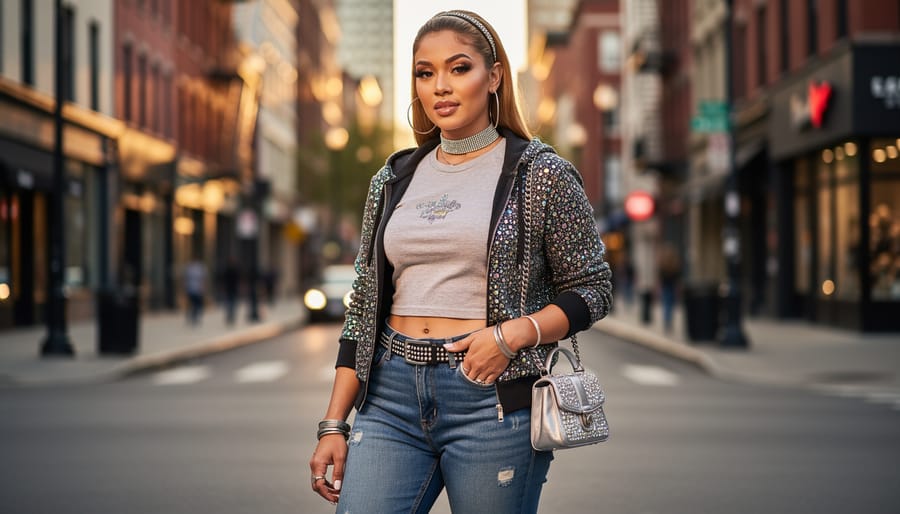
Low-rise jeans became the defining silhouette of 2000’s fashion, sitting several inches below the natural waistline and paired with crop tops to maximize exposed midriff. These ultra-low waistbands, often dropping to hip level, appeared across jeans, cargo pants, skirts, and even formal trousers, creating a body-conscious aesthetic that dominated the decade.
The trend extended beyond denim into every category. Mini skirts sat low on the hips, often paired with visible thong straps that became a deliberate style choice. Cargo pants featured dropped waistlines with multiple pockets, while even professional wear adopted lower rises. Britney Spears and Christina Aguilera popularized exposed midriffs on red carpets and in music videos, making bare skin between top and bottom a standard look rather than an exception.
This silhouette promoted narrow beauty standards that research confirms media affects body image particularly regarding body size and shape expectations. The low-rise trend required specific body proportions to appear as styled in celebrity photos, creating pressure around weight and torso length.
Today’s revivals are reinterpreting these silhouettes more thoughtfully. Contemporary brands offer mid-rise alternatives that reference the era without extreme drops, extended size ranges that accommodate diverse body types, and styling that makes midriff exposure optional rather than required. The focus has shifted from replicating exact measurements to capturing the playful, confident energy the original trend represented.
Velour Tracksuits and Athleisure’s Birth
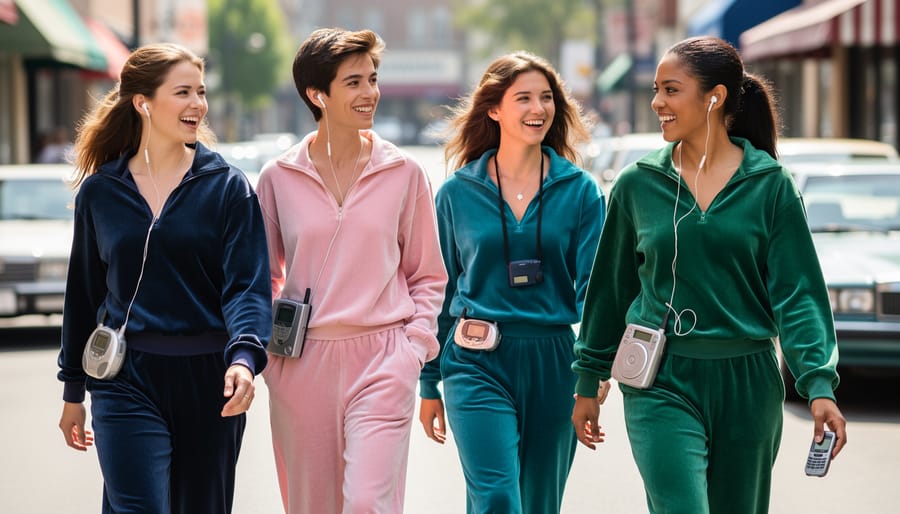
The velour tracksuit stands as perhaps the most emblematic garment of 2000’s fashion trends, transforming loungewear into a legitimate style statement. Juicy Couture’s bedazzled zip-ups and matching pants became the uniform of celebrities and aspirational shoppers alike, spotted everywhere from red carpets to school drop-offs. What made this trend revolutionary was its democratization of comfort: suddenly, showing up in what was essentially expensive pajamas signaled status rather than sloppiness.
The matching set formula, coordinated jacket and pants in candy colors with brand names emblazoned across the rear, created a blueprint that today’s athleisure industry still follows. Brands like Victoria’s Secret PINK and countless mall retailers rushed to replicate the look, making velour sets accessible at every price point. This widespread adoption normalized the idea that athletic-inspired clothing could function as everyday fashion, not just gym wear.
From a sustainability perspective, though, these tracksuits presented serious problems. Velour is typically made from polyester, a petroleum-based synthetic that sheds microplastics with every wash and doesn’t biodegrade. The 2000’s obsession with matching sets meant consumers often bought multiple colorways, accelerating the accumulation of synthetic textiles that would eventually end up in landfills. The chemical dyes needed to achieve those signature hot pink and baby blue shades added another layer of environmental concern.
Today’s athleisure revival has largely abandoned velour for technical fabrics, but the sustainability challenges remain similar: synthetic materials, trend-driven overconsumption, and garments designed for fashion rather than longevity.
Maximalist Embellishment Culture
If it didn’t sparkle, have visible logos, or feature gratuitous decoration, it wasn’t considered fashion-forward in the 2000s. Rhinestone embellishments covered everything from jeans and handbags to phones and pet accessories. Von Dutch trucker hats became status symbols despite their gas-station aesthetic, while brands like Ed Hardy turned T-shirts into canvases for ornate, logo-heavy designs. Juicy Couture printed “JUICY” across backsides, and everyone knew exactly which designer bag you carried because the logo was the entire point.
This maximalist approach to embellishment created significant environmental problems that rarely get discussed in nostalgic retrospectives. Rhinestones are typically plastic-based and applied with chemical adhesives that can’t be recycled. The bedazzling trend encouraged consumers to constantly update perfectly functional items with glue-on gems, creating waste while adding microplastic-shedding materials. Heat-transfer logos and screen-printed graphics used phthalates and PVC inks that degrade into harmful particles during washing.
The logomania culture also normalized conspicuous consumption as an aesthetic choice. Wearing visible branding wasn’t just acceptable, it was the goal, training an entire generation to view themselves as walking advertisements. This mindset fed directly into fast fashion’s business model, where brand recognition mattered more than garment longevity or production ethics.
Denim Innovation and Experimentation
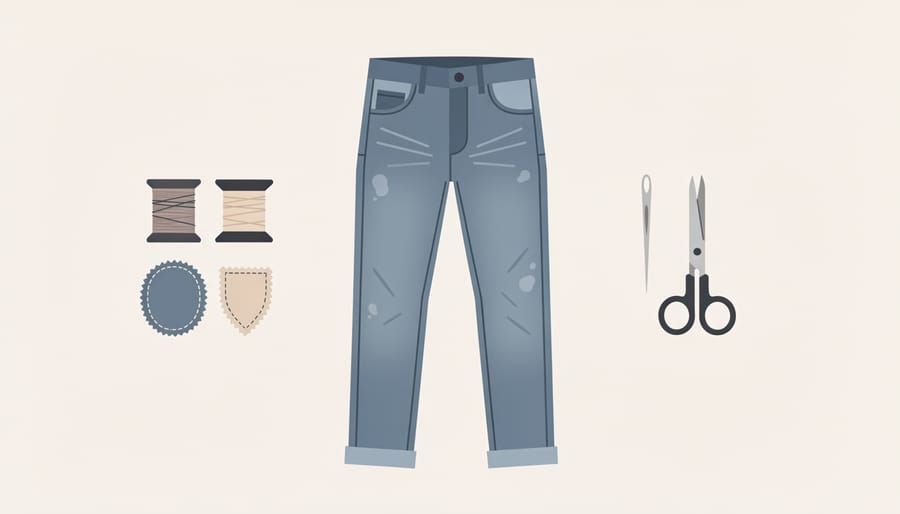
The 2000’s fashion era pushed denim to experimental extremes that earlier decades never attempted. Whiskering, those artificial fade lines radiating from the crotch and thighs, became so ubiquitous that finding jeans without them proved nearly impossible. Brands achieved this look through sandblasting and chemical washes, processes that exposed factory workers to silica dust and contaminated water supplies with toxic chemicals.
Patchwork denim merged different washes and fabrics into single garments, while strategic distressing created pre-worn holes, frays, and bleach splatters straight off the rack. The denim-on-denim Canadian tuxedo moved from fashion faux pas to statement look, with celebrities layering denim jackets over low-rise jeans in mismatched washes. Jean skirts, often created by cutting and distressing actual jeans, ranged from micro-minis to midi lengths, frequently featuring uneven hems and visible pocket linings.
These aesthetic innovations came at severe environmental cost. Each pair of distressed jeans required up to 2,000 gallons of water for washing and chemical treatments. The techniques that made 2000’s denim distinctive, the extreme whiskering, strategic destruction, and multiple wash cycles, used three times more water than producing standard denim. Fast fashion brands replicated expensive designer techniques cheaply, normalizing resource-intensive production as the baseline expectation rather than a premium feature.
How 2000’s Fashion Trends Operated in Practice
The 2000’s fashion ecosystem ran on a fundamentally different engine than the designer-led, runway-driven system of previous decades. Celebrity culture became the primary tastemaker, bypassing traditional fashion gatekeepers entirely. Paparazzi shots of Paris Hilton leaving a club or Britney Spears grabbing coffee turned into instant style blueprints. Tabloid magazines like Us Weekly and In Touch created a weekly cycle of celebrity fashion documentation that fans consumed voraciously, studying every outfit detail for replication.
Music videos functioned as three-minute fashion films with enormous reach. Destiny’s Child’s coordinated looks, Christina Aguilera’s provocative styling, and Nelly’s Air Force Ones became cultural moments that shaped what millions wore. MTV’s Total Request Live wasn’t just music programming; it was a daily fashion broadcast that made artists’ wardrobes as influential as their songs. This visual saturation created unprecedented demand for rapid access to similar styles.
The machinery that satisfied this demand operated through several interconnected channels:
– MTV’s constant music video rotation and reality shows showcasing celebrity lifestyles
– Celebrity tabloid magazines publishing multiple paparazzi shots per week
– Mall anchor stores like Abercrombie, American Eagle, and Wet Seal offering fast trend replication
– Early e-commerce sites making trend purchases accessible beyond major cities
– Reality shows from The Simple Life to Laguna Beach normalizing casual luxury aesthetics
Fast fashion brands perfected the art of translating runway and celebrity looks into affordable mall versions within weeks rather than seasons. What took six months in the 1980’s now happened in six weeks. Zara and H&M expanded aggressively during this period, training consumers to expect constant newness at low prices.
Mall culture served as the physical distribution hub for this accelerated cycle. Weekend shopping trips meant encountering new inventory drops constantly, with store windows reflecting whatever celebrities wore the previous week. The dopamine hit of finding a version of Paris’s tracksuit or Britney’s low-rise jeans at an accessible price point reinforced a consumption pattern that prioritized volume and immediacy. This infrastructure normalized buying clothes as entertainment rather than necessity, fundamentally reshaping how people related to fashion itself and setting the stage for the sustainability crisis we’re addressing today.
The Environmental Legacy of 2000’s Fashion
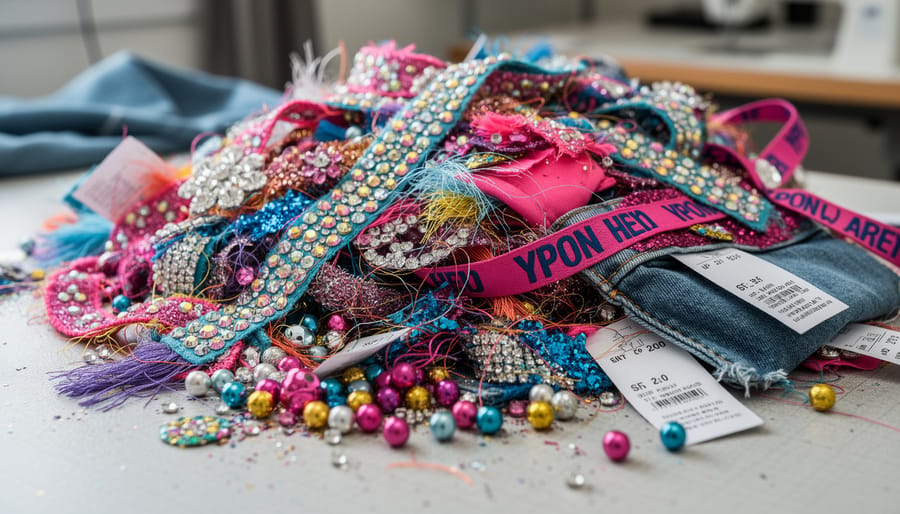
The 2000’s fashion boom left an environmental footprint we’re still dealing with two decades later. While the decade’s trends felt fun and accessible at the time, they marked a turning point where disposability became normalized and synthetic materials reached mass-market saturation.
Consider the velour tracksuit phenomenon. These plush matching sets were almost universally made from polyester velour, a petroleum-based synthetic that sheds microplastics with every wash. A single tracksuit could release hundreds of thousands of plastic fibres during its lifetime, pollution that’s still accumulating in waterways today. The production process itself was energy-intensive and created textile waste at unprecedented scales, as manufacturers rushed to meet demand for what they knew would be short-lived trends.
Distressed denim presented different but equally serious problems. Achieving that perfectly worn-in look required stone-washing, chemical bleaching, and sandblasting techniques that consumed massive amounts of water and released toxic effluents. Workers in denim factories faced health hazards from silica dust exposure during sandblasting. The environmental cost of making a single pair of pre-distressed jeans could include 1,800 gallons of water and a cocktail of harsh chemicals, yet these jeans were marketed as disposable items to be replaced each season as styles shifted.
The embellishment craze added another layer of damage. Rhinestone application involved adhesives and synthetic stones made from acrylic or glass, creating products that were nearly impossible to recycle. When a bedazzled tank top went out of style after months, it headed straight to landfill where those plastic decorations and chemical glues would persist for centuries.
Most significantly, 2000’s fashion normalized the idea that clothing should be cheap, abundant, and temporary. This mindset shift established fast fashion’s business model and trained an entire generation to view garments as disposable. Understanding this history helps conscious consumers recognize the true cost of trend-chasing and make different choices as these styles resurface.
How the 2000’s Revival Shows Up Today
The 2000’s fashion revival isn’t a simple rewind, it’s a selective remix happening across runways, social media, and street style. Gen Z discovered the Y2K aesthetic on TikTok and Instagram around 2020, finding fresh appeal in the decade’s unapologetic maximalism and playful silhouettes. Unlike the original era’s mall-driven uniformity, today’s interpretation cherry-picks elements that photograph well and allows for more individual expression.
Certain trends have roared back with full force. Low-rise jeans returned to mainstream retailers by 2023, though typically sitting higher than the extreme hip-huggers of 2003. Butterfly motifs appear everywhere from hair clips to embroidered details. Cargo pants traded military surplus stores for designer collections. Tiny shoulder bags reclaimed their status as statement accessories, and visible bra straps became intentional styling choices rather than fashion crimes.
Other signature 2000’s elements remain firmly in the past. Full velour tracksuits with “JUICY” across the rear haven’t achieved widespread comeback status. Extremely distressed, pre-faded denim faces skepticism from sustainability-minded consumers who recognize the water waste behind whiskering treatments. Logomania persists in luxury fashion but rarely reaches the aggressive branding intensity of Von Dutch’s heyday.
The crucial difference lies in how these trends are being produced. Fast fashion brands predictably rushed to manufacture cheap Y2K-inspired pieces, perpetuating the same disposable model that made 2000’s fashion so environmentally damaging. However, conscious brands are approaching the revival through a circular economy lens, creating sustainable alternatives:
- Organic cotton low-rise jeans and skirts without synthetic stretch blends
- Recycled polyester used for tracksuit sets and athleisure pieces
- Curated vintage collections featuring authentic 2000’s pieces given second life
- Water-efficient laser distressing and ozone washing techniques for denim
Independent designers are reimagining Y2K aesthetics using deadstock fabrics, while rental platforms let consumers experiment with trend-driven pieces without ownership commitment. The vintage market exploded with demand for authentic 2000’s items, creating a more sustainable path to the aesthetic than buying new reproductions. This generation’s revival demonstrates that nostalgia and environmental responsibility can coexist when consumers choose thoughtfully.
Shopping 2000’s-Inspired Fashion Sustainably
The best way to engage with 2000’s fashion trends sustainably is shopping vintage and secondhand first. Platforms like Depop, Poshmark, and Vinted offer authentic pieces from the era without new production impact. Search specifically for brands that defined the decade, Juicy Couture, Von Dutch, Baby Phat, and you’ll find original items with better quality than modern fast fashion copies. Local thrift stores often hide gems from this period for a fraction of online prices.
When buying new Y2K-inspired pieces, verify sustainability claims carefully. Fast fashion brands slap Y2K labels on polyester velour tracksuits and rhinestone-covered tops that replicate the original era’s environmental damage. Compare Paka vs fast fashion brands to understand the production difference, responsible brands use organic materials, ethical labor, and transparent supply chains even when making trend-driven items.
Look for contemporary brands reimagining 2000’s aesthetics through sustainable methods. Some use deadstock fabrics for patchwork denim projects or create low-rise silhouettes from regenerative cotton rather than virgin polyester. Small designers often experiment with Y2K elements using upcycled materials, offering unique pieces that capture the era’s playfulness without the waste.
Avoid buying multiples of trend pieces you’ll wear briefly. The 2000’s normalized constant consumption, but you don’t need five velour tracksuits to participate in the trend. Choose one quality item you genuinely love and will style repeatedly. Consider the care requirements too, heavily embellished pieces demand intensive sustainable laundry practices to maintain them properly.
If you’re drawn to rhinestone embellishments or logo-heavy items, DIY customization of existing clothes creates that maximalist aesthetic sustainably. Buy secondhand basics and add your own bedazzling using existing craft supplies rather than purchasing new pre-embellished fast fashion pieces that combine poor quality with environmental cost.
Common Questions About 2000’s Fashion Trends
Why are 2000’s fashion trends popular again?
The resurgence stems from nostalgia-driven cycles that typically occur 20-30 years after a trend’s peak, combined with social media’s amplification of Y2K aesthetics. Younger consumers who didn’t experience the original era are discovering these styles as fresh and novel, while millennials revisit their youth through a less critical lens than they held at the time.
Are 2000’s fashion trends sustainable?
The original trends were among the least sustainable in fashion history, relying heavily on synthetic materials, chemical treatments, and disposable fast fashion models. However, the current revival can be approached sustainably through vintage shopping, secondhand purchases, and supporting brands that reimagine these aesthetics using responsible production methods rather than buying new fast fashion reproductions.
How can I wear 2000’s fashion trends responsibly in 2026?
Prioritize vintage and secondhand sources for authentic pieces, choose quality items you’ll wear repeatedly rather than disposable trend purchases, and focus on individual elements like accessories or silhouettes instead of full head-to-toe looks. When buying new, research brands’ sustainability credentials thoroughly and avoid fast fashion’s cheap replicas of embellished or synthetic-heavy items.
What makes 2000’s fashion distinct from other decades?
The 2000’s uniquely blended technology influence with maximalist embellishment, creating a aesthetic that embraced visible branding, body-conscious silhouettes, and the “more is more” philosophy. Unlike the minimalism of the ’90s or the bohemian ease of the ’70s, this era celebrated excess, synthetic materials, and the collision of high fashion with celebrity-driven accessibility through early fast fashion.
The answers to these questions reveal a crucial tension: while 2000’s fashion trends captivate a new generation, they also represent a cautionary tale about consumption patterns. The decade normalized buying cheaply-made trend pieces designed to last a single season, a model that proved environmentally devastating.
Understanding this context helps conscious consumers make better choices during the current revival. You can appreciate the aesthetic creativity of the era without replicating its wasteful practices. The key lies in being selective, choosing one or two meaningful pieces that genuinely reflect your style rather than chasing every micro-trend that surfaces on social media.
The difference between participating in trends consciously versus mindlessly comes down to intentionality. Ask yourself whether a piece fills a genuine gap in your wardrobe, whether you’ll wear it beyond the current trend cycle, and whether its production aligns with your values. These questions matter more now than they did in the original 2000’s, when sustainability rarely entered mainstream fashion conversations.
The return of 2000’s fashion trends proves that style moves in cycles, but we don’t have to repeat the same mistakes. What makes this revival different is our collective awareness of fashion’s environmental cost. The generation embracing low-rise jeans and bedazzled accessories today has access to information and alternatives that simply didn’t exist twenty years ago.
The appeal is understandable. These trends represent a pre-recession optimism, a playful maximalism, and for younger consumers, a fresh aesthetic they never experienced firsthand. But unlike the original era, when fast fashion’s environmental impact went largely unquestioned, today’s conscious consumers can participate thoughtfully.
Every trend-driven purchase is a choice. Sourcing a genuine vintage Juicy tracksuit supports circular fashion. Choosing a sustainably-made Y2K-inspired piece from a transparent brand sends market signals. Even deciding which trends to skip entirely is an act of conscious consumption.
Fashion Upended exists to help you navigate these decisions with clear information, not judgment. Understanding where 2000’s fashion trends came from, how they were originally produced, and what their environmental legacy means equips you to engage with this revival on your own terms. The past will always influence what we wear. The difference now is that we can choose a better future while appreciating where style has been.




Average Rating