
 0
 0
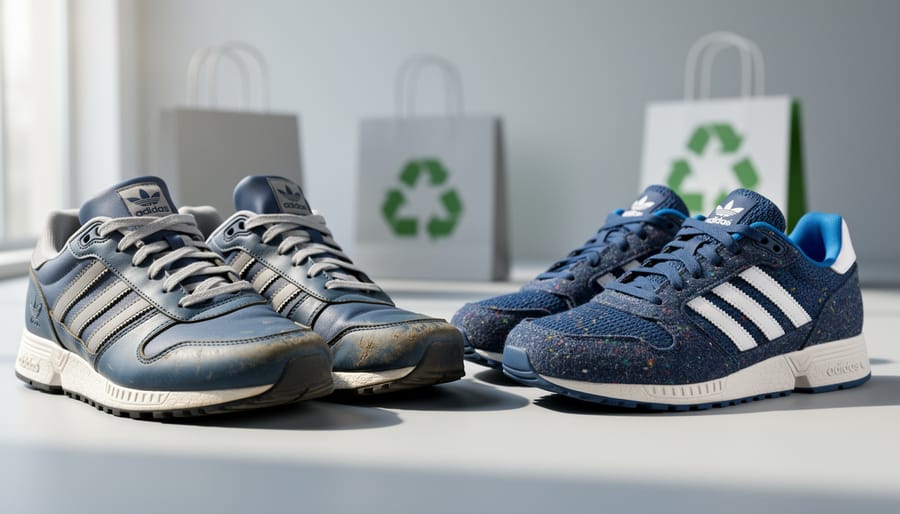
If you’re weighing an Adidas purchase this sale season and care about the planet, buy resale through Choose to Give Back first, and treat new recycled-material products as the second-best option. The reason is simple: a pair that already exists needs no new materials at all, while even the best recycled-polyester line still means making something new.
That doesn’t make Adidas’s newer lines a bad choice. The company says 96% of the polyester in its products is now recycled polyester, and that more than 30 million pairs of shoes have been made with Parley Ocean Plastic. Those are encouraging numbers. They’re also company-reported, and some of the bigger promises are still goals rather than results: the first products using textile-to-textile recycled polyester are only planned for 2026, and the target of 10% of polyester coming from recycled textile waste is set for 2030.
We compared the two paths on what the claims actually cover and what they leave out, so you can decide which fits the way you shop.
This guide is for shoppers who want to feel good about a purchase without taking marketing at face value. Sale prices in Canada vary, so confirm what you’d pay before you decide. What follows will help you pick the path that matches your priorities.
Adidas Recycled Lines vs. Adidas Resale at a Glance
If you’re eyeing an Adidas sale and want to spend with your conscience intact, you really have two routes. You can buy something new made with recycled materials, or you can extend an existing piece’s life through resale. Here’s the shape of each before we get into the detail.
| Dimension | Recycled-material lines | Choose to Give Back resale |
|---|---|---|
| Core idea | Buy a new item made with recycled inputs, such as Primeblue or Parley Ocean Plastic | Pass on gear you already own through a resale program enabled by thredUP |
| What Adidas says | 96% of its polyester is now recycled, and over 30 million pairs of shoes were made with Parley Ocean Plastic | It supports resale as part of its commitment to reducing environmental impact |
| Verified vs. still a goal | The figures above are Adidas’s own statements. Textile-to-textile recycled polyester is planned for 2026, and 10% of polyester from textile waste is a 2030 goal | The program’s existence is verified. Eligibility and Canadian availability need checking with Adidas directly |
| Who it suits | Shoppers who genuinely need a new item and want better-sourced materials | Shoppers who already own Adidas pieces and can pass them along |
Two things stand out when you read across the rows. The recycled figures describe material inputs, mostly polyester, not a product’s full footprint. And the more ambitious milestones are still ahead of us rather than on shelves today.
In our read of these claims, the resale route asks the least of the planet because it doesn’t require making anything new. The recycled lines ask you to trust Adidas’s reporting and to look past green-sounding labels for specifics. Neither path is a free pass, and the next sections show where each one holds up and where it doesn’t.
What Each Option Actually Is
The Recycled-Material Lines
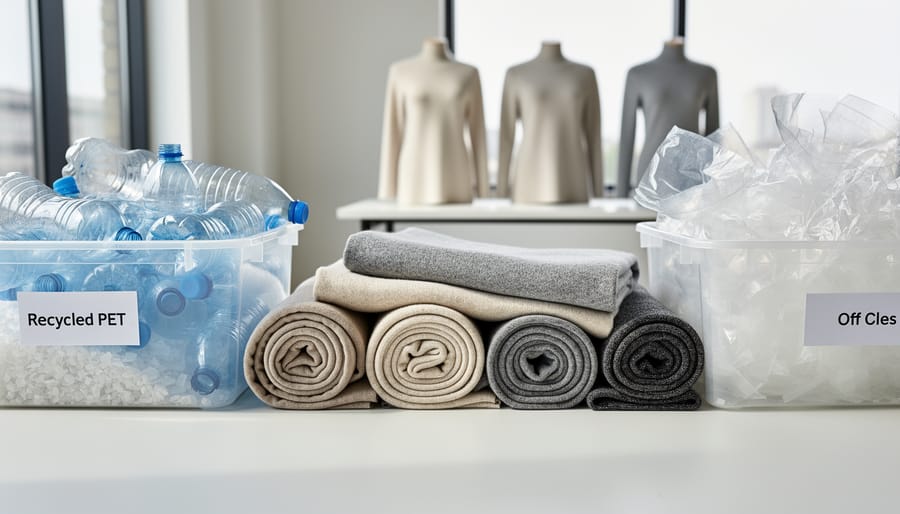
When Adidas talks about recycled polyester, it’s describing what the fabric is made from. The material comes from recycled sources instead of freshly made virgin polyester. That tells you about the input, not the whole lifecycle: how the item is dyed, shipped, worn, washed or eventually thrown away stays outside that label. Think of it the way you’d think about any recycled clothing claim, as a useful starting point rather than the full story.
Adidas says 96% of the polyester in its products is now recycled, which is a real shift in sourcing. Two named threads sit inside that story:
- Primeblue
- Described as a recycled technical material used in Adidas performance gear.
- Parley Ocean Plastic
- A recycled-material input Adidas has used in shoes, with more than 30 million pairs made with it.
- Primegreen
- Another named Adidas line. We’re sticking to the name here rather than guessing at its details.
Notice what these labels don’t say. None of them tells you how long a piece will last, how much microplastic it sheds, or what happens when you’re done with it. That’s why the specific wording on a tag or product page matters more than a green-sounding line name. A shirt can carry real recycled content and still be a purchase you didn’t need.
The Resale Route: Choose to Give Back
Choose to Give Back is Adidas’s resale program, and it’s enabled by thredUP, the online secondhand marketplace. That’s the verified core: Adidas isn’t running a standalone resale shop here, it’s partnering with an established resale platform to move used clothing and shoes into a second life.
The adidas Creator’s Club app comes up as a recurring entity around the program. Think of it as the Adidas-side environment shoppers may already be using, so it’s worth looking there to see how, or whether, the resale option is surfaced to you. We haven’t confirmed the exact mechanics of how the app connects to Choose to Give Back, so we won’t pretend otherwise.
That caution is the point of this section. Adidas’s own pages, not a third-party summary, should be the source for what actually matters to you as a buyer or seller:
– Which items and conditions qualify
– What you receive in return, and in what form
– Whether the program is open to Canadian customers
We haven’t verified any of those details, and the answers can change, so check them directly with Adidas before you plan around the program.
What the program does tell us is that Adidas treats extending a product’s life as part of its sustainability story, not just swapping in recycled inputs. Whether that holds up for you depends on whether it’s actually available where you live and whether the terms make sense for the gear you own.
Adidas Recycled Lines vs. Resale, Dimension by Dimension
Sustainability Claims: What Adidas Says vs. What You Can Verify
Adidas says it is committed to reducing its impact on the environment through sustainable operations, materials and supply chain. That’s a commitment statement. It tells you the direction the brand wants to travel, not whether it has arrived. At Fashion Upended, we read that kind of language as a starting point, and in our experience it’s where the useful questions begin.
The claims worth weighing are the ones you can check. Adidas says 96% of the polyester in its products is now recycled, and that more than 30 million pairs of shoes were made with Parley Ocean Plastic. Those are specific. But a specific number still needs context: what does it cover, and how is it measured? Polyester is one material, not the whole product or its full footprint.
This is also why we treat headline sustainability ratings with caution, since a single score can hide the detail you need. Vague wording deserves skepticism. Precise figures deserve a closer look at their scope before you trust them.
Recycled Materials: The Numbers in Context
Adidas has put out a few recycled-material numbers, and they’re worth reading closely rather than skimming. Here are the ones that matter, with what each does and doesn’t tell you:
- Adidas says it now uses 96% recycled polyester in its products. This covers polyester only, not cotton, rubber, leather or foam.
- The company says its 100% by 2024 target has been maintained for all polyester, wherever technically possible. That “wherever technically possible” wording leaves room for exceptions.
- More than 30 million pairs of shoes were made with Parley Ocean Plastic. That shows real scale, but not how much of each shoe is recycled.
The common thread is scope. Every figure describes an input material, and polyester is only one part of what goes into a shoe or jacket. None of them measures a product’s total footprint, so they can’t tell you whether a piece is low-impact overall.
They also say nothing about what happens after you buy. Polyester sheds microplastics when washed, and recycled polyester sheds just like virgin polyester. And a recycled-content label doesn’t mean the garment can be recycled again, which is what a true circular economy depends on. These are good steps, but they are partial ones.
The Textile-to-Textile Gap: Goals Still Ahead
Here is where the story shifts from done to still ahead. Adidas says 96% of the polyester in its products is now recycled, but that progress mostly comes from recycled inputs like bottles. Textile-to-textile recycling is different: it turns old clothing back into new fiber, so garments stay in the loop instead of leaning on a separate stream of plastic bottles.
That matters because a bottle can only be recycled into fabric so many times before the loop runs out of material. Old clothes are a huge, mostly wasted resource, and closing that gap is what would make recycled polyester truly circular.
Now check what Adidas has actually promised. The brand says the first products with textile-to-textile recycled polyester are planned for 2026, and that 10% of its polyester will come from recycled textile waste by 2030. Both are goals. Neither is a product you can point to today.
So treat a planned product as a milestone to watch, not a proof point you can buy. We’d hold off on giving credit until a textile-to-textile item reaches shelves and the claim can be checked against what’s actually on the tag. For now, it’s worth knowing what is verified and what is still on the roadmap.
Resale Eligibility and Product Lifecycle Extension
Resale and recycled content tackle different ends of a product’s life. Recycled polyester changes what goes into a new item. Resale changes how long an item that already exists stays in use. In our hands-on read of the two routes, the second is generally the stronger lever, because nothing new has to be made at all.
Choose to Give Back is a resale program enabled by thredUP, and that’s the extent of what we can verify here. Before you count on it, confirm a few things directly with Adidas:
– Which items qualify, and whether condition or category limits apply.
– Whether the program is available to Canadian customers, and how shipping or drop-off works from here.
– What you receive in return, since we haven’t confirmed any terms.
Keep the comparison honest, too. Adidas says 96% of its polyester is now recycled, which is meaningful progress for new products. But that figure describes inputs, not a shirt’s second or third owner. A well-made piece worn for years, then passed on, avoids a purchase entirely. If resale isn’t available to you, simply keeping gear longer delivers much of the same benefit.
The Trade-Offs of Buying Recycled vs. Using Resale
Neither path is a clean win, and a sale price can make both feel more virtuous than they are. Here’s how we weighed them against what Adidas has actually said.
Pros
- Buying new recycled lines gets you a product with real, stated recycled content, since Adidas says 96% of the polyester in its products is now recycled.
- Recycled-material products like Primeblue and Parley Ocean Plastic shoes give you something specific to check on the tag rather than a vague green promise.
- Resale through Choose to Give Back, enabled by thredUP, keeps clothing in use instead of adding another new item to the world.
- Passing on gear you already own asks for no new production at all.
Cons
- A recycled-polyester label describes the input material, not the whole footprint, and says nothing about shedding or what happens at end of life.
- The textile-to-textile milestone is still ahead, with the first such products only planned for 2026, so today’s recycled polyester isn’t yet closing the loop on old clothing.
- A sale discount can nudge you into buying something you didn’t need, which cancels out much of the benefit of better materials.
- Resale only helps if your items qualify and the program works for you in Canada, which you’ll need to confirm with Adidas directly.
The practical read is that recycled lines improve what goes into a new purchase, while resale and long ownership reduce how many new purchases happen. Adidas frames its approach as a commitment to cutting its environmental impact across operations, materials and supply chain. That’s a direction, not a guarantee, and it deserves the same scrutiny as any brand’s broad statement.
What we kept coming back to is that the stronger lever is rarely the fabric. A well-sourced new piece is a fair choice when you truly need something, but it’s still a new item. If you already own Adidas gear that’s seen better days, giving it a second life through resale does more good than any single recycled jacket. And if the discount is the only reason you’re looking, the most sustainable option may be leaving the cart empty.
Which Path Should You Choose?
Your best path depends on what you already own and what you actually need. Sale season in Canada tests that quickly, and pricing varies, so we aren’t assessing it here.
- You need a new piece and want the better-sourced option: choose a recycled-material item, since Adidas reports that 96% of its polyester is now recycled.
- You already own Adidas gear you’ve outgrown or stopped wearing: pass it on through Choose to Give Back, the resale program enabled by thredUP, after checking current eligibility.
- You’re tempted by a discount on something you don’t need: skip it, because the lowest-impact item is the one you never buy.
- You want textile-to-textile recycled polyester: wait, since Adidas says the first such products are only planned for 2026.
If you do buy new, read the product page and tag like a skeptic. In our evaluation, the wording that tells you the most is also the most specific. Look for these before you add to cart:
- A named recycled material, such as recycled polyester, Primeblue or Parley Ocean Plastic, rather than a general “eco” or “sustainable” label.
- A stated percentage of recycled content, with the fibre it applies to.
- Clear language about what is recycled (the input material) versus what is claimed about the whole product.
- No leaning on future goals as if they were today’s reality.
Vague green language deserves caution, while a specific, checkable statement is worth taking seriously. And remember that a new recycled item still adds to your closet, which is why the most conscious sale-season move often looks more like slow fashion than a bigger haul. Buy the thing you’ll wear for years, and let the rest of the sale pass.
Adidas Sustainability Questions Shoppers Ask Before Buying
Is Adidas actually sustainable?
Adidas says it is committed to reducing its environmental impact through its operations, materials and supply chain, but that is a commitment, not proof. The checkable parts are the specific claims, like its recycled polyester figures, and those cover materials rather than the brand’s whole footprint.
What is Primeblue?
Primeblue is described as a recycled technical material. Like any “recycled” label, it tells you about the input, not how long the product lasts or what happens to it at the end of its life.
What is Parley Ocean Plastic?
It’s a recycled material that Adidas has used in footwear, with more than 30 million pairs of shoes made with it. Treat that as a scale figure for one material, not a measure of the company’s total impact.
Does Adidas have a resale or take-back program?
Yes. Choose to Give Back is a resale program enabled by thredUP. Check Adidas directly for current eligibility and whether it’s available to you in Canada, since we haven’t confirmed that.
A few other questions come up often, and the honest answers are mostly about limits. Is recycled polyester better than regular polyester? It generally means fewer virgin inputs, which is a real step, and Adidas says 96% of the polyester in its products is now recycled. But recycled content doesn’t fix every issue, since it says nothing about microplastic shedding or what happens when the garment is finished.
Another common worry is whether the textile-to-textile milestone is already here. It isn’t something to count on yet. Adidas says the first products using textile-to-textile recycled polyester are planned for 2026, with a goal of 10% of polyester coming from recycled textile waste by 2030, so for now those are targets, not purchasable proof.
The practical habit is simple. Look for specific recycled-content wording on the product page or tag rather than general green language, and weigh whether you need the item at all.
Adidas’s progress on recycled polyester looks real as the company reports it: 96% of the polyester in its products is now recycled, and more than 30 million pairs of shoes have been made with Parley Ocean Plastic. That’s worth acknowledging. The textile-to-textile milestone is a different story. The first products using it are planned for 2026, and the 10% recycled-textile-waste goal belongs to 2030, so treat both as things to watch rather than things to assume.
Here’s what we’d actually do this sale season. Buy less, keep what you own longer, and if you’ve got Adidas gear you’ve outgrown, a resale route like Choose to Give Back, enabled by thredUP, may be a better home for it than a drawer. If you do need something new, look for specific recycled-content wording on the tag or product page, not just green-sounding language.
Before you check out, confirm the claim on the item itself, and confirm the sale price on Adidas’s Canadian site yourself.




Average Rating