

 0
0
 0
0
You’ve probably picked up a T-shirt labeled “eco-friendly” only to wonder if that claim means anything at all. The frustration is real. Fashion brands know consumers care about sustainability, and many slap vague environmental badges on their products without backing them up with transparent data. That’s where brand sustainability ratings come in, but here’s the catch: not all rating systems are created equal.
Understanding how these ratings actually work can transform you from a confused shopper into an informed decision-maker. Some systems evaluate brands using rigorous, third-party verified data across dozens of environmental and social metrics. Others rely on self-reported information that brands can manipulate. The difference matters because choosing genuinely sustainable fashion means looking beyond marketing spin and examining which rating systems hold brands accountable.
The good news? You don’t need a degree in environmental science to decode these ratings. Once you know what separates credible assessments from greenwashing tools, you can quickly identify which fashion brands deserve your money and which are merely performing sustainability theater. In 2026, several reliable rating platforms have emerged that do the heavy lifting for you, consolidating complex data about supply chain transparency, carbon emissions, labor practices, and material choices into accessible scores.
This guide breaks down exactly how brand sustainability ratings function, which systems you can trust, and how to use them effectively when shopping. We’ll explore the methodologies behind major rating platforms, reveal red flags that signal unreliable assessments, and give you practical strategies for integrating these tools into your purchasing decisions. Because the power to drive real change in the fashion industry starts with knowing which brands are walking the walk, not just talking the talk.

Why Most Sustainability Ratings Miss the Mark
The problem with most sustainability ratings isn’t that they mean nothing. It’s that they mean too many different things.
Walk into any fashion retailer today and you’ll find clothing tagged with sustainability scores, eco-labels, and certification badges. But these ratings often tell wildly different stories about the same brand. One system awards high marks for using recycled polyester. Another penalizes that same brand for the microplastic pollution those synthetics create. A third ignores materials entirely and focuses on carbon emissions. There’s no universal rating approach which leaves consumers piecing together contradictory information like a puzzle with pieces from different boxes.
The fundamental flaws run deeper than mere inconsistency:
- Self-reporting without verification: Brands submit their own data with minimal third-party validation, creating an honor system that rewards the best storytellers rather than the best performers.
- Pay-to-play structures: Some platforms charge brands for ratings or premium placements, compromising the objectivity of their assessments.
- Surface-level metrics: Many systems evaluate easily quantifiable factors like percentage of organic cotton while ignoring complex issues like living wages or biodiversity impact.
- Narrow scope: A rating focused solely on environmental factors might give high marks to a brand with a stellar carbon footprint but abysmal labor practices.
- Static assessments: Annual or biannual updates can’t capture real-time supply chain problems or sudden policy reversals.
These weaknesses create exploitable loopholes. In early 2026, a mid-market retailer earned “sustainable leader” status from a prominent rating platform largely by switching 30% of its cotton to organic sources. Sounds impressive until you realize the brand simultaneously expanded its production volume by 40%, used air freight for faster deliveries, and maintained factory contracts flagged for wage violations. The rating system measured the cotton swap but missed the bigger picture.
Another case involved competing ratings for the same athletic wear brand. One system awarded it 4.5 out of 5 stars for environmental performance based on recycled materials usage. A second platform gave it a “needs improvement” classification because those recycled materials came from virgin plastic production specifically created to be “recycled,” rather than post-consumer waste. Both ratings were technically accurate under their respective methodologies, yet they guided consumers in opposite directions.
The gaming happens subtly. Brands learn which specific data points each rating system weighs most heavily, then optimize for those exact metrics while neglecting unmeasured areas. It’s teaching to the test, sustainability edition. The result? Ratings that reflect strategic compliance rather than genuine commitment to environmental and social responsibility.
The Essential Components of Reliable Brand Ratings
Transparency: The Non-Negotiable Foundation
Methodology transparency separates credible sustainability ratings from marketing tools masquerading as objective assessments. When a rating system openly shares its evaluation criteria, data sources, and scoring formulas, consumers can judge whether its approach aligns with their values and actually measures what matters.
A transparent rating system publishes exactly how it weighs different sustainability factors. For example, does it prioritize carbon emissions over water usage? Does it count a brand’s public commitments equally with verified outcomes? These choices fundamentally shape whether a high score reflects genuine sustainability leadership or clever positioning. Without this disclosure, you’re essentially trusting a black box.
Look for ratings that explain their data collection methods in detail. Do they rely on brand self-reporting, or do they verify claims through factory audits, supply chain documentation, and third-party certifications? The best systems document their verification process and acknowledge limitations, such as which parts of a supply chain they cannot fully trace.
Update frequency matters too. A rating based on 2023 data tells you little about a brand’s current practices in 2026, yet many systems leave this timeline buried or unstated. Transparent platforms clearly date their assessments and explain how often they refresh evaluations.
When rating methodology remains vague or inaccessible, assume the system benefits brands more than consumers. Genuine transparency costs nothing but reveals everything about a rating’s trustworthiness.
Attribute-Based vs. Single-Score Systems
Single-score sustainability ratings promise simplicity but often obscure the details that matter most to your purchasing decisions. When a brand receives an overall “B” or “75/100” rating, you cannot tell whether they excel in fair labor practices but use synthetic materials, or vice versa. This collapsed view forces you to trust someone else’s weighting of priorities that might not align with your own values.
Attribute-based systems break sustainability into distinct categories, materials sourcing, manufacturing practices, labor conditions, carbon footprint, water usage, waste management, and transparency. You can see exactly where a brand performs well and where it falls short. If you prioritize animal welfare over packaging reduction, you can weight those factors accordingly in your own decision-making rather than accepting a predetermined formula.
| System Type | Strengths | Limitations | Best For |
|---|---|---|---|
| Single-Score | Quick comparison, easy to understand at a glance | Hides trade-offs, obscures methodology, one-size-fits-all weighting | Initial screening of many brands quickly |
| Attribute-Based | Transparent trade-offs, personalized priorities, identifies specific improvements | Requires more time to review, can feel overwhelming initially | Making informed final purchasing decisions aligned with personal values |
The most effective approach combines both: use simplified scores to narrow your options, then examine attribute breakdowns for brands you are seriously considering. This two-step process balances efficiency with the depth needed to avoid greenwashing. Several platforms now offer toggleable views that let you switch between summary scores and detailed attribute ratings, giving you control over how much information you want to process at each stage of your shopping journey.
Independent Verification Standards
Third-party verification transforms sustainability claims from corporate marketing into accountable commitments. Rigorous validation requires on-site facility audits, supply chain tracing to raw material sources, and worker interviews conducted by independent auditors with no financial stake in positive outcomes. Third-party certifications like B Corp, Fair Trade, and GOTS demand extensive documentation review, unannounced inspections, and annual recertification to maintain validity. The strongest verification processes publish detailed audit reports rather than just issuing badges, allowing you to review specific findings about labor conditions, chemical use, and environmental impact metrics. Look for rating systems that require brands to undergo these comprehensive assessments instead of accepting self-reported data or paying fees for favorable scores.
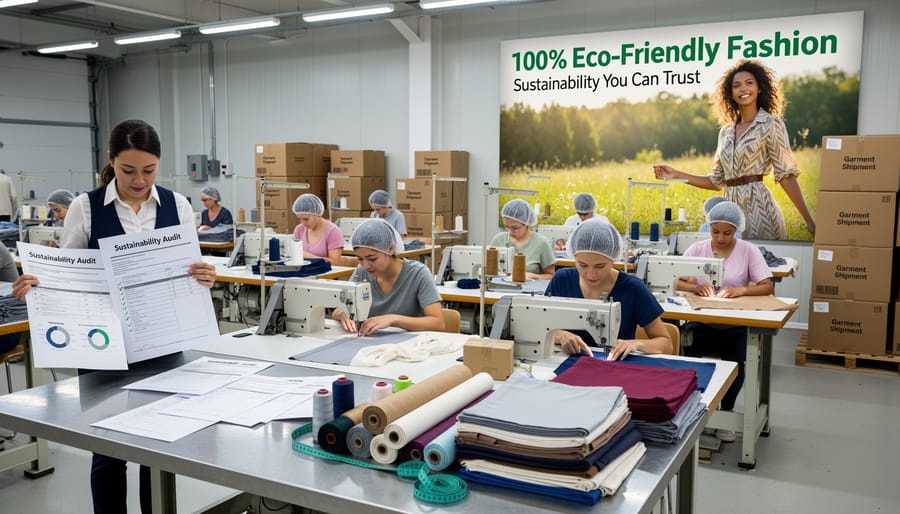
What Gets Measured: Key Sustainability Attributes
Reliable rating systems evaluate brands across multiple dimensions, recognizing that sustainability isn’t a single metric but a complex web of interconnected practices. The most effective systems break down their assessments into distinct attributes, allowing consumers to understand exactly where a brand excels and where it falls short.
- Material Sourcing
- The environmental impact of raw materials used in garments, including fiber type, farming practices, and resource consumption. This matters because textile production accounts for roughly 10% of global carbon emissions, making material choices foundational to a brand’s environmental footprint.
- Supply Chain Transparency
- The degree to which brands disclose information about their manufacturing facilities, production processes, and supplier relationships. Transparency enables accountability and allows consumers to verify whether brands’ sustainability claims align with their actual practices.
- Labor Standards
- Working conditions, fair wages, worker safety, and the absence of forced or child labor throughout the production chain. These practices reflect the human cost of fashion and distinguish ethical brands from those prioritizing profit over people.
- Water and Chemical Management
- How brands handle water usage, wastewater treatment, and toxic chemical elimination in dyeing and finishing processes. This attribute addresses one of fashion’s most severe environmental impacts, as textile production is a leading cause of water pollution globally.
- Carbon Footprint
- Greenhouse gas emissions across the product lifecycle, from raw material extraction through manufacturing, transportation, and end-of-life disposal. Reducing carbon emissions is essential for limiting fashion’s contribution to climate change.
- Circular Design Practices
- Whether products are designed for durability, repairability, recyclability, or take-back programs that keep materials in use. Circularity directly challenges the wasteful linear model that has defined fast fashion for decades.
When it comes to sustainable fabric materials rigorous systems look beyond surface-level claims like “organic cotton” to assess the full lifecycle impact. They examine water usage during cultivation, pesticide application, processing methods, and whether certifications like GOTS or OEKO-TEX validate those claims. A brand using recycled polyester, for instance, should demonstrate how that material reduces virgin plastic use while addressing microplastic shedding concerns.
Supply-chain transparency gets evaluated through concrete disclosures: Do brands publish their supplier lists? Can they trace materials to the farm or factory level? Have they mapped their entire production network, including subcontractors? Trustworthy systems penalize vague statements like “committed to ethical manufacturing” while rewarding brands that provide facility addresses, audit results, and remediation plans for identified issues.
Labor practices require verification beyond brand statements. Effective systems check for third-party certifications (Fair Trade, SA8000), review independent audit reports, and investigate whether brands pay living wages rather than minimum wages. They assess whether workers can unionize, whether brands have grievance mechanisms, and how companies respond when violations surface.
Circularity assessment goes deeper than offering a recycling bin in stores. Strong systems examine design choices: Are garments made from mono-materials that simplify recycling? Do brands offer repair services? What percentage of used items actually get resold or recycled versus landfilled? They track whether take-back programs create genuine closed-loop systems or serve primarily as marketing tools.
Red Flags: Spotting Unreliable Rating Systems
Not all rating systems deserve your trust. Some exist primarily to provide marketing cover for brands rather than genuine accountability. Learning to spot the red flags saves you from misleading information that defeats the entire purpose of checking sustainability credentials.
The most glaring warning sign is pay-to-play certification. If brands can purchase their rating or if the system offers “premium” tiers that influence scores, walk away. Legitimate verification should never be a transaction where money improves outcomes. Similarly, ratings that feature mostly brands you know are heavy advertisers should raise immediate suspicion about conflicts of interest.
Vague or undisclosed criteria represent another major red flag. If you can’t find detailed methodology explaining exactly what’s measured and how scores are calculated, the system lacks accountability. Phrases like “comprehensive sustainability assessment” without specifics mean nothing. You should be able to determine whether a rating prioritizes carbon emissions over labor rights, or how water usage factors into the final score.
Brand self-reporting without independent verification is essentially worthless. Companies claiming their own sustainability achievements is like students grading their own exams. Reliable systems require third-party audits, supply chain visits, and documentation review. If the rating clearly states it relies solely on brand-submitted information, treat any results as marketing material rather than objective assessment.
Check when the rating was last updated. Fashion supply chains change constantly. A brand scored in 2023 might have shifted factories, changed material suppliers, or abandoned previous commitments entirely. Systems that don’t require annual or biannual reverification become outdated fast, leaving you with stale information that no longer reflects current practices.
Watch for ratings that ignore entire sustainability dimensions. A system focusing exclusively on environmental impact while ignoring worker welfare or one that evaluates only materials while skipping manufacturing processes provides an incomplete picture. As our greenwashing guide explains, brands often highlight their strongest attributes while concealing weaknesses elsewhere.
Finally, be wary of ratings with suspiciously uniform high scores. If most featured brands receive excellent marks, the system probably isn’t rigorous enough. True sustainability remains difficult to achieve, and honest assessment should reflect that reality through score distribution that includes poor and mediocre performers alongside genuine leaders.
How to Use Ratings Effectively When Shopping
Don’t let sustainability ratings paralyze you at checkout. Instead, use them as one helpful data point in a broader decision-making process.
Start with these five practical steps:
- Check multiple rating sources rather than relying on a single platform. If three independent systems flag similar concerns about a brand’s labor practices, that’s meaningful. If ratings wildly disagree, dig deeper into their methodologies.
- Identify your non-negotiables. Do you prioritize living wages over organic materials? Animal welfare over carbon footprint? Focus on the attributes that align with your values rather than chasing perfect overall scores.
- Look for specific evidence, not vague claims. A rating that shows “82% recycled polyester in spring collection” tells you more than a general “eco-friendly materials” badge.
- Compare within categories. Ratings help you choose a better brand for the specific item you need, whether that’s denim, activewear, or outerwear. Different product categories have different sustainability challenges.
- Cross-reference with your own research. Spend five minutes checking a brand’s own sustainability reports and recent news. If a company just faced labor violations but still shows high ratings, something’s off.
Remember that ratings can’t capture everything that matters. A brand might score lower because it’s a small company without resources for extensive third-party certifications, yet still operate more ethically than a corporate giant with a polished sustainability report. Similarly, buying secondhand from any brand beats buying new from even the most sustainable producer.
Set realistic expectations. You won’t always find perfect information, and that’s okay. Making an 80% informed choice beats decision paralysis that leads to impulse purchases from fast fashion giants. Use ratings to eliminate the worst offenders and identify genuine leaders, then trust your judgment on the middle ground.
The goal isn’t perfection. It’s progress toward supporting brands that are actually trying while avoiding those that aren’t.
The Future of Fashion Sustainability Verification
The landscape of sustainability verification is shifting rapidly, driven by three converging forces: technological innovation, regulatory pressure, and consumers who refuse to accept vague promises.
Blockchain technology has moved beyond pilot programs into practical deployment for supply chain tracking. Several mid-sized European brands now use distributed ledgers to create tamper-proof records of materials from farm to finished garment. This isn’t about buzzwords anymore. When you scan a QR code and see verified checkpoints showing organic cotton’s journey from a specific Gujarat farm through certified facilities, that represents a fundamentally different level of accountability than a certification logo printed on a hangtag.
Artificial intelligence is proving particularly effective at scale verification, analyzing satellite imagery to confirm regenerative agriculture claims and processing thousands of factory audit documents to flag inconsistencies human reviewers might miss. The EU’s Digital Product Passport initiative, set to expand significantly in 2027, will mandate machine-readable sustainability data for textiles, essentially forcing standardization through regulatory requirement rather than industry goodwill.
We’re seeing the first genuine movement toward unified verification standards. The International Sustainability Standards Board released its first sector-specific guidelines for fashion in early 2026, and while adoption remains voluntary, major retailers are beginning to require ISSB alignment from suppliers. This matters because fragmented systems have allowed brands to shop for favorable ratings. Universal standards close that loophole.
The regulatory environment is tightening worldwide. California’s Fashion Accountability Act requirements, which took effect in January 2026, mandate specific disclosure and verification protocols for brands selling in the state. The UK’s expanded greenwashing regulations now carry penalties substantial enough to actually change corporate behavior. These aren’t suggestions anymore.
Perhaps most significantly, consumer expectations have fundamentally shifted. Data from sustainability platforms shows that 68% of eco-conscious shoppers in 2026 actively cross-reference multiple verification sources before purchase, compared to just 34% in 2023. Brands are responding because their market depends on it. The companies thriving aren’t those with the cleverest marketing but those willing to open their entire supply chain to scrutiny.
The verification systems of 2030 will look radically different from what we have today, not because the industry suddenly developed ethics, but because the combination of technology, regulation, and informed consumer pressure is making opacity unsustainable.

The fashion industry’s sustainability transformation hinges on reliable information, and you deserve better than the broken rating systems that have dominated the landscape for too long. As we move through 2026, the good news is that trustworthy verification methods are gaining ground, giving conscious consumers the tools they need to separate genuine sustainability from clever marketing.
Your purchasing decisions carry real power. When you choose brands with verified sustainability credentials over those hiding behind vague claims, you signal to the entire industry that greenwashing won’t be tolerated. Every dollar spent on truly sustainable fashion strengthens the market for ethical production and pushes competitors to meet higher standards.
Demanding transparency isn’t asking too much. It’s the bare minimum. Continue questioning rating systems that lack clear methodologies, refuse to disclose their verification processes, or accept payment for favorable scores. Support platforms that prioritize independent validation and granular attribute-based assessments over simplistic scores.
The path forward requires vigilance from everyone involved. Brands must back their sustainability claims with verifiable data. Rating platforms need to maintain rigorous standards without conflicts of interest. And consumers like you must stay informed, ask difficult questions, and refuse to settle for half-truths.
Change happens when enough people refuse to accept the status quo. You already took the first step by educating yourself about what makes ratings reliable. Now use that knowledge every time you shop.

0 %

0 %

0 %

0 %

0 %

0 %



Average Rating