
 0
0
 0
0
Sustainable craftsmanship refers to production methods that minimize environmental harm and support fair labor practices throughout the creation process, from raw material sourcing to final product assembly. Unlike mass manufacturing that prioritizes speed and cost-cutting, this approach treats each stage of production as an opportunity to reduce waste, preserve traditional skills, and create lasting value. For eco-conscious consumers tired of vague sustainability promises, understanding these production methods provides the tools to separate genuine ethical practices from greenwashing.
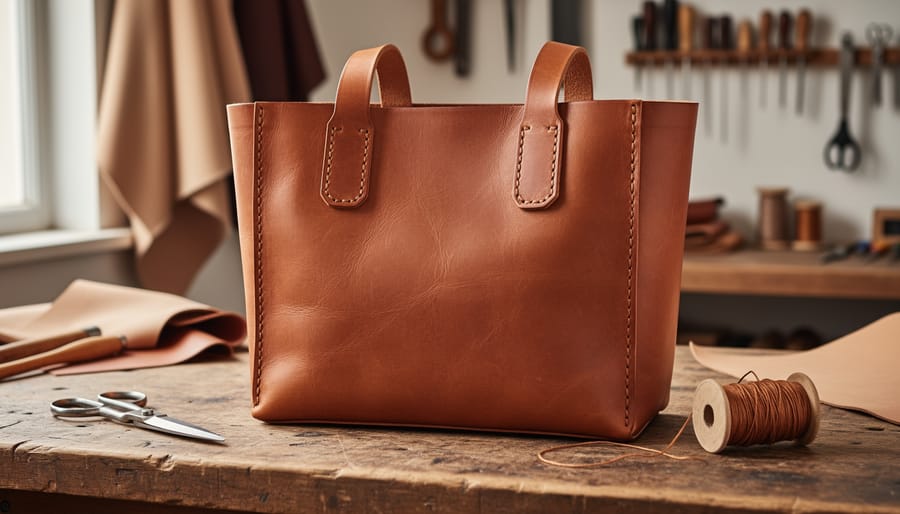
The distinction matters because brands increasingly slap “sustainable” labels on products without changing how they’re actually made. A hand-stitched leather bag produced in a workshop using vegetable-tanned hides represents sustainable craftsmanship. The same bag mass-produced with synthetic adhesives and chrome-tanned leather in a factory with poor ventilation does not, regardless of marketing claims. The difference lies in verifiable production choices: renewable energy use, non-toxic material processing, waste reduction systems, and transparent labor conditions.
Craftsmanship itself carries sustainability benefits that industrial methods rarely match. Skilled artisans typically produce fewer units with greater durability, directly countering the planned obsolescence built into fast fashion and disposable goods. A ceramicist firing small batches in an efficient kiln creates less total waste than factory production lines churning out thousands of identical mugs destined for landfills within months. Quality construction means longer product life, which remains the most effective way to reduce consumption’s environmental footprint.
The challenge for consumers in 2026 comes from distinguishing authentic sustainable craftsmanship from performative storytelling. Brands have learned that heritage narratives and artisan imagery sell products, leading to carefully staged workshop photos masking conventional manufacturing. Understanding specific production practices, asking direct questions about supply chains, and demanding third-party verification cuts through this noise.
What Sustainable Craftsmanship Actually Means
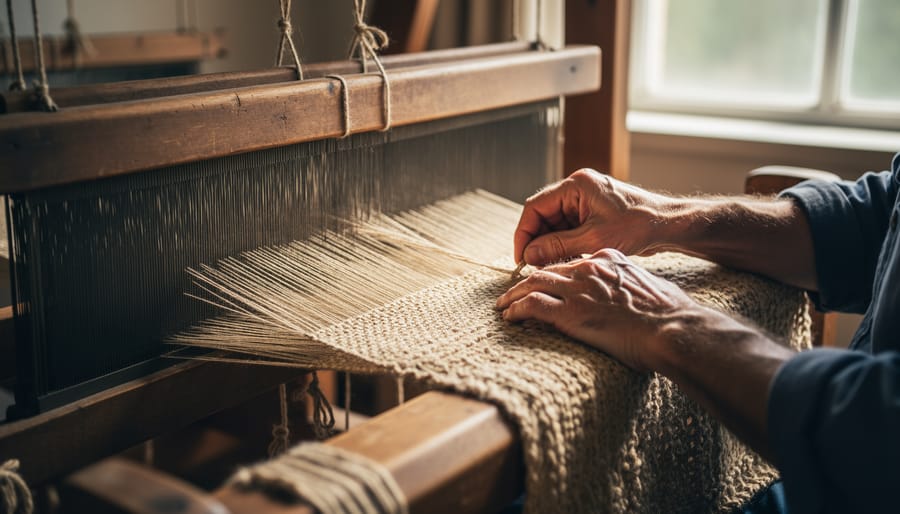
Sustainable craftsmanship isn’t just another marketing term, it’s a fundamental shift in how we make clothing. At its core, it represents the convergence of three inseparable elements: skilled human hands, production methods that work with rather than against natural systems, and respect for materials throughout their entire lifecycle.
- Sustainable Craftsmanship
- The practice of creating garments through skilled techniques that minimize environmental harm while preserving traditional knowledge and supporting artisan livelihoods.
- Artisan Production
- Small-scale manufacturing that relies on human expertise and hand techniques rather than mechanized processes, typically resulting in lower energy consumption and higher quality output.
- Material Stewardship
- The responsible management of fibers and fabrics from sourcing through disposal, ensuring resources are used efficiently and can safely return to natural cycles.
- Circular Design
- Creating products that are designed from the outset to be repaired, remade, or safely composted rather than discarded, closing the loop on waste.
Fast fashion operates on the opposite principle. Industrial looms churn out fabric at speeds that prioritize volume over longevity. Chemical shortcuts replace time-tested natural processes. Workers become machine operators following predetermined steps rather than craftspeople making informed decisions. The result is clothing designed for disposability, contributing to fast fashion microplastics pollution and overwhelming waste streams.
Sustainable craftsmanship asks different questions: How can we achieve durability without toxic finishes? What traditional techniques minimize water use? Can we create beautiful textiles using only plant-based dyes? This approach acknowledges that every production choice carries environmental weight, from the energy powering looms to the chemicals fixing colors to fabric.
The contrast becomes clearer when you examine production speed. A hand-weaver might complete three meters of fabric daily. An industrial facility produces thousands. But that handwoven textile typically lasts years longer, requires no synthetic treatments, and supports a skilled artisan’s livelihood. Understanding how upcycling helps demonstrates the same principle, valuing quality and resourcefulness over constant newness.
The Craftsmanship Behind Truly Sustainable Fabrics
From Fiber to Fabric: Where Sustainability Gets Lost
The transformation from raw plant fiber to finished fabric creates the largest gap between a material’s sustainability promise and its actual footprint. Even fibers grown without pesticides or synthetic fertilizers can become environmental liabilities during processing.
Chemical treatment stages pose the first major hurdle. Converting raw fiber into usable yarn typically requires scouring to remove natural oils and waxes, often using strong alkaline solutions or synthetic detergents. Bleaching follows for lighter fabrics, introducing chlorine compounds or hydrogen peroxide that generate toxic byproducts. Dyeing adds another layer of chemical complexity, synthetic dyes account for a substantial share of textile processing pollution burdens with heavy metals and azo compounds persisting in wastewater long after discharge. Finishing treatments like wrinkle resistance, water repellency, or softening apply additional chemical coatings, many containing formaldehyde or fluorocarbons.
Water consumption multiplies these impacts. Conventional cotton fabric production uses 10,000 to 20,000 liters of water per kilogram, with dyeing and finishing alone accounting for 70% of that total. Most facilities discharge this contaminated water into local waterways without adequate treatment, particularly in countries with lax environmental enforcement.
Energy intensity varies dramatically by method. Industrial spinning, weaving, and heat-setting require substantial electricity, usually from fossil-fuel sources in major textile hubs. Steam for dyeing and finishing adds thermal energy demands.
Waste generation happens at every stage. Fiber preparation creates 8-15% material loss as short fibers get discarded. Dyeing produces unused dye liquor and chemical sludge. Finishing generates contaminated water and fabric scraps that typically end up in landfills.
This is where craftsmanship matters, thoughtful production choices at each processing stage determine whether a naturally grown fiber maintains its sustainable credentials through to finished fabric.
Kratom Fabric: A Case Study in Material Potential
Kratom leaves, best known for their controversial medicinal applications, come from trees native to Southeast Asia that grow quickly in tropical climates without pesticides or fertilizers. The plant’s rapid growth and minimal cultivation needs position it as a potentially low-impact fiber source, but sustainable craftsmanship practices during extraction and processing determine whether this potential translates to reality.
Traditional fiber extraction from kratom involves manual harvesting of mature leaves followed by retting, a fermentation process that separates usable fibers from plant matter. Artisan methods use natural water sources and sun-drying, creating minimal waste and requiring no industrial energy. When rushed or scaled through chemical processing, however, the environmental advantage disappears. Some producers employ harsh alkalis or enzymes to speed extraction, generating toxic runoff and negating the raw material’s sustainability credentials.
The fiber-to-fabric transformation reveals where craftsmanship makes the crucial difference. Hand-spinning kratom fibers preserves their natural strength while consuming zero electricity. Small-batch weaving on traditional looms allows artisans to blend kratom with other natural fibers without synthetic binding agents. Industrial approaches typically add polyester for easier processing or use formaldehyde-based treatments for wrinkle resistance, choices that undermine the material’s inherent sustainability.
Water consumption during processing serves as a clear sustainability indicator. Artisan production might use 20 gallons per pound of finished fabric through careful water recycling, while factory processing can exceed 200 gallons when efficiency isn’t prioritized. The craftsmanship approach, patient, manual, and locally controlled, transforms kratom from a promising plant into a genuinely sustainable textile. Without that human expertise and environmental consciousness, it’s just another fiber with wasted potential.
Traditional Techniques That Reduce Environmental Impact
Traditional craftsmanship offers proven methods to shrink fashion’s environmental footprint through techniques refined over centuries. These approaches sidestep the resource-intensive machinery and chemical cocktails that modern industrial production depends on, delivering textiles with substantially lower environmental costs.
Hand-weaving stands out for its minimal energy demands. While power looms consume electricity continuously and require climate-controlled facilities, hand looms operate on human power alone. A skilled weaver can produce intricate patterns without generating carbon emissions, and the slower pace naturally reduces fabric waste since artisans spot and correct flaws immediately rather than running entire production batches before quality checks catch problems. The practice also creates denser, more durable textiles that resist wear longer than many machine-woven alternatives.
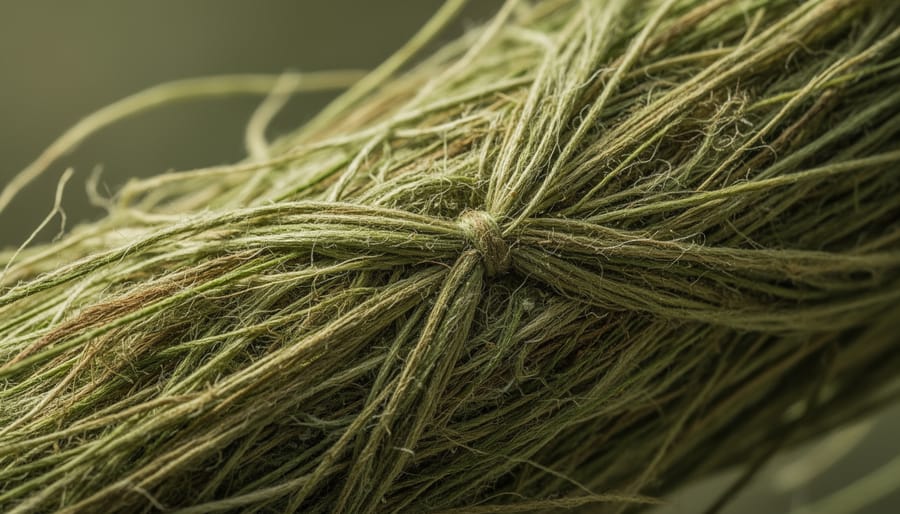
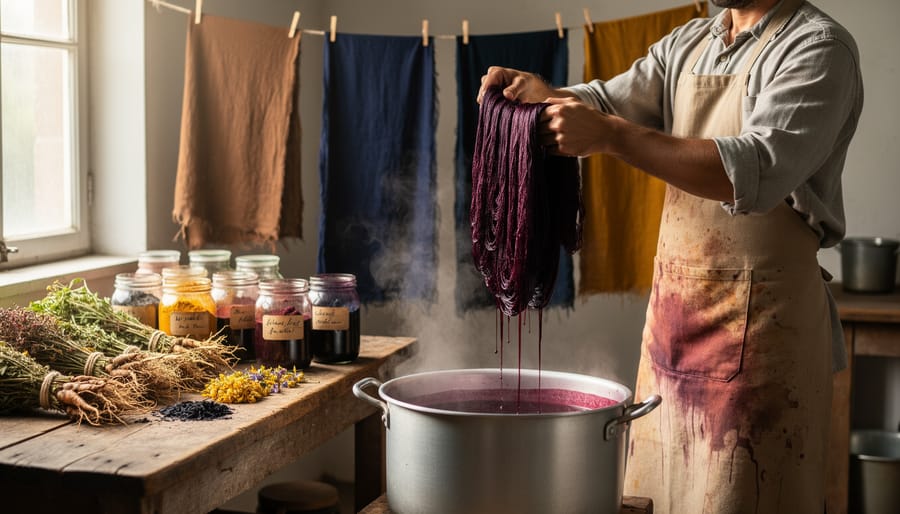
Natural dyeing eliminates the toxic chemical burden that synthetic dyes impose on waterways. Plant-based dyes from indigo, madder root, turmeric, and dozens of other botanical sources create rich colors without heavy metals, azo compounds, or petrochemical additives. The process typically requires lower temperatures than synthetic dyeing, cutting energy use by 30-50%. Traditional mordants like alum or iron fix colors to fibers, and while they require careful handling, they break down in the environment far more readily than synthetic fixatives. Artisans who practice natural dyeing also tend to recycle dye baths multiple times, extracting maximum color before disposing of liquids that are essentially plant tea rather than chemical soup.
Low-water processing techniques demonstrate how traditional wisdom addresses resource scarcity. Wax-resist methods like batik and tie-dye create patterns while using a fraction of the water that industrial printing demands. Block printing with natural pigments requires minimal rinsing compared to screen printing with synthetic inks. Some traditional finishing methods, including mechanical calendering to create sheen or hand-beating to soften fibers, achieve effects that industrial processes accomplish only through repeated washing and chemical softeners.
Traditional finishing techniques avoid the formaldehyde resins, optical brighteners, and antimicrobial treatments that conventional garment finishing relies on. Artisans achieve wrinkle resistance through fiber selection and weave structure rather than chemical coatings. They create water repellency using natural waxes instead of fluoropolymers. These approaches mean garments enter your home without off-gassing volatile compounds or requiring special disposal at end of life.
The cumulative impact matters more than any single technique. A garment that’s hand-woven, naturally dyed, and traditionally finished can carry an environmental footprint 70-80% smaller than its industrially produced equivalent, even when both use identical raw fibers.
The Artisan Advantage: Why Human Hands Matter
When a garment passes through human hands rather than industrial machinery, the benefits extend far beyond the romantic notion of “handmade.” Artisan production fundamentally alters both the environmental equation and the human cost of your clothing.
Industrial textile manufacturing runs on volume and speed, consuming massive amounts of electricity to power high-speed looms, automated cutting systems, and chemical processing equipment. A single automated weaving facility might run 24/7, drawing power equivalent to a small town. Artisan workshops, by contrast, operate on human energy supplemented by minimal electricity. Hand-weaving produces zero carbon emissions during the actual fabric creation. Even when artisans use foot-powered looms or hand-cranked spinning wheels, the energy input remains negligible compared to factory equipment.
This energy difference translates directly to carbon footprint. A hand-woven scarf might take eight hours of human labor but generates virtually no emissions. The same scarf produced on industrial equipment consumes kilowatt-hours of grid power, much of it still sourced from fossil fuels in major textile manufacturing regions.
The economic impact matters equally. Artisan production distributes income directly to skilled makers rather than concentrating profits in factory ownership. In regions where traditional textile crafts survive, this income supports entire communities. A weaver in rural India supporting a family through fair-wage artisan work preserves not just a skill but a viable alternative to urban factory migration. These craft communities maintain traditional knowledge systems, keep cultural practices alive, and provide stable local employment without the exploitative conditions common in industrial garment factories.
Quality creates the final environmental advantage. Artisan-made garments typically feature stronger construction, better finishing, and materials chosen for durability rather than cost minimization. A hand-stitched hem holds longer than a machine-sewn one. Natural dyes applied by hand penetrate fibers more thoroughly than industrial spray applications. These quality differences mean artisan garments last years longer, often becoming pieces you repair rather than replace. When one garment replaces three in your closet over a decade, the resource savings compound dramatically.
The pace of artisan work also encourages thoughtful consumption. Knowing a garment took days of skilled labor to create naturally shifts how you value and care for it.
How to Verify Craftsmanship Claims
Verifying a brand’s craftsmanship claims requires looking beyond marketing language to concrete evidence. Start by examining their supply chain transparency. Brands committed to genuine sustainable craftsmanship typically share specific information about where and by whom their products are made. Look for names of workshops or cooperatives, locations of production facilities, and details about artisan partnerships rather than vague statements about “ethical production.”
Certifications provide measurable verification, but not all carry equal weight. Fair Trade Certified, Global Organic Textile Standard (GOTS), and Cradle to Cradle verify specific production practices and labor conditions. The Leather Working Group certification demonstrates responsible tannery practices, while certifications from recognized craft guilds confirm traditional techniques. Compare these legitimate standards against vague marketing claims:
| Legitimate Certification | What It Verifies | Vague Marketing Claim | What It Actually Means |
|---|---|---|---|
| Fair Trade Certified | Fair wages, safe conditions, community investment | “Ethically made” | Undefined, no third-party verification |
| GOTS | Organic fibers, chemical restrictions, social criteria | “Eco-friendly production” | No measurable standards or auditing |
| B Corp Certification | Comprehensive social and environmental performance | “Sustainable practices” | Self-declared, lacks specifics |
| Cradle to Cradle | Material health, recyclability, renewable energy | “Consciously crafted” | Marketing language without accountability |
Ask brands direct questions about their production methods. Where specifically are garments made? What proportion of work is completed by hand versus machine? How are artisans compensated, and what working conditions do they experience? Which chemicals are used in processing, and how is wastewater managed? Brands with genuine craftsmanship commitments welcome these inquiries and provide substantive answers. Those hiding behind generalities likely have less to offer than their messaging suggests.
Watch for red flags that indicate greenwashing. Claims about “small batch” production mean nothing without production volume numbers. Phrases like “inspired by traditional techniques” often mean mechanized processes with superficial artisan touches. Be wary of brands that emphasize their sustainable materials while remaining silent about processing methods, the COS microplastics issue demonstrates how material claims can obscure larger environmental problems. Similarly, generic sustainability ratings often miss the nuances of craftsmanship quality and artisan welfare.
Request evidence of long-term artisan relationships. Brands genuinely invested in craftsmanship typically work with the same workshops and makers for years, often highlighting these partnerships in their storytelling. Short-term vendor relationships suggest a focus on cost rather than craft quality.
Sustainable materials alone don’t create sustainable fashion, the hands and methods that transform them do. A kratom fiber shirt processed with toxic chemicals and sewn in exploitative conditions carries a heavier true cost than its plant-based label suggests. Real sustainable craftsmanship requires both eco-friendly materials and production practices that honor people and planet at every stage.
The most effective action you can take is asking brands direct questions: Who made this? How was it processed? What certifications back your claims? Brands genuinely committed to sustainable craftsmanship welcome these questions and provide transparent answers. Those offering vague responses about “eco-friendly practices” or “traditional methods” without specifics reveal where their priorities actually lie.
Your purchasing choices send powerful signals. When you support brands that pay fair wages to artisans, minimize water and chemical use, and document their supply chains, you’re funding the infrastructure that makes genuinely sustainable fashion possible. Each purchase either reinforces extractive industrial systems or strengthens networks of skilled craftspeople preserving low-impact production knowledge.
The fashion industry won’t transform overnight, but the shift toward valuing craftsmanship over speed has already begun. As more consumers recognize that how clothes are made matters as much as what they’re made from, brands face mounting pressure to prove their sustainability claims through transparent practices rather than marketing buzzwords. That transformation starts with the questions you ask and the standards you refuse to compromise.




Average Rating