
 0
0
 0
0
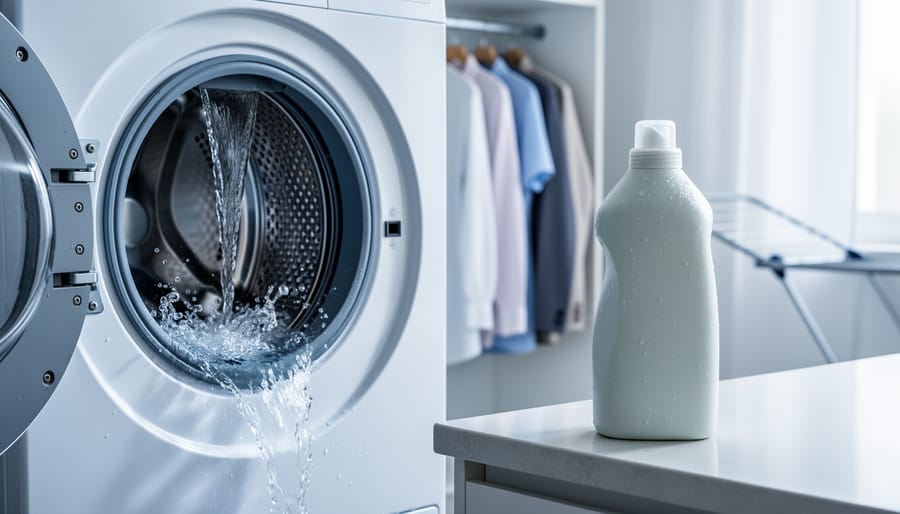
Laundry sustainability comes down to three immediate changes: washing in cold water, running full loads, and choosing plant-based detergents. These steps can cut your laundry’s carbon footprint by up to 75% without spending a cent on new equipment or specialty products.
The environmental cost of keeping our clothes clean adds up fast. The average household runs nearly 300 loads of laundry each year, consuming roughly 15,000 gallons of water and significant energy for heating. Toss in synthetic detergent chemicals that end up in waterways and microfiber pollution from synthetic fabrics, and you’re looking at one of the home’s most resource-intensive routines. The good news? Unlike many sustainability challenges, laundry offers clear wins you can start today.
What makes laundry sustainability tricky isn’t the science behind it. Cold water cleans effectively, concentrated detergents reduce packaging waste, and air-drying saves energy. The challenge is sorting genuine eco-solutions from marketing noise. Brands slap “natural” and “eco-friendly” labels on products that still contain problematic ingredients or come wrapped in single-use plastic. Meanwhile, the most impactful changes, like adjusting wash temperature or extending the life of your current machine rather than upgrading, get buried under ads for the latest smart washer.
This guide cuts through the confusion. We’ve evaluated actual environmental impact data, not branding claims, to show you which changes deliver real results and which ones are greenwashing dressed up as progress. You’ll find practical steps ranked by impact, honest assessments of eco-products that actually work, and clear guidance on when investing in new technology makes environmental sense. No guilt trips, no perfect-or-nothing thinking, just transparent information to help you make your laundry routine genuinely sustainable.
The True Environmental Cost of Conventional Laundry

Every time you run a load of laundry, you’re using far more resources than the water flowing into your machine. The average household in developed countries washes about 300 loads per year, and each cycle carries a hidden environmental price tag that extends well beyond your utility bill.
Water consumption ranks among the most visible impacts. A standard top-loading washing machine uses roughly 40 gallons per cycle, while even efficient front-loaders consume 12 to 15 gallons. Multiply that across millions of households, and residential laundry accounts for approximately 15 to 20% of total home water use in the United States. In regions facing water scarcity, this represents a significant strain on already stressed resources.
Energy consumption tells an equally troubling story. Heating water accounts for about 90% of the energy used in a typical wash cycle. The U.S. Department of Energy estimates that the average American family spends over $100 annually just heating water for laundry. When you factor in the electricity needed to power the machine itself and run the dryer, laundry becomes one of the most energy-intensive household activities. Switching to cold water saves energy dramatically, cutting consumption by up to 90% per load.
The microplastic crisis adds another dimension. Synthetic fabrics like polyester, acrylic, and nylon shed thousands of plastic microfibers with every wash. A single load can release up to 700,000 microscopic plastic particles that flow through wastewater treatment plants, most of which lack the filtration capacity to capture them. These microplastics enter rivers and oceans, where marine life ingests them and they accumulate in the food chain.
Chemical runoff compounds the problem. Conventional detergents contain phosphates, optical brighteners, synthetic fragrances, and surfactants that persist in aquatic ecosystems. Phosphates cause algal blooms that deplete oxygen in waterways, creating dead zones where fish and other organisms can’t survive. Nonylphenol ethoxylates, still used in some detergents, act as endocrine disruptors affecting wildlife reproduction.
| Impact Category | Conventional Practice | Sustainable Alternative |
|---|---|---|
| Water per Load | 40 gallons (top-loader) | 12-15 gallons (efficient front-loader) |
| Energy per Load | 4.5 kWh (hot water wash + dryer) | 0.3 kWh (cold wash, air dry) |
| Microplastics Released | Up to 700,000 fibers per load | Reduced 25-50% with washing bag |
| Annual CO2 Emissions | 480 kg per household | 130 kg (cold wash, line dry) |
The carbon footprint deserves separate attention. Between heating water, running machines, and using dryers, the average American household generates about 480 kilograms of CO2 annually from laundry alone. That’s equivalent to driving a car nearly 1,200 miles. When you consider that much of this energy still comes from fossil fuel sources in many regions, laundry’s contribution to climate change becomes undeniable.
These numbers aren’t meant to induce guilt but to establish a baseline. Understanding the true cost of conventional laundry practices makes it clear why changing how we wash matters, and why relatively simple adjustments can create measurable environmental benefits.
Smart Washing Habits That Cut Your Impact in Half
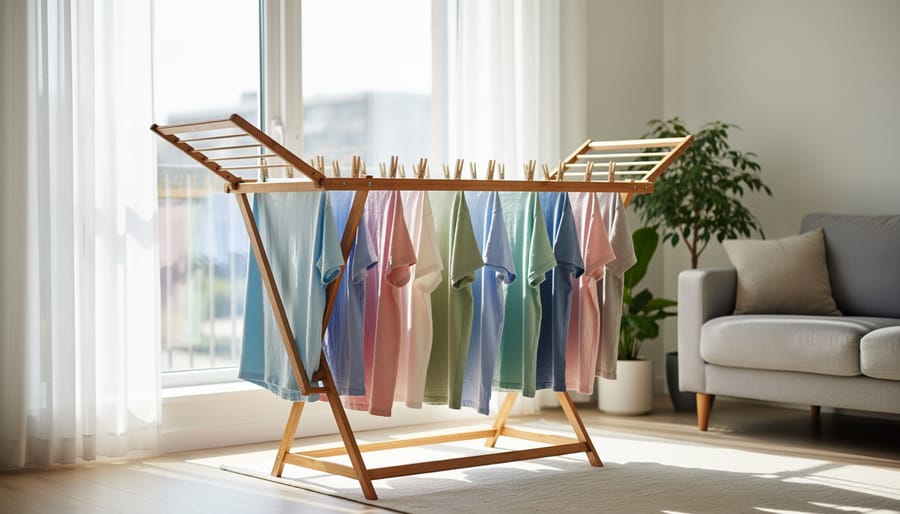
Switching to cold water delivers the single biggest reduction in laundry’s carbon footprint. Heating water accounts for roughly 90% of the energy consumed during a wash cycle, so running cold-water loads cuts that energy use dramatically. Modern detergents work effectively in cold temperatures because manufacturers have reformulated enzymes to activate without heat. You’ll get clothes just as clean while slashing your energy bill and carbon emissions.
Running full loads every time maximizes efficiency. A half-empty machine uses nearly the same water and energy as a full one, which means you’re essentially doubling your environmental cost per garment washed. Wait until you have enough items to fill the drum properly, but don’t overstuff, clothes need room to agitate and rinse thoroughly. This approach also extends fabric life since you’re subjecting garments to fewer wash cycles overall.
Air drying eliminates the dryer entirely, the second-largest energy consumer in laundry after water heating. Dryers generate significant carbon emissions and subject fabrics to harsh heat that degrades fibers faster. Line drying or using a drying rack preserves fabric integrity, prevents shrinkage, and costs nothing. Even partial air drying, removing items when they’re 80% dry and finishing them briefly in the dryer, creates meaningful energy savings.
Rethinking wash frequency matters more than most people realize. Not every worn item needs immediate washing. Jeans, sweaters, and jackets can typically go several wears between washes unless visibly soiled or smelling. Overwashing strips fabrics of their natural resilience and causes unnecessary wear. Spot-clean stains promptly, air out garments between uses, and reserve full washes for items that genuinely need them.
Shorter wash cycles work perfectly for lightly soiled everyday clothing. Extended cycles make sense for heavily soiled work clothes or sports gear, but most loads don’t require 60-minute programs. Quick cycles (15-30 minutes) use less water and energy while still cleaning effectively. When selecting eco-friendly products, understanding what certifications verify helps you avoid greenwashing claims and identify formulations that genuinely complement these water-saving practices.
These behavioral shifts require zero upfront investment yet create measurable environmental impact. Implementing just cold water and full loads can cut your laundry-related energy consumption in half. Combine all five habits and you’re approaching a 75% reduction in environmental cost compared to conventional hot-water, small-load, dryer-dependent routines.
Detergents and Products: What Actually Works
Understanding Sustainable Detergent Certifications
Navigating the green claims on detergent labels requires understanding what certifications actually verify. The EPA Safer Choice label is the gold standard in the US, it certifies that every ingredient meets strict safety criteria for human health and aquatic ecosystems, not just the formula overall. Products carrying this seal undergo ingredient-by-ingredient evaluation, eliminating genuinely harmful chemicals rather than just diluting them.
The EU Ecolabel takes a lifecycle approach, assessing environmental impact from manufacturing through disposal. It sets limits on phosphates, surfactants, and packaging waste while requiring biodegradability testing. Both certifications prohibit ingredients linked to microplastics from fast fashion pollution and impose strict aquatic toxicity standards.
Leaping Bunny and PETA’s cruelty-free certifications verify no animal testing occurred, but they don’t address environmental impact or ingredient safety. “Plant-based” and “natural” claims remain unregulated marketing terms, a detergent can be plant-derived yet still contain problematic surfactants or excessive packaging.
The Cradle to Cradle Certified mark evaluates material health, recyclability, and manufacturing ethics, making it one of the most comprehensive standards. Some brands highlight their COS microplastics stance or water safety commitments, but third-party verification always trumps self-reported claims. When choosing detergents, look for multiple credible certifications rather than vague eco-buzzwords, and verify claims on the certifying organization’s website to confirm current status.
Plant-Based vs. Conventional: The Real Differences
Plant-based detergents derive their cleaning agents from renewable sources like coconut oil, corn, and sugar beets, while conventional detergents rely on petroleum-derived surfactants. This fundamental difference affects both cleaning performance and environmental footprint, though not always in the ways marketing suggests.
On effectiveness, independent testing shows plant-based detergents perform comparably to conventional options for most household laundry. They excel at everyday dirt and light stains but may struggle with heavy grease or set-in protein stains where petroleum-based surfactants have an edge. The performance gap narrows significantly when you pre-treat tough stains or wash in warmer water.
The environmental comparison gets more nuanced. Plant-based formulas typically biodegrade faster and release fewer persistent chemicals into waterways. However, their agricultural footprint matters: coconut and palm oil derivatives require significant land and water for cultivation. A poorly sourced plant-based detergent can carry a larger environmental burden than a concentrated conventional formula with responsible manufacturing.
Conventional detergents often contain optical brighteners, synthetic fragrances, and phosphates that persist in aquatic ecosystems and contribute to algal blooms. They also include more synthetic preservatives and stabilizers. Plant-based alternatives generally skip these additives, which reduces chemical load on water treatment systems.
Cost becomes a factor in real-world sustainability. Plant-based detergents typically cost 20-40% more per load. If the higher price pushes consumers toward cheaper conventional brands or using more product than necessary, the environmental benefit disappears. The most sustainable choice is whichever effective detergent you’ll use correctly and consistently at the recommended concentration.
The Microplastic Problem and How to Minimize It
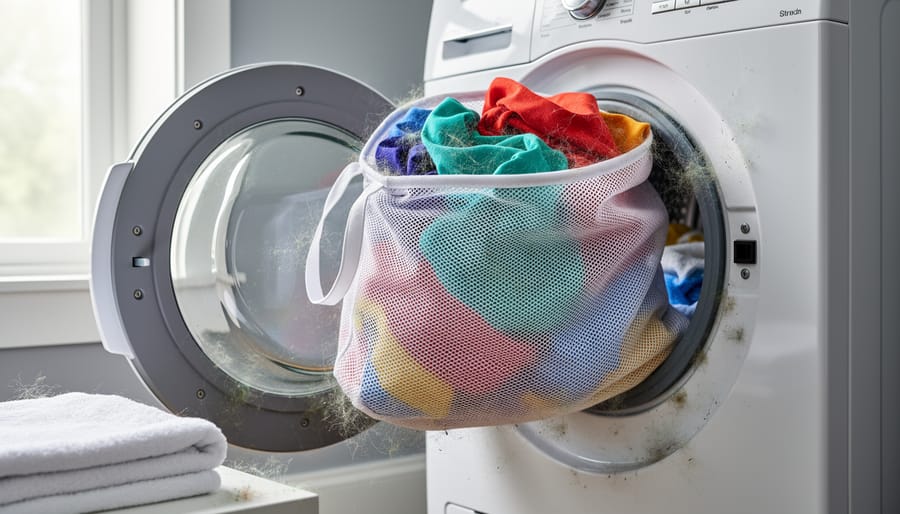
Every time you wash a polyester shirt, fleece jacket, or pair of yoga pants, thousands of microscopic plastic fibers break loose and flow down the drain. A single synthetic garment can release 700,000 microfibers per wash cycle, according to research from the University of Plymouth. These particles, too small to be caught by wastewater treatment plants, end up in rivers, oceans, and eventually the food chain. Synthetic fabrics (polyester, nylon, acrylic, spandex) make up roughly 60% of global clothing production, which means our collective laundry routine sends an estimated 500,000 tons of plastic microfibers into the ocean each year.
The problem isn’t just volume. Microfibers absorb pollutants like pesticides and heavy metals as they travel through water systems, becoming concentrated toxin carriers. Marine organisms mistake them for food, and scientists have found microplastics in fish, shellfish, table salt, and even human bloodstreams. The damage compounds because synthetic fabrics shed most heavily during their first few washes, then continue releasing fibers throughout their lifespan, especially as they age and fabric integrity breaks down.
Friction drives microfiber release. Longer, hotter wash cycles with aggressive agitation cause more shedding. Front-loading machines typically generate less friction than top-loaders with central agitators. Older, worn garments shed more than new ones, and cheaper synthetic fabrics with looser weaves release more fibers than tightly-knit, higher-quality construction.
You can’t eliminate microfiber pollution entirely if you wear synthetic clothing, but you can reduce it substantially. Washing synthetic items less frequently makes an immediate difference, many performance fabrics don’t need washing after every wear. When you do wash, use cold water on a gentle cycle and always run full loads; fewer items mean more friction between garments. Skip the dryer when possible, since heat degrades synthetic fibers and increases future shedding.
Three types of tools can capture microfibers before they reach waterways: washing bags, external filters, and machine-integrated solutions. Each has distinct advantages and limitations.
Pros
- Washing bags like Guppyfriend capture 86-90% of released fibers and cost $30-40 with no installation required.
- External filters (Filtrol, XFiltra) catch fibers from all laundry and can be retrofitted to existing machines.
- Machine-integrated filters provide the highest capture rates (up to 95%) and require no behavior change once installed.
Cons
- Washing bags require sorting synthetics separately and limit load size per bag.
- External filters need professional installation ($150-300) and regular cartridge replacement ($40-60 annually).
- Machine-integrated solutions are only available on select new models, adding $100-200 to appliance cost.
Washing bags offer the simplest starting point, you separate synthetic items, zip them in the bag, and wash normally. After washing, fibers collect inside the bag’s seams and you dispose of them in household trash (not ideal, but better than ocean contamination). The Guppyfriend bag is the most tested option, with independent lab verification of its capture rate.
Your fabric choices matter long-term. Buying fewer synthetic garments reduces the problem at its source. When synthetic performance features are necessary, look for tightly-woven, higher-quality construction that sheds less. Some brands now use recycled polyester with chemical treatments that minimize fiber loss, though effectiveness varies and third-party testing remains limited.
Energy-Efficient Machines and Upgrades Worth Making
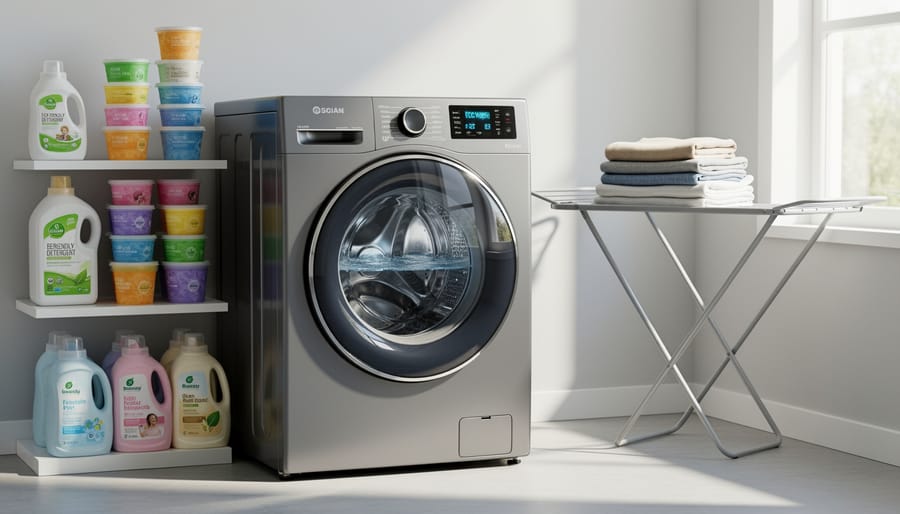
Upgrading to an energy-efficient washing machine reduces your environmental footprint, but the decision isn’t straightforward. Manufacturing a new appliance requires significant resources and energy, so replacing a functioning machine solely for efficiency gains can take years to offset the embodied carbon of production. If your current washer is broken or genuinely inefficient (pre-2010 models often use double the water and energy of modern ones), upgrading makes sense. If it still works well, focusing on behavioral changes delivers faster environmental benefits.
When shopping for a new machine, look for the ENERGY STAR certification as your baseline. ENERGY STAR washers use about 25% less energy and 33% less water than standard models. The yellow EnergyGuide label shows estimated annual energy costs and water consumption in gallons per year, compare these numbers directly rather than relying on vague “eco” marketing. A typical efficient front-loader uses 13-15 gallons per load versus 20-30 gallons for older top-loaders.
Front-load washers consistently outperform top-loaders in efficiency. They use gravity and tumbling action rather than filling an entire tub with water, cutting consumption dramatically. They also spin faster, extracting more water and reducing dryer time (or air-drying duration). Top-load high-efficiency (HE) models exist but generally can’t match front-loaders for water savings. The trade-off: front-loaders cost more upfront and require proper maintenance to prevent mold in door seals.
Skip gimmicky “eco” cycles that just add time without meaningful savings. The features that actually matter are load-sensing technology (adjusts water to load size), higher spin speeds (removes more water before drying), and true cold-water cleaning capability. Some newer models include microfiber filters to capture synthetic fabric particles, though aftermarket solutions often work as well.
Calculate payback before buying. If a $900 efficient washer saves $50 annually in energy and water costs compared to your current machine, you’re looking at 18 years to break even financially, though environmental savings accrue immediately. Factor in repair costs for your old machine and how long it’s likely to last. For many households, the right answer is maximizing the life of their current washer while adopting better washing habits, then choosing efficiency when replacement becomes necessary.
Brands Leading the Sustainable Laundry Movement
Several laundry brands have moved beyond vague eco-claims to demonstrate measurable sustainability improvements. The difference lies in verified certifications, transparent ingredient disclosure, and commitment to a circular economy where packaging and formulations minimize waste.
When evaluating sustainable laundry brands, look for these key attributes:
- Biodegradability
- Formulas that break down completely within 28 days under OECD 301 testing standards, leaving no persistent chemicals in waterways.
- Packaging Practices
- Use of post-consumer recycled materials, refillable containers, or plastic-free packaging that reduces single-use waste.
- Carbon Neutrality
- Verified carbon offset programs or manufacturing processes powered by renewable energy, with third-party certification of climate claims.
- Ingredient Transparency
- Full disclosure of all ingredients including percentages and sourcing, not just listing a few “hero” natural components.
- Social Responsibility
- Fair labor practices throughout the supply chain and commitment to safe working conditions verified by independent audits.
Brands that consistently meet these standards include Seventh Generation, which holds EPA Safer Choice certification across its entire line and publishes detailed ingredient lists with Environmental Working Group ratings. Their bottles contain 75 percent post-consumer recycled plastic, and the company discloses its carbon footprint annually. Blueland stands out for eliminating single-use plastic entirely through tablet formulations that dissolve in reusable containers. Each tablet replaces one traditional detergent bottle, and the company’s carbon-neutral shipping is Climate Neutral Certified.
Dropps offers concentrated pods in compostable packaging made from PVOH film that dissolves completely in water. The brand maintains B Corporation certification and shares third-party test results demonstrating that 97 percent of ingredients biodegrade within 28 days. For wool and delicates, Eucalan provides a phosphate-free, biodegradable formula in concentrated form that requires no rinsing, reducing water use by up to 40 percent per wash.
The standout feature across these brands is verifiable data. They don’t just claim sustainability, they publish lifecycle assessments, share factory audit results, and maintain current certifications that require annual compliance testing. This transparency lets you evaluate their environmental commitments against measurable standards rather than marketing language. When choosing a sustainable laundry brand, prioritize those that provide proof over promises.
You don’t need to overhaul your entire laundry routine overnight. The research shows that even single changes deliver real results: switching to cold water cuts energy use by up to 90% per load, while washing full loads instead of partial ones can halve your water consumption over a year. These aren’t abstract goals, they’re immediate reductions in your household’s environmental footprint.
Start with the changes that fit your life right now. If you’re renting and can’t replace your machine, focus on washing habits and product swaps. If you’ve got the budget for upgrades, prioritize an efficient washer or a microfiber filter. The point isn’t perfection; it’s momentum. Each adjustment compounds over time, and collectively, household laundry accounts for a significant portion of residential water and energy use globally.
The brands and practices covered here represent verified options, not marketing spin. You now know which certifications matter, which sustainability claims hold up under scrutiny, and where your money makes the biggest difference. Whether you choose a Guppyfriend bag to catch microplastics or switch to a concentrated detergent, you’re making an informed decision grounded in evidence.
Your laundry routine touches the environment thousands of times a year. Making it sustainable isn’t about sacrifice, it’s about smarter choices that protect what you value while keeping your clothes clean.



Average Rating