

 0
0
 0
0
Building a sustainable business in 2026 means embedding environmental and ethical practices into your core operations while maintaining profitability, and the process starts with a documented foundation of measurable goals, transparent supply chains, and third-party verification. The good news? You don’t need a massive budget or decades of experience to get started. What you need is a clear framework, honest assessment of your current impact, and commitment to proving your claims with evidence rather than marketing spin.
The challenge most business owners face isn’t knowing that sustainability matters. Consumer demand for ethical products has reached a tipping point, with purchasing decisions increasingly shaped by a company’s environmental and social track record. The real obstacle is cutting through the noise of greenwashing to build credibility that actually holds up under scrutiny. When everyone claims to be “eco-friendly” or “sustainable,” those words lose meaning fast.
This is where verification becomes non-negotiable. Conscious consumers have grown sophisticated at spotting vague promises and half-truths. They want specifics: carbon footprint data, fair labor certifications, transparent ingredient sourcing, and proof that your business model doesn’t just reduce harm but actively contributes to positive change. The companies thriving in this space aren’t the ones with the slickest green marketing campaigns. They’re the ones willing to open their books, trace their supply chains, and submit to independent audits.
The roadmap ahead covers exactly how to build that credibility from the ground up. You’ll learn which sustainability frameworks and tools provide the structure you need, how to avoid common pitfalls that undermine trust, and the step-by-step process for documenting your progress in ways that withstand scrutiny. By the end, you’ll have a practical blueprint for creating a business that’s both profitable and verifiably sustainable.
What You’ll Need to Build a Sustainable Business

Building a sustainable business requires more than good intentions. You’ll need specific tools, committed resources, and the right partnerships in place before you implement any changes. Think of this as assembling your toolkit, skip the essentials, and you’ll struggle to prove your impact when it matters most.
Start with stakeholder buy-in. Without commitment from leadership, investors, and key team members, sustainability initiatives become side projects that fade when budgets tighten. You need explicit agreement that this transformation is a business priority, not a marketing exercise. Document these commitments formally. When challenges arise, and they will, having leadership on record matters.
Next, you’ll need robust sustainability assessment frameworks. These structured methodologies help you evaluate where you stand across environmental and social metrics. Frameworks like the B Impact Assessment, the Global Reporting Initiative standards, or industry-specific tools provide the scaffolding for measuring everything from carbon emissions to labor practices. They prevent you from cherry-picking flattering data while ignoring problematic areas.
Measurement tools turn vague sustainability goals into trackable metrics. Carbon calculators quantify your emissions across scopes one through three. Supply chain trackers map your vendor relationships and flag ethical risks. Life cycle assessment software evaluates product impact from raw materials through disposal. Without these tools, you’re guessing rather than managing. The data they generate becomes the foundation for credible reporting.
Here are the essential resources you’ll need, organized by function:
- Assessment tools: B Impact Assessment, GRI Standards, materiality assessment templates
- Measurement platforms: carbon accounting software (Watershed, Persefoni), supply chain mapping tools (Sourcemap, TrusTrace)
- Reporting frameworks: CDP disclosures, SASB standards, annual impact report templates
- Certification bodies: B Lab, Fair Trade USA, Climate Neutral, Global Organic Textile Standard
- Stakeholder engagement systems: survey platforms, feedback collection tools, transparent communication channels
Transparent reporting systems make your data accessible and understandable. This means platforms for publishing regular sustainability updates, interfaces where customers can verify product claims, and internal dashboards that track progress against goals. Transparency isn’t optional in 2026. Consumers and investors expect real-time access to your sustainability performance.
Budget allocation separates serious transformation from performative gestures. Sustainable materials cost more initially. Certifications require fees. Audits aren’t free. Allocate specific funds for these investments rather than treating them as discretionary spending that vanishes during tight quarters.
Finally, establish third-party verification partnerships early. Identify which certifications align with your business model and industry. Research the auditors and certification bodies you’ll eventually work with. These relationships take time to develop, and starting conversations now helps you understand their requirements and timelines. Independent verification transforms internal claims into externally validated proof, the difference between saying you’re sustainable and proving it.
Before You Start: Critical Considerations and Red Flags
Before you invest time and money into sustainability initiatives, understand the serious pitfalls that can derail your efforts and damage your reputation. The most dangerous trap is greenwashing, making environmental claims that sound impressive but lack substance or proof. In 2026’s marketplace, consumers are skeptical, regulators are watching closely, and the consequences of misleading claims extend far beyond bad press.
Hollow commitments without measurement systems are equally problematic. Pledging to “reduce your carbon footprint” or “use sustainable materials” means nothing if you can’t quantify your starting point or track progress. Without baseline data and ongoing measurement, you’re essentially guessing whether your initiatives work, and you certainly can’t prove anything to customers or investors who demand evidence.
Many businesses prioritize optics over actual impact, choosing visible but superficial changes, like switching to green packaging, while ignoring their largest environmental burdens in manufacturing or shipping. This approach wastes resources on minor improvements while failing to address the operations that truly matter. Conduct a proper materiality assessment to identify where your business actually causes the most harm, then focus there first.
Insufficient budget planning derails sustainability efforts quickly. Transitioning to renewable energy, sourcing certified materials, and obtaining third-party verification all cost money. Underestimate these expenses, and you’ll either abandon initiatives halfway through or cut corners that compromise credibility. Build realistic budgets that account for both implementation and ongoing verification costs.
Ignoring supply chain transparency is particularly risky in fashion and retail. If you can’t trace your materials back to their source and verify labor conditions at every tier, your sustainability claims rest on shaky ground. Many sustainability ratings now penalize brands that lack supply chain visibility, and consumers increasingly demand proof of ethical production.
Finally, never make claims you can’t substantiate with documentation, data, or third-party certification. Vague statements like “eco-friendly” or “sustainable” without specific evidence invite scrutiny and skepticism. The reputational damage from exposed greenwashing can take years to repair, while legal consequences now include substantial fines and mandated transparency that forces you to publicly correct false claims.
Step-by-Step: Building Your Sustainable Business Foundation
Step 1: Conduct a Comprehensive Sustainability Audit
Start by mapping every area where your business touches the environment and people. Walk through your physical space with a notebook: measure monthly electricity and water bills, weigh a week’s worth of waste (separating recyclables, organics, and landfill-bound materials), and photograph your lighting, heating, and equipment. This initial snapshot becomes your baseline, the “before” data that proves future progress isn’t just narrative.
Next, trace your supply chain backward from finished product to raw materials. Request documentation from every supplier: Where do materials originate? What certifications do factories hold? How are workers paid and protected? For fashion businesses, investigate fabric sourcing closely, synthetic materials contribute to the microplastics impact through washing, while conventional cotton carries pesticide and water-use concerns.
Track packaging comprehensively: count plastic mailers, calculate cardboard weight per order, and note any non-recyclable components like bubble wrap or foam inserts. For transportation, pull shipping data to calculate total miles, delivery vehicle types, and packaging-to-product weight ratios.
Labor practices require honest assessment too. Review wages against living-wage benchmarks for your region, document workplace safety protocols, and evaluate whether your timelines pressure suppliers into exploitative practices.
Record everything in spreadsheets with dates and sources. These baseline metrics, kilowatt-hours, kilograms of waste, supplier audit scores, carbon tons, transform vague sustainability goals into measurable targets. Without this foundation, you can’t prove improvement or catch backsliding.
Step 2: Set Measurable, Science-Based Goals
Vague promises to “go green” won’t convince investors, customers, or certification bodies. You need concrete targets tied to recognized frameworks that prove you’re serious about impact, not just optics.
Start with the Science Based Targets initiative (SBTi), which provides methods for setting emissions reduction goals aligned with climate science. A fashion business might commit to reducing Scope 1 and 2 emissions by 50% by 2030, with absolute numbers tied to your baseline audit. This specificity matters, it’s verifiable and comparable across your industry.
The UN Sustainable Development Goals offer broader impact areas beyond carbon. An e-commerce brand could target SDG 12 (Responsible Consumption) by committing to zero landfill waste by 2028 or ensuring 80% of products use recycled materials by 2027. Each goal needs a number, a deadline, and a measurement system.
B Corp certification requires scoring at least 80 points across governance, workers, community, environment, and customers. If you’re pursuing this credential, set internal targets for each category based on your initial assessment score. Address your weakest areas with specific improvements: raise your environment score from 15 to 25 by switching to renewable energy and implementing take-back programs.
Consider lifecycle impacts beyond manufacturing. If your products require washing, factor in laundry sustainability when setting water and energy reduction goals, perhaps designing garments that need less frequent cleaning or educating customers about cold-water washing.
Document every target with baseline data, interim milestones, and assigned accountability. Aspirations like “reduce our footprint” mean nothing. “Cut packaging waste by 40% within 18 months” builds your case.
Step 3: Redesign Operations and Supply Chains
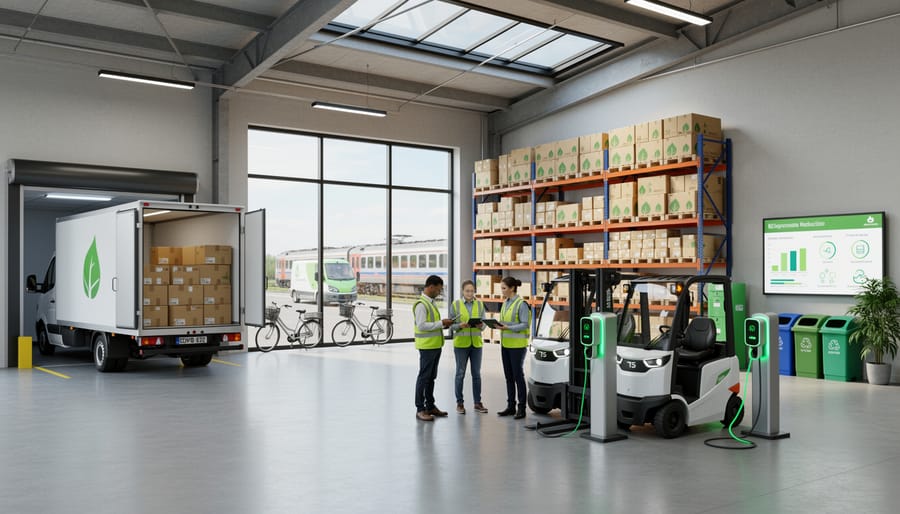
Now comes the hard part: translating your goals into operational reality. Start with your energy footprint, switch to renewable sources where possible, whether through direct solar installation, green energy contracts, or renewable energy credits. Many businesses see immediate cost savings after the initial investment.
Next, scrutinize your materials and suppliers. Replace conventional inputs with sustainable alternatives: organic cotton instead of conventional, recycled polyester over virgin, plant-based leather alternatives when appropriate. This isn’t about perfection, it’s about directional progress. Vet manufacturers rigorously: visit facilities when feasible, request transparency on labor practices and environmental compliance, and build relationships with partners who share your values rather than just telling you what you want to hear.
Waste reduction offers quick wins. Implement a circular economy approach by designing products for disassembly and repair, offering take-back programs, and finding uses for production scraps. Understanding how upcycling fixes waste can transform your approach to excess materials, turning would-be landfill contributions into new product lines.
Optimize logistics by consolidating shipments, choosing lower-emission transport options, and sourcing materials closer to production facilities. Design for longevity from the start, durable construction, timeless aesthetics, and modular components that can be replaced extend product life and reduce replacement cycles.
Tackle high-impact changes first (energy, materials), then work toward systemic transformation. Some shifts happen in weeks; others take years. The key is starting with changes that deliver both environmental impact and business value, building momentum and stakeholder confidence as you go.
Step 4: Document Everything with Radical Transparency

Documentation isn’t administrative overhead, it’s the foundation of credible sustainability claims. Without verifiable records, your efforts remain unproven assertions that skeptical consumers and investors will dismiss.
Start with supply chain traceability. Map every supplier, manufacturer, and logistics partner, maintaining contracts, audit reports, and correspondence that prove ethical sourcing. Photograph facilities and production processes. Keep samples of materials with accompanying certificates of origin. When you can trace a garment from raw fiber to finished product, you’re building the clothes story that differentiates authentic brands from greenwashers.
Track environmental data continuously. Log energy consumption, water usage, waste volumes, and carbon emissions monthly. Use standardized calculation methodologies (like the GHG Protocol) so your numbers withstand scrutiny. Store utility bills, shipping manifests, and waste disposal records digitally with timestamps, this creates an audit trail proving your baseline and progress.
Preserve all certifications, test results, and third-party assessment reports in organized, searchable archives. When a customer or journalist questions your claims, you should retrieve supporting documentation within minutes.
Create a transparency hub on your website where stakeholders can access annual impact reports, certification details, and supplier lists. This radical openness signals confidence. Brands hiding behind vague sustainability pages telegraph that they’re concealing inconvenient truths. Those sharing detailed, specific data, even imperfect data that acknowledges challenges, earn trust that converts to customer loyalty and investor confidence.
Step 5: Obtain Third-Party Verification

Third-party certifications transform your sustainability claims from promises into verified facts. Without independent verification, even genuine efforts risk appearing as greenwashing. The right credentials signal credibility to investors, retail partners, and increasingly skeptical consumers who’ve learned to demand proof.
Start by identifying which certifications align with your specific operations and goals. B Corp certification evaluates your entire business model across governance, workers, community, environment, and customers, making it comprehensive but demanding. GOTS addresses textile supply chains specifically, certifying organic fibers and ethical production, you can verify GOTS certified suppliers through their public database. Fair Trade focuses on labor practices and fair wages for producers. Climate Neutral certifies that you’ve measured, reduced, and offset your carbon footprint. Each credential communicates something different to your audience.
Preparing for audits requires the documentation systems you built in step four. Auditors will verify your supply chain records, inspect facilities, interview workers, and scrutinize your data. Expect the process to take months and cost thousands depending on certification scope. Budget for annual renewals and ongoing compliance.
Don’t chase every available badge. Choose certifications your target customers recognize and value, then pursue them thoroughly rather than collecting superficial credentials. One rigorously verified certification carries more weight than three questionable ones. The investment pays off when buyers choose you over unverified competitors because they can trust your claims.
Step 6: Communicate Honestly and Consistently
Once you’ve built sustainable practices and gathered verification, sharing your progress honestly becomes your most powerful marketing tool. Transparency isn’t a risk, it’s what conscious consumers demand in 2026.
Create annual impact reports that lead with hard numbers: tons of CO2 avoided, percentage of recycled materials used, living wages paid to workers, water saved in production. Replace claims like “eco-friendly” or “green” with specifics: “Our packaging contains 80% post-consumer recycled content and is curbside recyclable in 47 states.”
Acknowledge what you haven’t solved yet. Admitting challenges builds trust faster than claiming perfection. If you’re still working to eliminate virgin polyester from your supply chain, say so and explain your timeline. Customers respect brands that treat sustainability as an ongoing commitment rather than a finished achievement.
Educate rather than preach. Explain what your certifications actually verify, why certain materials matter, and what trade-offs you’ve navigated. Context helps customers understand the real impact of their purchase beyond surface-level green marketing.
Maintain consistent messaging across all channels, website, packaging, social media, customer service. One exaggerated claim undermines months of credible reporting. When you communicate regularly about both wins and setbacks, you build a documented narrative that proves your commitment goes deeper than marketing copy.
How to Verify Your Sustainability Progress and Adjust
Sustainability claims mean nothing without proof. The businesses that thrive are the ones that can demonstrate real progress with hard data, not marketing spin. Start by scheduling quarterly impact assessments that measure your performance against the baseline you established in your initial audit. Track the same metrics, energy consumption, waste output, water usage, emissions, supply chain transparency, so you can identify trends and spot problems before they become credibility issues.
Carbon accounting deserves its own review cycle. Conduct annual greenhouse gas inventories using recognized protocols like the GHG Protocol, and consider hiring third-party auditors to verify your calculations. This independent validation transforms “we think we reduced emissions” into “our carbon footprint decreased by 23% as confirmed by an accredited auditor.” That difference matters when you’re pitching to investors or defending claims to skeptical consumers.
Create feedback loops with everyone who touches your business. Survey employees about workplace practices, ask suppliers about challenges they face meeting your standards, and collect customer input on packaging and product durability. These stakeholder perspectives reveal gaps your internal data might miss. A supplier struggling to meet ethical labor standards needs support or replacement, not silence until the next audit cycle.
Performance tracking becomes meaningful when you compare results to specific targets. If you pledged to source 75% sustainable materials by 2027, your quarterly reports should show exactly where you stand, 68% this quarter, 71% last quarter, with clear explanations for any backsliding. This transparency builds trust because it shows you’re serious about the goals, not just the optics.
Course-correct immediately when something isn’t working. Maybe your packaging redesign increased material efficiency but confused customers, or your new shipping partner promised carbon-neutral delivery but can’t document it. Acknowledge the issue in your next impact report, explain what you’re changing, and follow through. Continuous improvement means treating setbacks as learning opportunities, not PR crises to hide.
Common Questions About Building Sustainable Businesses
Building a sustainable business raises practical questions, especially when you’re balancing ethical commitments with financial realities. Here are the answers to the concerns we hear most often from founders and business leaders making this transition.
Is sustainability actually profitable? Yes, but not always immediately. Sustainable practices often require upfront investment, switching to renewable energy, redesigning packaging, or vetting ethical suppliers costs money initially. However, businesses that embed sustainability report stronger customer loyalty, premium pricing power, and reduced long-term costs through efficiency gains. A 2025 study found that verified sustainable brands in fashion retained customers at 1.8 times the rate of conventional competitors. Profitability depends on communicating your efforts authentically and attracting the growing segment of consumers willing to pay more for proven impact.
How long does a complete sustainability transformation take? Realistically, 18 months to three years for meaningful, verifiable change across your entire operation. You can implement quick wins, like switching to sustainable packaging or renewable energy, within weeks. But fundamentally redesigning supply chains, obtaining third-party certifications, and building transparent reporting systems takes sustained effort. The timeline varies based on your industry, business size, and starting point. Don’t let the length discourage you; incremental progress documented along the way builds credibility faster than waiting to announce a “perfect” transformation.
What if I can’t afford all the certifications?
Start with one meaningful certification aligned with your core impact area rather than collecting multiple credentials. B Corp certification covers holistic sustainability, while focused certifications like Climate Neutral or Fair Trade address specific claims. Document your practices transparently even without formal certification, consumers value honest progress reports over credential collecting.
How do I handle supply chain partners who resist sustainable changes?
Begin with clear expectations in new contracts and offer collaboration rather than ultimatums with existing partners. Many manufacturers will adapt when presented with market demand data and support for transitioning. If partners refuse after reasonable engagement, you’ll need to find alternatives, maintaining integrity matters more than convenience.
Can small businesses compete with larger sustainable brands?
Small businesses often have advantages: shorter supply chains, direct relationships with makers, and agility to implement changes quickly. Focus on radical transparency about your specific practices rather than trying to match the scale of corporate sustainability reports. Consumers trust detailed honesty about small-batch production more than vague claims from large operations.
What do consumers actually care about when evaluating sustainability claims? Specificity and proof. Shoppers have grown skeptical of generic “eco-friendly” marketing. They want concrete data: exact carbon footprints, named supplier locations, specific materials with certifications, and transparent wage information. They care about honesty, brands that acknowledge limitations and share improvement plans earn more trust than those claiming perfection. Most importantly, they’re looking for third-party verification that confirms your claims match reality. The Fashion Transparency Index shows that detailed disclosure correlates directly with consumer trust and purchase intent.
The common thread across these questions: sustainability requires investment, patience, and honesty, but the business case strengthens when you can prove your impact rather than just promoting it.
Building a sustainable business in 2026 isn’t a marketing tactic or a nice-to-have differentiator. It’s foundational to long-term viability. Consumers, investors, and employees increasingly choose companies based on verified environmental and social performance, not vague promises. The businesses that thrive will be those that can prove their impact with documentation, third-party verification, and transparent communication.
The case for business sustainability becomes compelling when you move beyond claims to evidence. Your carbon data, supply chain records, certification audits, and honest progress reports tell a story that builds trust in ways generic sustainability statements never will. Stakeholders want receipts, not rhetoric.
Start with one concrete change that you can measure and document. Switch to renewable energy for your operations. Audit one tier of your supply chain. Calculate your baseline carbon footprint. Choose a step that matters to your business model and your customers, then build proof around it before announcing it publicly.
Sustainability isn’t a destination you reach and declare complete. It’s an ongoing process of assessment, improvement, verification, and communication. You’ll make mistakes. Some initiatives will fall short. The companies that earn lasting trust are those willing to acknowledge gaps while demonstrating measurable progress over time.
Your business can be both profitable and responsible. The question isn’t whether you can afford to prioritize sustainability, it’s whether you can afford not to.




Average Rating