
 0
 0
The skinny jean fashion trend for 2026 is a revival in a new shape: slim and straight silhouettes that still hug the leg but feel less constricting than the stretch-heavy skinnies of the past. So yes, the skinny jean is back on the runway, but the evidence on shoppers is more mixed, and the difference matters.
Vogue reports that the narrowing of denim has shown up at Jonathan Anderson’s Dior, Khaite, Jil Sander, and Acne Studios, and credits Michael Rider’s debut at Celine as part of the push. Sales tell a quieter story. Circana found that U.S. women’s jeans sales fell 3% through September compared with the prior year, and $8 of every $10 lost came from skinny jeans. A runway signal is not a buying wave, and treating one as the other is how closets fill up with pieces that never get worn.
That gap is exactly where an eco-conscious shopper has the advantage. This guide explains what the new skinny looks like, how it differs from the old one, and how to wear it. It also gives you a transparent way to judge denim claims, with real price points from $80 to $420, so you can decide whether this trend deserves a place in your wardrobe at all.
What the Skinny Jeans Fashion Trend 2026 Actually Means
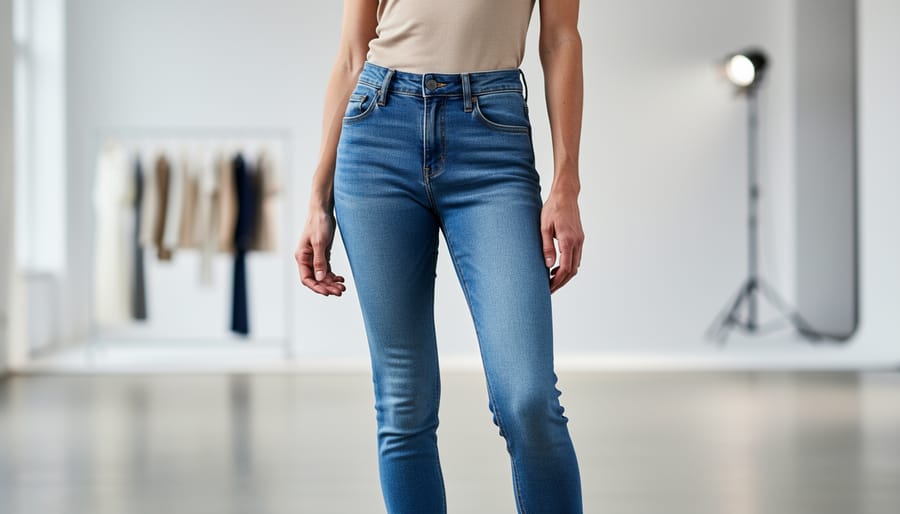
When people talk about the skinny jeans fashion trend 2026, they don’t mean a carbon copy of the 2010s. Vogue’s reporting describes a new generation of slim and straight silhouettes that still hug the leg but feel less constricting. Think of it as denim narrowing again, with more room to move.
Here’s where the evidence stands. Vogue says the skinny jean has come back for spring and into spring 2026, buoyed in part by Michael Rider’s debut at Celine, and that the narrowing of denim has shown up on the runways at Dior, Khaite, Jil Sander, and Acne Studios. That’s a documented runway-and-press signal. What it doesn’t prove is a shopper-led shift. Circana reported that U.S. women’s jeans sales fell 3% through September versus the prior year, with $8 of every $10 lost coming from skinny jeans. So the revival is still an emerging signal, not a confirmed change in what people are buying.
A few terms will help you read the coverage:
- Skinny
- A close-fitting cut that follows the leg from thigh to ankle.
- Slim-leg
- A narrow leg that skims the body rather than gripping it.
- Straight-leg
- A leg that stays roughly the same width from knee to hem.
- Barrel
- A rounded, curved leg that is wider through the middle and tapers toward the ankle.
- Low-rise
- A waistband that sits below the navel, closer to the hips.
- High-rise
- A waistband that sits at or above the navel.
Keep these definitions in mind as we look at the evidence more closely.
The Evidence Behind the Revival: What We Can Verify
Runway Signals vs. Real-World Sales
Runways set the mood, but checkouts tell the real story. Vogue reports that skinny jeans are back for spring and into spring 2026, and denim has narrowed on the runways at Dior, Khaite, Jil Sander, and Acne Studios. Yet the Circana denim sales data shows U.S. women’s jeans sales down 3% through September versus the prior year, with $8 of every $10 lost coming from skinny jeans.
Those two facts point in different directions, and neither proves the other. A runway comeback doesn’t guarantee a retail rebound, and falling sales don’t rule one out. So read trend headlines with healthy skepticism. Ask what is actually being measured: what designers showed, what people searched for, or what shoppers bought. Only the last one reflects real demand.
How Today’s Slim Denim Differs from the Skinny Jeans You Remember
The jeans you remember from the 2010s were built to grip. Today’s version, according to Vogue, is a new generation of slim and straight silhouettes that still hug the leg but feel less constricting. The goal has shifted from squeezing into a shape to wearing a shape that skims the body and moves with you.
In practice, that changes how often you’ll reach for a pair. Denim that doesn’t pinch at the knee or dig in at the waist is easier to wear through a full day, and a slimmer-but-roomier line pairs more naturally with different tops and shoes. Comfort tends to drive wear frequency, and wear frequency is the quiet measure of whether a pair was worth buying.
Because “slim” means different things from one label to the next, it helps to check the fit itself rather than the name on the tag. Here’s what to look at in a fitting room or on a product page:
- Leg opening: a narrower hem reads closer to classic skinny, while a slightly wider one reads slim or straight.
- Rise: low, mid, and high rise change where the jean sits and how the whole leg line falls.
- Stretch content: more stretch means more give, while rigid denim holds its shape but eases up less.
- Thigh and knee: look for a cut that skims these areas without pulling, tightening, or restricting movement.
A quick sit-and-squat test in the fitting room tells you more than any label. If the jean stays comfortable in motion, it’s far more likely to earn a permanent place in your rotation.
Types of Slim Denim Showing Up Now, and What They Cost
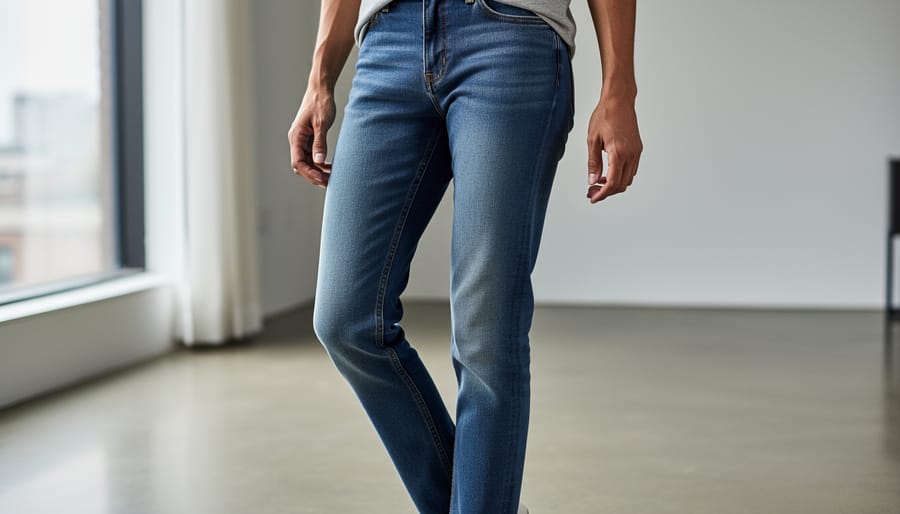
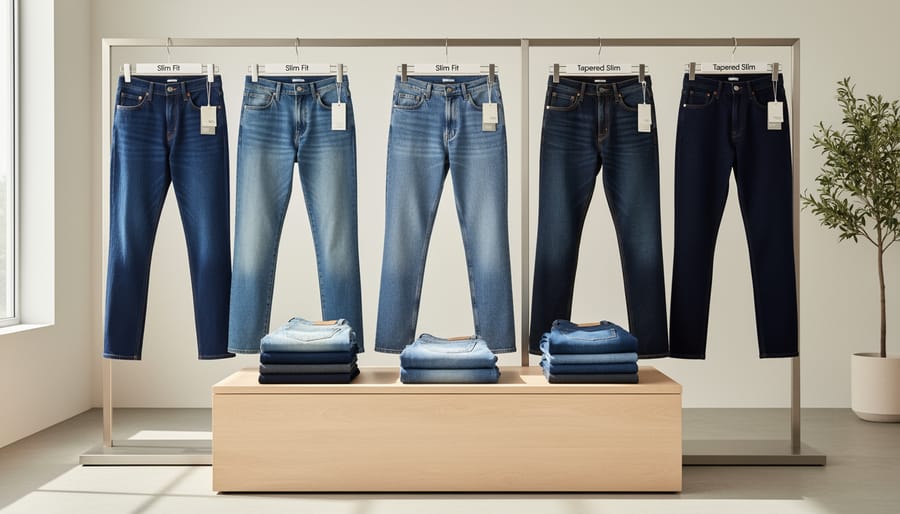
Slim denim in 2026 isn’t one silhouette. It’s a handful of related fits, and Vogue’s price examples show how wide the range runs.
Low-rise skinny. This is the closest relative of the denim you remember: fitted through the hip and thigh, sitting lower at the waist. Vogue lists Levi’s Superlow skinny jeans at $80, which shows the style at an accessible price point.
Low-rise slim-leg. The cut still follows the leg but loosens slightly through the thigh and ankle, so it feels less constricting. Vogue lists Agolde low-rise slim-leg jeans at $250.
High-rise slim-fit. A higher waist paired with a streamlined leg gives a more tailored, polished line. Vogue lists Toteme Garderob high-rise slim-fit jeans at $420.
Together, those three listings span $80 to $420. That spread tells you the trend is landing across very different budgets, not that any tier is better made or better for the planet.
Here’s the part worth pausing on: price is not proof of sustainability. A $420 tag doesn’t mean cleaner dyeing, safer working conditions, or longer-lasting fabric, and an $80 pair isn’t automatically the worse choice. A higher price can just as easily reflect branding, retail markup, or design positioning. The listings above tell us what these jeans cost, not how they were made.
So when you’re comparing options, look past the number on the tag. Ask what the fiber content is, how the denim was dyed and finished, and whether the brand shares specifics about where and how the jeans were produced. The most sustainable pair is often the one you’ll genuinely wear for years, whatever the fit is called.
Is Buying Into the Trend Sustainable? A Conscious Shopper’s Lens
Denim is one of the most resource-intensive things in your closet, and the reasons are easy to picture. Cotton is a thirsty crop. Turning it into jeans takes dyeing, washing, and finishing steps like sanding, bleaching, and stonewashing that use more water, energy, and chemicals. Those effects land long before a pair ever reaches a hanger, which is why one purchase can carry more weight than it appears to.
That’s the catch with a revival like this one. Vogue reports the skinny jean is back for spring and into spring 2026, with denim narrowing on runways at Dior, Khaite, Jil Sander, and Acne Studios. But the same trend that makes a closet feel dated can quietly push us toward buying more than we need. Circana’s data showed U.S. women’s jeans sales fell 3% through September, with most of that loss coming from skinny jeans. A runway signal isn’t a reason to replace pairs that still fit.
Then there’s the marketing. Words like “eco,” “conscious,” or “green” on a denim label mean little without detail. A trustworthy claim gets specific:
– Fiber: What is it made of, and is any of it recycled or organic, with proof?
– Dyeing and finishing: How were the color and wash achieved, and how is wastewater handled?
– Production: Where were the jeans made, and what’s said about the factory?
If a brand can’t answer those plainly, treat the claim with caution. This is exactly why we built our approach around transparent, specific criteria. Our guide to why sustainability ratings so often fall short explains what to look for instead. And if you want the bigger picture of buying less and choosing better, slow fashion is a good place to start.
Used this way, the trend becomes a prompt to ask better questions rather than a reason to shop more.
How to Style and Shop Slim Denim Without Overbuying
Start with what’s already hanging in your closet. Slim denim pairs easily with oversized knits, structured blazers, and loose shirts you own, because the leg-skimming shape gives you balance against a looser top. Try a few outfits at home before you spend a dollar. If three combinations work without buying anything new, you may not need new jeans at all.
To test a fit, wear it the way you live. Sit, squat, climb a few stairs, and reach overhead in the fitting room. Vogue describes the current slim and straight silhouettes as hugging the leg while feeling less constricting, so a pair that pinches at the waist or restricts your stride isn’t delivering the point of the shape. Check the rise for comfort across a full day, not just a quick glance in the mirror.
Before you buy, run through a quick checklist:
- Will I wear this at least 30 times?
- Does it work with what I already own?
- Can the brand explain how it was made?
- Could I find a similar pair secondhand?
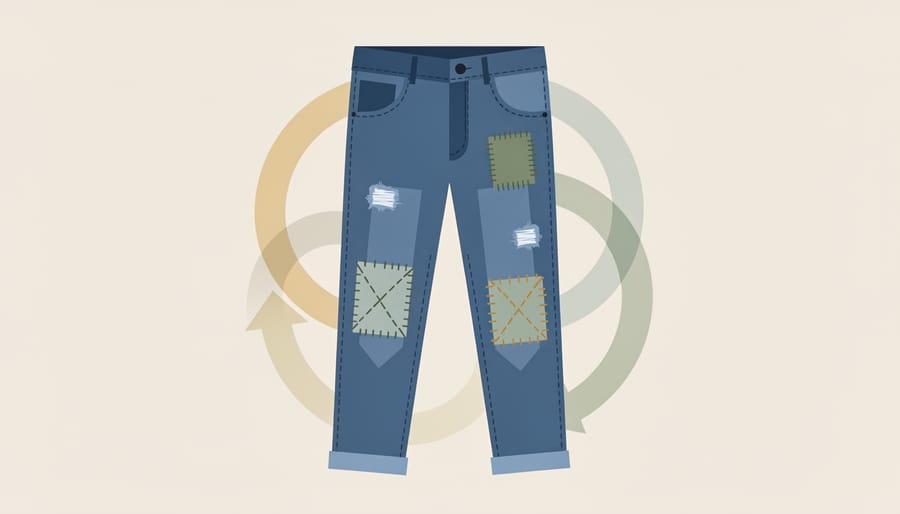
That last question matters more than it seems. Thrift shops, resale platforms, and vintage racks are full of slim and straight denim, and buying there keeps existing garments in use, a small but real step toward a circular economy. If you already own a pair that almost works, a tailor can often taper a leg or adjust the waist for far less than a new pair would cost. Fixing a fit is usually the most sustainable purchase of all.
Skinny Jeans in 2026: Your Questions Answered
Is skinny jeans back in 2026?
Vogue reports that the skinny jean has returned for spring and into spring 2026, helped in part by Michael Rider’s debut at Celine. That is a runway-led signal, though, and Circana reported that U.S. women’s jeans sales fell 3% through September versus the prior year, with $8 of every $10 lost coming from skinny jeans.
What runway shows brought skinny jeans back?
Vogue points to Michael Rider’s debut at Celine, and says denim has narrowed on the runways at Jonathan Anderson’s Dior, Khaite, Jil Sander, and Acne Studios for spring 2026 and even pre-fall 2026.
How do you style skinny jeans in 2026?
Vogue describes the new slim and straight silhouettes as hugging the leg but feeling less constricting, so a fit you can actually move in is the best starting point. Beyond that, we can’t verify specific 2026 styling formulas, so test the fit with pieces you already own.
Which jeans trends are taking off in New York right now?
We can’t verify city-specific trends, so we won’t guess. The signals we can point to are the narrowing of denim on the runways and Shopify merchants’ increased barrel jean sales in 2024, which came with a 500% rise in Google searches.
Whichever trend you follow, how you care for your denim matters as much as what you buy. Washing less often and choosing gentler methods is a simple place to start, and our guide to sustainable laundry explains what your routine really costs.
The skinny jeans fashion trend 2026 is worth watching, but it’s a signal from the runway, not an instruction to clear out your closet. Vogue points to slimmer, less constricting cuts at houses like Dior, Khaite, Jil Sander, and Acne Studios, yet the sales picture is more complicated: Circana found that skinny jeans accounted for most of the recent dip in U.S. women’s jeans sales. Buzz and buying habits don’t always move together.
So let the trend be a prompt for curiosity rather than a reason to restock. The most conscious pair of jeans is usually the one you already own, or one you’ll wear for years because the fit genuinely works for your life. If something new does earn a place in your wardrobe, choose it for how it fits and how long it will last, not for how loudly it’s being talked about.
And when a brand promises its denim is “eco” or “responsible,” don’t take the label at face value. Check it against Fashion Upended’s ratings, and let evidence, not hype, guide what you buy.



Average Rating