
 0
0
 0
0
Searching for “a ja fashion” almost certainly means you’re looking for information about Kaja Fashion, a query variation that reveals multiple fashion entities sharing the name but little verifiable sustainability information. Based on current evidence from 2026, at least two distinct brands operate under Kaja-related names: KAJA Clothing, which sells women’s apparel through retailers like Nordstrom and recently announced its 2026 collection, and Kaja Fashions, a Vaughan, Ontario-based retailer specializing in Semi Kanchipuram Silk Sarees. Despite their presence in the market, neither brand has publicly documented certifications, transparent supply chain practices, or third-party verified sustainability claims that would meet rigorous ethical fashion standards.
This lack of transparency doesn’t necessarily mean these brands are harmful, but it does mean eco-conscious shoppers can’t make informed decisions without investigation. Rather than promoting unvetted labels, this article equips you with the tools to evaluate any fashion brand yourself. You’ll learn which certifications actually matter, what questions to ask retailers directly, and how to spot greenwashing tactics that mask unsustainable practices. The goal isn’t to dismiss Kaja brands outright but to demonstrate that responsible fashion purchasing requires evidence, not marketing claims. Whether you found these brands through a search variation or intentional research, the transparency framework outlined here applies to every label in your closet.
Understanding the Search: ‘A Ja Fashion’ vs. ‘Kaja Fashion’
If you searched for “a ja fashion” and landed here, you’re in the right place. That search query is almost certainly a spacing variation of “Kaja Fashion,” and you’re likely looking for information about fashion brands under that name. This happens more often than you’d think, a quick typo or autocorrect quirk can add unexpected spaces to brand searches.
We’ve investigated what’s actually behind the Kaja Fashion name, and what follows is a transparent look at what these brands are, what they offer, and crucially, what we don’t know about their sustainability practices. If you’re an eco-conscious shopper hoping to make an informed decision, keep reading.
Who Is Kaja Fashion? Identifying the Brands

KAJA Clothing: Women’s Fashion with 2026 Launches
KAJA Clothing operates as a women’s fashion brand with an active 2026 presence. The brand recently announced “New Arrival 2026 is coming!” suggesting fresh collections launching this year, though specific product details or release dates aren’t publicly available yet.
You’ll find KAJA Clothing products through Nordstrom, which carries their women’s clothing, shoes, and accessories. This retail partnership indicates a certain level of market presence, though it doesn’t tell us much about the brand’s manufacturing practices or material sourcing.
The brand currently offers a promotional discount code, Welcome_KAJA2026, providing 20% off orders over $60. This one-time-use offer appears designed to attract new customers to their 2026 launches, though the limited availability and minimum purchase requirement are worth noting.
What’s notably absent from KAJA Clothing’s public presence is any meaningful information about how or where their products are made, what materials they use, or whether they hold any third-party sustainability certifications. For conscious consumers, this information gap makes evaluation difficult.
Kaja Fashions: Semi Kanchipuram Silk Sarees from Canada
Kaja Fashions operates from Vaughan, Ontario, specializing in Semi Kanchipuram Silk Sarees. The Canadian retailer recently promoted its newest collection of these traditional sarees, which blend silk with other materials to create a lighter, more affordable alternative to pure Kanchipuram silk while maintaining the characteristic weave patterns and rich colors.
You’ll find the store at 9222 Keele St Unit 9, Vaughan, ON L4K 5A3, and can reach them at 647-262-3350. Unlike KAJA Clothing’s broader women’s fashion focus, Kaja Fashions serves a specific niche: customers seeking traditional South Asian formal wear, particularly sarees for weddings, festivals, and special occasions.
The Semi Kanchipuram designation indicates a fabric blend rather than pure silk, which typically makes these sarees more accessible price-wise. However, we found no public information about the sourcing of their silk, manufacturing locations, labor conditions in their supply chain, or environmental practices related to silk production and dyeing processes.
What We Don’t Know: The Sustainability Information Gap
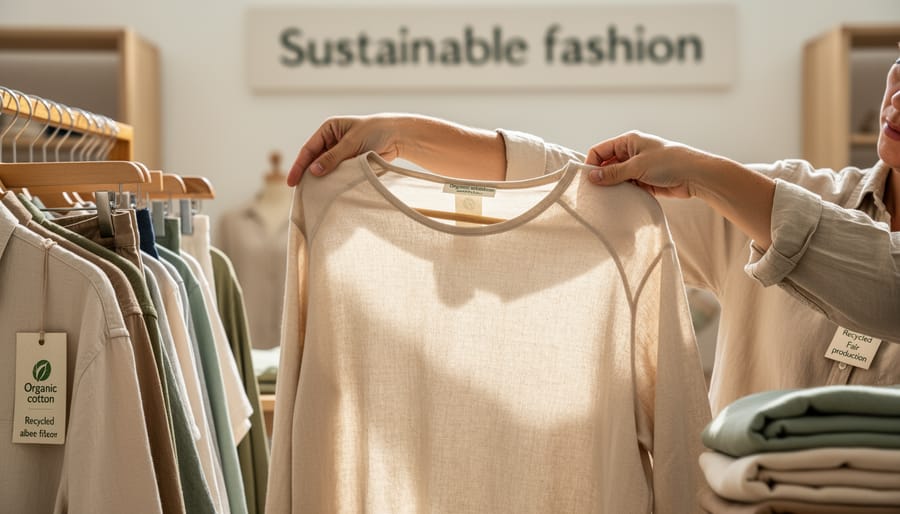
When we searched for information about Kaja Fashion brands, we hit a transparency wall that conscious consumers should recognize immediately. Neither KAJA Clothing nor Kaja Fashions provides publicly accessible details about their sustainability practices, material sourcing, or manufacturing standards. This isn’t a minor omission. It’s a fundamental gap that makes it impossible to evaluate these brands against the criteria that matter to eco-conscious shoppers.
We couldn’t verify where their materials come from, whether they use organic or recycled fibers, or how they process textiles. There’s no information about water usage, chemical treatments, or dyeing processes. For KAJA Clothing’s women’s collection and their 2026 new arrivals, we found product descriptions but zero material transparency. Kaja Fashions’ Semi Kanchipuram Silk Sarees lack details about silk sourcing or production methods.
Labor practices remain equally opaque. We don’t know where these garments are manufactured, what factory conditions look like, or whether workers receive fair wages. There are no certifications from recognized third-party organizations like Fair Trade, GOTS, or B Corp. No sustainability reports. No carbon footprint disclosures. No evidence of circular economy initiatives or take-back programs.
This absence matters because what is slow fashion centers on transparency and accountability. Brands genuinely committed to sustainability typically share this information readily because they’re proud of their practices. When details are missing, we can’t distinguish between a brand that’s working quietly toward better practices and one that simply hasn’t prioritized sustainability.
We’re not saying Kaja Fashion brands are necessarily unsustainable. We’re saying we don’t have the evidence to confirm they are sustainable, which is precisely the honesty eco-conscious consumers deserve before making purchasing decisions.
How to Investigate Fashion Brands Yourself

Key Questions to Ask Any Fashion Brand
When evaluating whether a fashion brand deserves your support, asking pointed questions cuts through marketing fluff. Start with materials: “What fabrics do you use, and where do they come from?” Genuine transparency means specifics, organic cotton certified by GOTS, recycled polyester with GRS verification, not vague “eco-friendly materials.” Ask about manufacturing: “Where are your clothes made, and what are the working conditions?” Brands committed to fair labor will name factories and share audit reports, not hide behind “ethically sourced.”
Push further on environmental impact: “How do you minimize water usage, chemical pollution, and textile waste?” Look for concrete practices like closed-loop dyeing systems or participation in a circular economy through take-back programs. Finally, ask the accountability question: “What third-party certifications verify your claims?” Certified B Corporations, Fair Trade labels, and Bluesign approval carry weight because independent auditors enforce standards. If a brand deflects these questions with generalities or silence, that’s your answer, move on to companies willing to prove their commitments.
Recognizing Genuine vs. Greenwashed Claims
Vague promises fall apart under scrutiny. When a brand claims to be “eco-friendly” or “sustainable” without details, that’s a red flag. Genuine transparency means specific information: which materials come from where, who made them under what conditions, and what measurable environmental targets the brand has set. If you can’t find a published supplier list or verified factory locations (tools like the Open Apparel Registry help track this), the brand isn’t truly transparent.
Watch the language. “Conscious,” “green,” and “better for the planet” mean nothing without proof. Real commitments name third-party certifications: GOTS for organic cotton, Fair Trade for labor standards, B Corp for verified social and environmental performance. They publish annual impact reports with hard numbers, water saved, carbon reduced, waste diverted. They acknowledge their weaknesses alongside their progress.
Greenwashing thrives on beautiful imagery and feel-good storytelling that distracts from empty substance. A recycled-polyester capsule collection doesn’t offset a brand churning out hundreds of new styles monthly. One “sustainable” line while the core business remains opaque is a marketing tactic, not a transformation.
Authentic brands make verification easy. Their websites link directly to certifications, share factory audit results, and provide material breakdowns for specific products. They answer tough questions about their entire supply chain, not just the flattering bits. If a brand’s sustainability page reads like an aspirational mission statement rather than a factual disclosure, keep your wallet closed.
What Conscious Consumers Should Look for Instead
When evaluating any fashion brand, focus on concrete evidence rather than marketing language. Genuine sustainable fashion demonstrates transparency through third-party verification, detailed supply chain disclosure, and measurable environmental commitments.
Start with certifications that actually mean something. Labels matter, but only when backed by rigorous standards:
- GOTS (Global Organic Textile Standard)
- Verifies organic fiber content and tracks the entire supply chain from harvesting through manufacturing, including wastewater treatment and fair labor practices.
- Fair Trade Certified
- Ensures farmers and workers receive fair wages, work in safe conditions, and benefit from community development funds.
- OEKO-TEX Standard 100
- Tests finished textiles for harmful substances, confirming the final product is safe for human contact and meets strict chemical limits.
- B Corp Certification
- Assesses a company’s entire social and environmental performance, accountability, and transparency across all business operations.
- Cradle to Cradle Certified
- Evaluates material health, recyclability, renewable energy use, water stewardship, and social fairness throughout a product’s lifecycle.
Beyond certifications, look for brands that publish annual sustainability reports with specific metrics, not vague commitments. They should disclose factory locations, share their carbon footprint data, and explain their approach to circularity. Check our recycled clothing guide to understand what responsible material sourcing actually involves.
Real transparency means a brand can tell you who made your garment, where the fabric originated, and what happens to items at end-of-life. They’ll acknowledge challenges openly rather than claiming perfection. When a company shares its goals alongside current shortfalls, you’re seeing honest communication rather than greenwashing.
Finally, prioritize brands with repair programs, take-back schemes, or rental options. These practices demonstrate a commitment to reducing consumption, not just producing “eco-friendly” items you’ll still discard after a season.
So where does this leave you if you searched for “a ja fashion” and landed here? Whether you typed “a ja fashion” with that spacing or were looking for Kaja Fashion all along, the honest answer is simple: as of 2026, we can’t verify the sustainability credentials of KAJA Clothing or Kaja Fashions. These brands exist, they sell products, and you can find them through retailers like Nordstrom or directly in Vaughan, Ontario. But the transparency markers that define genuinely sustainable fashion, certified materials, verified labor practices, documented environmental commitments, aren’t publicly available for either entity.
That doesn’t mean you should give up on conscious fashion. It means you have power. Every time you ask a brand about their supply chain, demand proof of their sustainability claims, or choose transparency over marketing spin, you’re pushing the industry forward. The movement toward genuine sustainable fashion is real and growing, fueled by consumers who refuse to settle for vague promises.
At Fashion Upended, we’ll keep doing what we do: honest evaluations, no promotional fluff, and the tools you need to investigate any brand yourself. The fashion industry changes when we collectively decide that transparency isn’t optional, it’s the baseline. You’re part of that shift, and that’s genuinely hopeful.




Average Rating