
 0
 0
An unsustainable business model in fashion is one that only works by pushing its true costs onto someone else: the workers who make the clothes, the ecosystems that supply and absorb the materials, or the customers who are nudged to buy far more than they’ll ever wear. The numbers can look healthy on a balance sheet while the damage piles up elsewhere.
The mechanics tend to repeat. Pile on volume, cut the price, shorten the cycle between design and shelf, and keep the pressure on suppliers to deliver faster for less. Growth depends on constant newness, so the model needs you to treat clothes as disposable. When the system stops producing waste, low wages, or overconsumption, the profit disappears.
Spotting it takes practice, because the language around it has gotten very polished. Vague green claims, endless drops, and prices that can’t account for fair labor are all signals worth learning to read.
This guide defines the term plainly, explains how these models operate, breaks down the common forms they take, and shows you how to recognize them in real life. It also looks at what healthier alternatives are built on, because understanding what’s broken is only useful if you can see what better looks like.
What an Unsustainable Business Model Means in Fashion
An unsustainable business model is a way of making and selling clothes that only works financially because it draws down something it isn’t replacing. That might be natural resources, workers’ wellbeing, or the trust of customers who eventually figure out they were oversold. It’s different from a business that’s simply unprofitable. An unprofitable company loses its own money. An unsustainable one can post strong sales and healthy growth while the real bill gets quietly sent to someone else.
Two terms help here:
- Business model
- The full system a company uses to make money: what it sells, how it produces it, how it prices it, and how it persuades people to keep buying.
- Externality
- A cost created by a company’s activity that someone else ends up paying, such as river pollution, textile waste in landfills, or workers’ health problems.
- Overproduction
- Making more garments than customers will buy at full price, leaving surplus stock to be discounted, stored, or destroyed.
- Planned obsolescence
- Designing products, or the trends around them, so they wear out or feel outdated quickly and need replacing.
- Greenwashing
- Making environmental claims that sound impressive but aren’t backed by evidence or reflected in how the business actually runs.
Think of externalities as “borrowing.” A brand borrows clean water, stable emissions, fair labor, and its own future customers’ goodwill, then never pays any of it back. Because those costs don’t show up on its books, the numbers can look fantastic. Low prices, fast growth, and packed stores can all coexist with a model that’s consuming more than it can ever replenish. Success on the surface, in other words, tells you very little about whether the model can last.
This is why sustainable business strategies in fashion start with the whole model, not the product tag. A recycled-fiber hoodie sold through a system built on speed, volume, and disposability is still part of an unsustainable system. Sustainability is a design choice made at the level of how a company earns its money, who bears the costs, and whether the arrangement could keep going for decades. Once you hold that definition, it’s much easier to see which brands are rethinking the foundation and which are only repainting the walls.
How an Unsustainable Fashion Model Keeps Running
Think of an unsustainable fashion model as a machine with a few moving parts that all have to keep spinning at once. It starts with production. Garments are made cheaply and in huge batches, often in places where labor and environmental rules are weakest. Big volumes push the cost of each piece down, which is where the thin margins come from.
Next comes speed. Trend cycles get compressed so there’s always something new to want. A brand that drops fresh styles every week gives shoppers a reason to come back every week. That constant newness is the engine of repeat purchasing, and marketing keeps it humming with flash sales, countdown timers, and endless social media nudges.
Then there’s the price tag. It rarely reflects what a garment truly costs to make. The water drained from rivers, the dyes released into waterways, the emissions from long shipping routes, and the pay that falls short of a living wage don’t show up at checkout. Someone still pays them, though. Communities, workers, and ecosystems absorb those costs, which economists call externalities. The brand gets to look affordable because the bill has been sent elsewhere.
Here’s why the whole thing is fragile. When each sale earns only a sliver of profit, the business has to sell more, faster, to stay afloat. Growth stops being a goal and becomes a requirement. Slow the pace, and the math breaks.
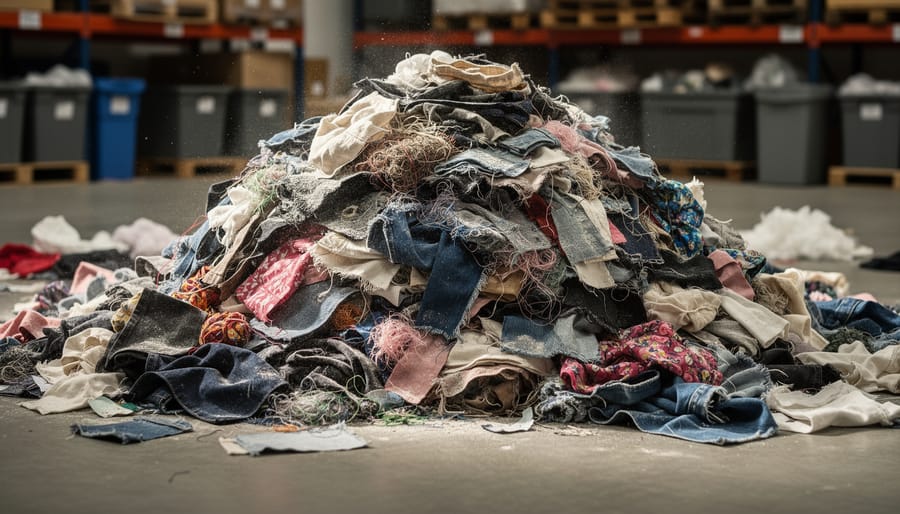
So what happens when volume and speed can’t keep climbing? Unsold stock piles up, and brands respond with deeper discounts, which squeezes margins even further. Suppliers get pressed to cut prices again, and that pressure usually lands hardest on the people at the bottom of the chain. Leftover clothing gets stored, sold off at a loss, or sent to landfill. Some businesses push harder on overproduction to chase growth, which only deepens the problem.
The Ellen MacArthur Foundation has estimated that the equivalent of one garbage truck of textiles is landfilled or burned every second. That number is a useful snapshot of what an oversupplied system looks like when the music slows down.
None of this means every brand with low prices or fast turnaround is doomed, and we’ll get to that nuance shortly. But the pattern is worth learning to see. Once you notice how the pieces depend on one another, the model stops looking mysterious and starts looking like what it is: a bet that growth never has to end.
Common Types of Unsustainable Business Models in Fashion
Fast Fashion and Overproduction
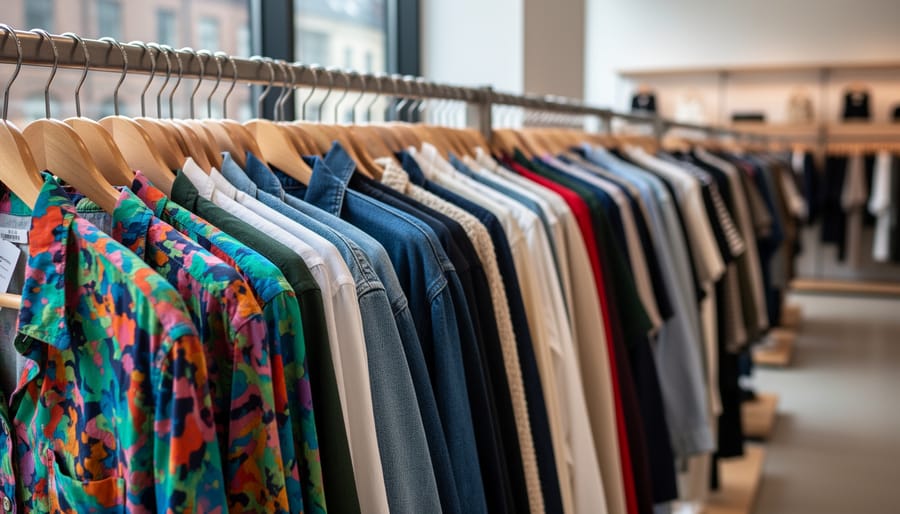
Fast fashion runs on speed. Instead of a few seasonal collections, a brand releases new styles every week or two, keeping the shop floor and the app feeling fresh so shoppers come back often. To pull that off, designs move from sketch to rack in a matter of weeks, and trend predictions are baked in before anyone knows what will actually sell.
That guesswork is where overproduction creeps in. Brands tend to make more than they expect to sell, because a missed trend costs more than a surplus. Cheap production makes extra units easy to justify.
The leftovers have to go somewhere. Unsold stock gets marked down, shipped to outlet channels, stored, or discarded. Garments blended from mixed fibres are hard to recycle, so many end up in landfill or incineration. The model works only while volume keeps flowing, and the waste is the price someone else pays.
Greenwashed Models
A greenwashed model keeps the core business exactly as it was and adds a sustainability story on top. The classic version is a small “conscious” capsule collection sitting beside thousands of conventional styles produced the same way, at the same speed and volume. The marketing spotlights the capsule, while the rest of the business, where nearly all the environmental impact lives, stays untouched.
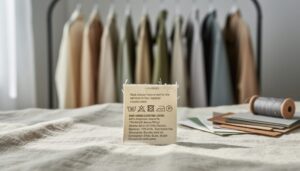
The language is the giveaway. Terms like “eco-friendly,” “green,” “planet-friendly,” or “natural” sound reassuring, but they mean almost nothing without specifics. Eco-friendly compared to what? Measured how? A tag that says a garment is sustainable but never names the material, the percentage, the factory, or the certifying body is asking for your trust without earning it.
Here’s the useful test: a real claim can be checked. It names a fabric, gives a number, points to a third-party standard, and admits what it doesn’t cover. A vague claim does the opposite, offering a feeling instead of evidence. When a brand’s sustainability message is louder than its disclosures, treat that gap as a warning sign worth noticing.
Labor-Dependent Cost Cutting
Some fashion brands keep prices low by quietly passing the bill to the people who sew the clothes. This is labor-dependent cost cutting, and it shows up in three main ways: low pay, unsafe conditions, and opaque subcontracting.
Low pay is the most direct. When a brand pressures suppliers to meet a price that leaves no room for fair wages, the shortfall lands on workers, often in the form of pay that falls below what a family needs to live on, or unpaid overtime to hit a deadline.
Unsafe conditions follow the same logic. Fire exits, ventilation, and building maintenance cost money. A supplier squeezed on margin may skip them, which is how the cost of a cheap garment becomes a risk someone else carries.
Opaque subcontracting hides all of it. Orders get passed down to smaller workshops or home-based workers the brand never audits and may not even know about. Responsibility blurs, and so does accountability.
The pattern matters because the low price tag isn’t the whole price. It only holds as long as workers keep absorbing what the brand won’t.
How to Spot an Unsustainable Model as a Shopper
You don’t need inside access to a company to read its business model. You need a method, and a healthy dose of curiosity. Start by asking one question: how does this brand make money, and who or what is paying the hidden costs? If the answer depends on ever-faster volume, you’ve likely found the pattern we covered earlier.
If you want a fuller walkthrough, our guide on how to spot ethical brands goes deeper. For now, here are the red flags worth checking first:
- Constant new drops that push you to buy before the last collection has even gone out of style.
- No disclosure of factories, suppliers, or where garments are actually made.
- Vague claims like “eco-friendly” or “conscious” with no numbers or evidence behind them.
- Prices so low they can’t plausibly cover fair wages and decent materials.
- No repair, resale, or take-back options once the garment leaves the shop.
One red flag isn’t a verdict. Plenty of imperfect brands are working in good faith, and plenty of polished ones are not. What matters is the pattern. Several flags together suggest a model that leans on externalities, while a brand that openly shares its trade-offs deserves a closer, more generous look.
Next, check the quality of the proof. Specific, measurable claims beat slogans every time. “Made with 60% recycled cotton, verified by a named third party” tells you something. “Planet-friendly fabrics” tells you nothing. Look for independent certifications, published supplier lists, and sustainability reports that admit what hasn’t been solved yet. Be wary of any rating system taken at face value, too. It’s worth reading about what works before trusting a score.
Finally, ask the brand directly. A genuine sustainability effort welcomes questions, and a quick, specific reply is a good sign. Silence or a vague, copy-pasted answer tells you just as much.
From Unsustainable to Sustainable: What Genuine Change Looks Like
Genuine change doesn’t start with a new fabric or a green-tinted campaign. It starts with the model itself. A brand that moves from unsustainable to sustainable changes how it decides what to make, how much to make, and who carries the cost.
The most visible shift is in production. Instead of guessing demand and hoping for the best, brands make smaller runs or produce to order, which cuts the unsold stock that otherwise ends up discounted, dumped, or burned. It pairs naturally with slow fashion where fewer collections, timeless design, and sturdier construction replace the constant churn of trends.
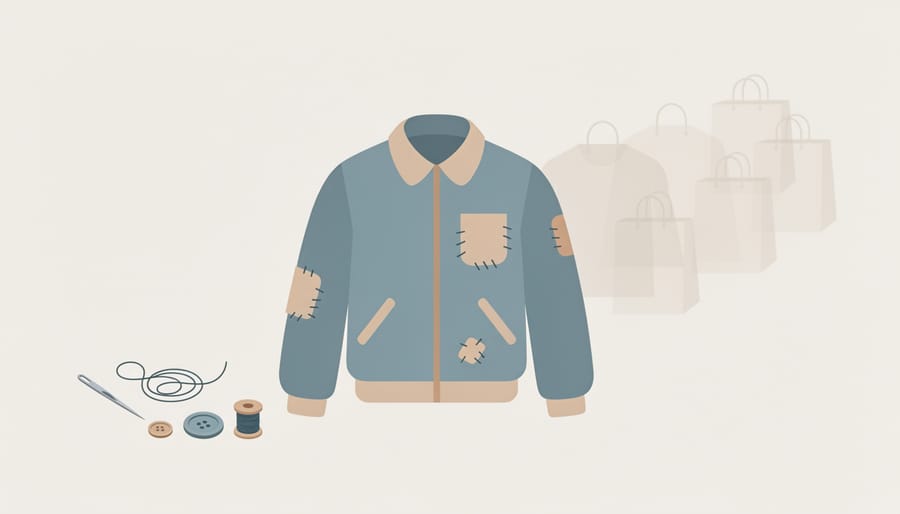
Durability only matters if it’s backed by action after the sale. Repair services, take-back programs, and resale channels keep garments in use longer, and this is where a brand starts to resemble a circular economy rather than a straight line from factory to landfill. Materials and products are designed to be kept, fixed, passed on, or recycled.
Then there’s the human side. A sustainable model prices clothes to cover fair wages and safe conditions, and it maps its supply chain well enough to know who actually makes each item. That means moving beyond a single audited factory toward visibility into subcontractors, mills, and raw material sources.
Here’s the part worth holding onto: this is a spectrum, not a switch. Few brands do everything well, and none are perfect. A company might excel at fair pay but still struggle with material impacts, or lead on repair while its sourcing remains a work in progress. That’s normal. What separates credible effort from marketing is how the brand talks about it.
Look for measurable targets, progress reports, and plain admissions of trade-offs and shortfalls. A company that says “here’s what we’ve improved, here’s where we’re still falling short, and here’s our timeline” is far more trustworthy than one claiming flawless virtue. If a brand wants to prove sustainability it does so with disclosed data and independent verification, not slogans. Honest communication, including about the messy parts, is itself a sign the change is real.
Common Questions About Unsustainable Fashion Business Models
Is a cheap brand always unsustainable?
Not automatically. Low prices can come from simple designs, efficient operations, or secondhand sourcing. The warning sign is a price that can’t cover fair wages, decent materials, and responsible production, which means someone else is paying the difference.
Can a big brand have a sustainable model?
It’s possible, but scale makes it harder. A large company has to rethink volume, speed, and sourcing across the whole business, not just launch a better product line. Look for disclosed, measurable changes rather than announcements.
Is a recycled-materials line enough?
Rarely on its own. Recycled fibers can reduce some impacts, but if the brand still overproduces and pushes constant new drops, the underlying model hasn’t changed.
How is greenwashing different from an unsustainable model?
Greenwashing is a communication problem: claims that overstate or mislead. An unsustainable model is a structural problem: the business only works by pushing costs onto others. The two often show up together, but a brand can have one without the other.
Buying less usually matters more than buying “green,” because the most impactful garment is often the one you already own. That said, the two aren’t in conflict. When you do need something new, choosing durable pieces from brands that back their claims with evidence lets you reduce your footprint without giving up on style.
An unsustainable business model comes down to one thing: it only works because someone else pays its real costs. The planet absorbs the pollution, workers absorb the low wages, and shoppers absorb the waste and the disappointment of clothes that don’t last. Once you can see that pattern, it’s hard to unsee, and that’s a good thing.
Knowing what fails gives you a sharper eye for what works. Sustainable business strategies in fashion don’t rely on a single green collection or a clever slogan. They rebuild how clothes are made, priced, sold, and cared for, and they show their work.
So keep asking questions. Look for specific, verified claims rather than vague promises, and notice which brands are open about their trade-offs. No company is perfect, but the ones doing the real work are usually happy to explain it. Every purchase is a small vote for the kind of industry you want.



Average Rating