
 0
0
 0
0
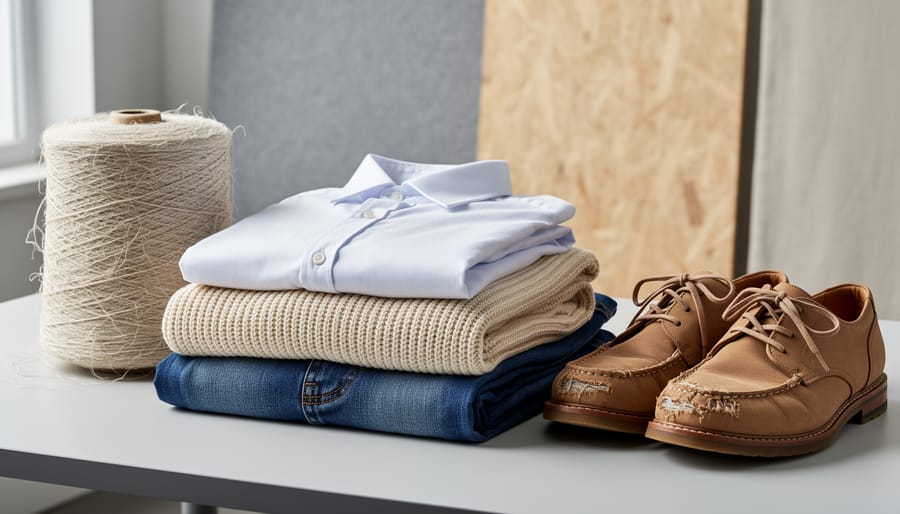
A circular economy in fashion is a system designed to eliminate waste and keep clothing, textiles, and materials in use for as long as possible through reuse, repair, rental, resale, and recycling. Unlike the traditional linear model where garments are made, worn briefly, and discarded, circular fashion creates closed loops where every product is designed from the start to have multiple lives and eventually return as raw material for new items.
This matters because the fashion industry currently operates as one of the world’s most wasteful systems. The average person buys 60 percent more clothing than fifteen years ago but keeps each item half as long. An estimated 92 million tons of textile waste ends up in landfills annually, while producing new garments consumes vast quantities of water, energy, and virgin resources. The linear take-make-waste model simply can’t continue at this scale.
Circular fashion offers a fundamentally different approach. When a brand designs with circularity in mind, they consider what happens to a garment after you’re done wearing it. Can the materials be separated and recycled? Is the construction durable enough for multiple owners? Can the item be easily repaired or refreshed? These aren’t afterthoughts but core design principles.
The concept sounds promising, but how does it actually work in practice? What’s the difference between rental, resale, and recycling models? And given the fashion industry’s history of greenwashing, how can you tell which circular claims are genuine versus just clever marketing?
This guide breaks down the mechanics behind circular fashion systems, explains the various business models brands are using, shows real examples of circularity in action, and gives you the transparency tools to verify whether a brand’s circular commitments are legitimate. Understanding these fundamentals helps you make purchasing decisions that truly reduce your environmental impact.
What the Circular Economy in Fashion Means
The circular economy model in fashion fundamentally reimagines how we make and use clothing. Instead of the traditional linear path, extract raw materials, manufacture products, wear them briefly, then discard, circularity keeps garments and textiles in active use for as long as possible, then returns those materials to the system to create new products.
Three core principles define this approach. First, designing out waste means creating clothes built to last, avoiding toxic substances, and planning from the start how materials will be recovered. Second, keeping materials in use involves extending garment lifespans through repair, rental, resale, and eventually high-quality recycling that maintains material value. Third, regenerating natural systems shifts fashion away from depleting resources toward practices that restore ecosystems, think organic farming methods that rebuild soil health rather than degrade it.
- Circular Economy
- An economic system where products and materials continuously cycle back into production rather than becoming waste, maintaining their value through multiple lifecycles.
- Linear Economy
- The traditional “take-make-waste” model where raw materials are extracted, turned into products, used once or briefly, then thrown away, the opposite of circular thinking.
- Closed-Loop System
- A process where a product’s end-of-life materials become inputs for new products of similar quality, creating a continuous cycle with minimal waste or virgin material input.
- Regenerative Design
- An approach that goes beyond sustainability to actively restore and improve natural systems, such as using farming methods that enrich soil or dyes derived from waste streams.
This isn’t just theory. Patagonia’s Worn Wear program buys back used gear, repairs it, and resells it, keeping functional garments in circulation rather than manufacturing new ones. Reformation designs with mono-materials and simple construction so clothes can be efficiently recycled. Eileen Fisher collects old garments, sorts them by condition, then either resells wearable pieces or breaks down damaged items into fiber for new textiles.
The distinction matters because a truly circular system challenges fashion’s current growth-at-all-costs mindset. It values longevity over disposability, access over ownership, and material quality over cheap abundance. For conscious consumers, understanding these principles means you can identify brands genuinely redesigning their operations versus those slapping a green label on business as usual.
How the Circular Economy Works in Fashion
The Role of Design in Circularity
Circularity begins at the drawing board. A garment’s end-of-life fate, whether it loops back into production or ends up in a landfill, depends almost entirely on choices made during design.
Durability comes first. Brands committed to circularity reinforce stress points, use high-quality construction techniques like French seams or bar tacks, and select fibers that maintain integrity through repeated wear and washing. Patagonia’s Worn Wear program succeeds partly because their products are engineered to last decades, not seasons.
Mono-material design simplifies recycling dramatically. A cotton shirt without polyester thread or elastane trim can be mechanically recycled back into fiber; a blended garment typically cannot. Brands like Filippa K have introduced collections using single-fiber compositions specifically to enable textile-to-textile recycling.
Modularity allows components to be replaced rather than discarding entire garments. Nudie Jeans provides free repair kits and designs jeans with replaceable buttons and rivets. When one part fails, you fix it, the whole garment doesn’t become waste.
Disassembly features matter for complex items. Removable zippers, snap-on trims, and detachable linings let sorters separate materials at end-of-life. Stella McCartney has experimented with garments designed for complete disassembly, using no mixed-material seams or permanent bonding.
Without these design principles embedded from the start, even the best collection and recycling infrastructure can’t close the loop. Circular fashion demands that designers think beyond the first sale to the garment’s fifth, tenth, or final life.
Collection, Recovery, and Regeneration Systems
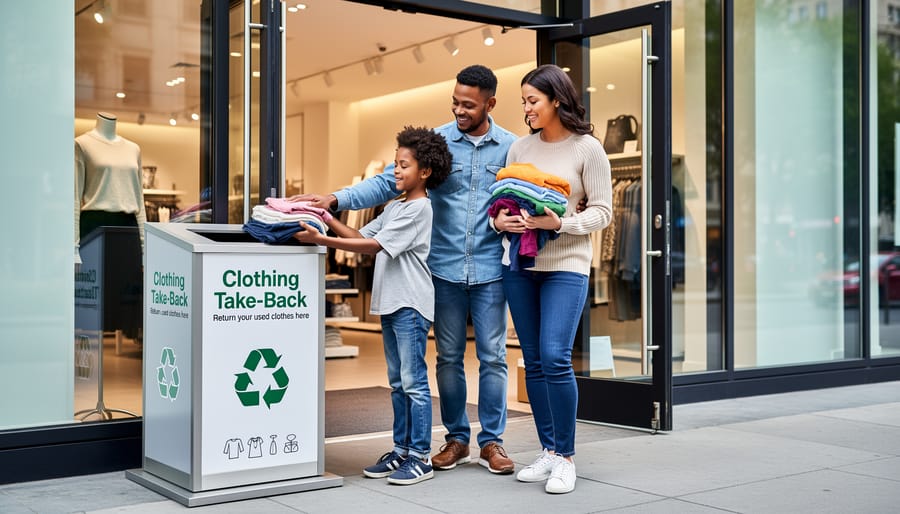
Once a garment reaches the end of its wearable life, getting it back into the production cycle requires coordinated infrastructure that most regions are still building. Take-back programs form the first critical step, brands install collection bins in stores or offer mail-in options where customers return unwanted clothing regardless of brand or condition. Patagonia’s Worn Wear program and H&M’s in-store collection are well-known examples, but what happens after drop-off matters more than the convenience of collection itself.
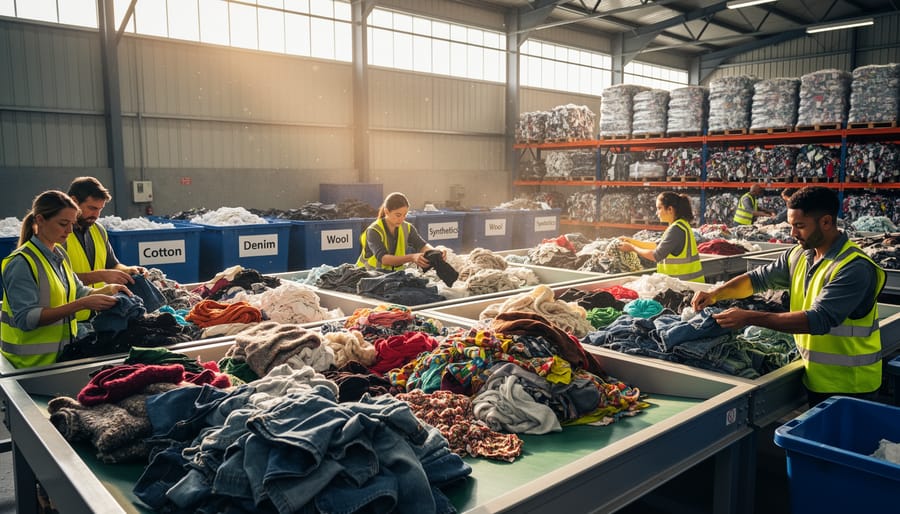
Sorting facilities use a combination of manual labor and emerging automated technology to separate textiles by fiber type, color, and condition. Advanced systems employ near-infrared spectroscopy to identify fiber composition at speed, though blended fabrics still confound most sorting tech. Garments suitable for resale get routed to secondhand markets, while damaged items move toward recycling streams.
Mechanical and chemical recycling represent two distinct pathways for transforming textiles into raw materials. Mechanical recycling shreds fabrics into fibers that can be spun into yarns, though this process shortens fiber length and often requires blending with virgin materials to maintain quality. Chemical recycling breaks down polymers at the molecular level, particularly effective for polyester and nylon, yielding material quality comparable to virgin inputs, but the process remains energy-intensive and expensive at scale.
The textile-to-textile loop still faces significant gaps. Most collected clothing currently becomes insulation, wiping rags, or low-grade applications rather than new garments. Innovations in enzymatic recycling and solvent-based depolymerization show promise for closing this loop economically, yet infrastructure investment and collection volume remain bottlenecks that prevent truly circular material flows in 2026.
Core Models and Approaches to Circular Fashion
Resale and Secondhand Markets
Resale and secondhand markets keep garments circulating longer, delaying, or even preventing, the need for new production. Peer-to-peer platforms like Depop and Poshmark connect individuals who no longer need an item with those actively seeking it, while brand-operated programs such as Patagonia’s Worn Wear and Eileen Fisher Renew let companies buy back, refurbish, and resell their own products. This model cuts demand for virgin materials and proves that a garment’s clothes story matters beyond its first owner, each successive wearer extracts more value from the same resources already invested. For luxury brands like Stella McCartney and The RealReal partnership, resale protects brand equity while acknowledging that circular revenue doesn’t always come from selling something new. The trade-off is logistics: collecting, cleaning, photographing, and shipping used items costs time and money. Still, resale infrastructures are maturing fast, and consumers increasingly view pre-owned fashion as a first choice rather than a compromise.
Rental and Subscription Services
Clothing rental and subscription services shift fashion from ownership to access, allowing multiple people to wear the same garment across its lifespan. This model works particularly well for occasion wear, wedding guest dresses, formal suits, maternity clothes, that might otherwise sit unworn after a single event. Companies like Rent the Runway pioneered this approach, while brands including Nuuly and By Rotation now offer everything from designer pieces to everyday basics on rotating subscription terms.
The circular logic is straightforward: one dress rented twenty times replaces twenty individual purchases. Studies suggest rental can reduce a garment’s environmental impact by 20-40% compared to single ownership, provided the item circulates frequently enough to offset the carbon footprint of shipping and professional cleaning.
That cleaning requirement is the model’s Achilles heel. Each rental cycle involves dry cleaning or industrial laundering, transportation between users, and packaging materials. If a piece only rents a few times before wear renders it unsellable, the environmental math flips negative. Distance matters too, local peer-to-peer rental platforms like HURR typically carry lower emissions than centralized operations shipping nationwide.
Rental works best when utilization rates are genuinely high and items are built to withstand repeated wear and cleaning.
Repair, Refurbishment, and Upcycling
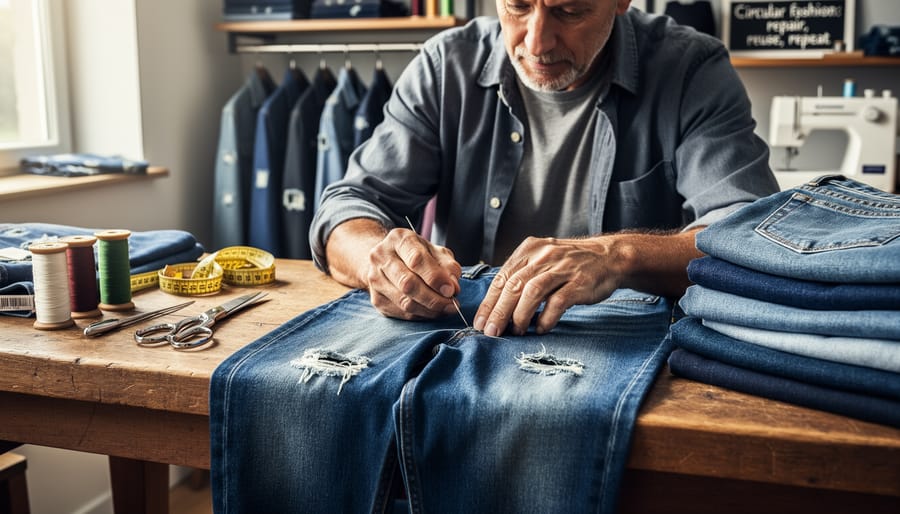
Repair services restore functionality to damaged garments, extending their usable life significantly. Many brands now offer in-house repair programs, Patagonia’s Worn Wear initiative repairs over 100,000 items annually, while Nudie Jeans provides free repairs at their repair shops and partners worldwide. This shift from disposing to mending keeps garments circulating longer and reduces demand for replacements.
Refurbishment goes further, restoring used items to like-new condition through professional cleaning, minor alterations, and component replacement. Brands like Eileen Fisher’s Renew program collect worn garments, refurbish them, and resell them at accessible prices, creating a secondary revenue stream while keeping textiles in use.
Upcycling transforms end-of-life materials into new products of higher value. Designers creatively reimagine textile waste, turning damaged jeans into patchwork jackets or deadstock fabrics into limited-edition pieces. Understanding how upcycling helps reveals its role in waste reduction and creative innovation.
This cultural shift toward valuing longevity over disposability challenges fast fashion’s throwaway mentality. Learning to mend, seeking repair services, and choosing brands that support garment longevity are accessible ways to participate in circular fashion systems.
Take-Back and Recycling Programs
Take-back programs promise to close the loop by collecting your unwanted garments, but the reality behind the bin varies widely. Many brands now offer in-store or mail-in collection, often partnering with textile recyclers like I:CO or Worn Again Technologies to handle sorting and processing. The best-case scenario: your old jeans become fiber for new denim through mechanical shredding or chemical recycling that breaks down polyester to its molecular building blocks.
However, transparency remains inconsistent. Some collected textiles end up downcycled into insulation or cleaning rags rather than new clothing, still better than landfill, but not truly circular. Others get shipped overseas as secondhand exports. To verify claims, look for brands that disclose specific recycling partners, publish the percentage of collected items actually recycled, and explain which products contain post-consumer recycled content from their programs.
Red flags include vague language like “responsibly handled” without details, programs that offer discounts to encourage more purchasing (potentially offsetting environmental benefits), or zero reporting on what happens after collection. Genuine circular commitment means showing the work: naming partners, sharing outcomes, and building traceable fiber-to-fiber systems rather than just convenient drop-off boxes.
Where Circular Fashion Is Being Applied
Circular fashion has moved beyond niche sustainability brands into nearly every fashion category, with different segments adopting models that suit their materials, price points, and customer expectations. Luxury houses like Stella McCartney and Eileen Fisher have integrated take-back programs and resale platforms directly into their operations, treating pre-owned versions of their products as extensions of the brand rather than competition. Patagonia’s Worn Wear program exemplifies how outdoor and activewear brands can build repair and resale into their core identity, offering trade-in value, fixing damaged gear, and reselling refurbished items alongside new products.
Denim brands have particularly embraced circularity because cotton is relatively recyclable compared to synthetic blends. Companies like Nudie Jeans operate free global repair services, provide customers with repair kits, and recycle old pairs into insulation or new denim, practices verified through transparent supply chain disclosures. Even fast-fashion retailers have launched collection bins and recycling partnerships, though conscious consumers should scrutinize what percentage of collected textiles actually get recycled versus downcycled into insulation or disposed of.
The breadth of circular applications spans:
- Luxury and designer: High-value items with strong resale demand, authentication services, and brand-operated secondhand platforms
- Denim and workwear: Durable materials suited to repair and mechanical recycling, with brands offering lifetime mending services
- Activewear and performance: Technical fabrics from brands like Girlfriend Collective using recycled polyester, with take-back programs for end-of-life garments
- Childrenswear: Rental and swap services addressing rapid outgrowing, such as subscription boxes for growing kids
- Accessories: Shoes, bags, and leather goods with refurbishment programs extending product life through sole replacement and reconditioning
Fashion Upended’s brand evaluations reveal that genuine circular practice requires transparent reporting on collection rates, material destinations, and lifecycle assessments, not just the presence of a take-back bin. The most credible circular brands publish annual impact reports detailing how many items they recovered, what happened to those materials, and the environmental savings achieved. Look for specific metrics rather than vague commitments, and prioritize brands that design for circularity from the start rather than retrofitting recycling onto fundamentally linear products.
Why Circular Fashion Matters for Conscious Consumers
Choosing circular fashion delivers measurable environmental gains that go beyond abstract sustainability talk. When you buy a garment designed for circularity, whether through resale, rental, or actual recycling, you’re directly reducing the 92 million tons of textile waste the fashion industry generates annually. Every piece that circulates through multiple users instead of ending up in a landfill means less virgin material extraction, fewer carbon emissions from production, and reduced water consumption.
The numbers matter. Extending a garment’s life by just nine months cuts its carbon, water, and waste footprint by around 20 to 30 percent. Circular models like resale can slash a product’s environmental impact by up to 80 percent compared to buying new. These systems also tackle less visible problems: keeping synthetic garments in use longer reduces fast fashion microplastics shedding from premature disposal and incineration.
Beyond environmental wins, circular fashion creates economic value. Repair services, resale platforms, and textile sorting facilities generate local jobs that don’t depend on exploitative global supply chains. You’re supporting a system that values craftsmanship and longevity over disposability.
But here’s the catch: not everything marketed as circular actually is. Watch for greenwashing red flags like vague “eco-collection” labels without transparent material sourcing, take-back programs with no disclosure about what happens post-collection, or recycling claims that fail to specify mechanical versus chemical processes. Genuine circular brands provide specifics, percentages of recycled content, third-party certifications, and traceable supply chains. They’ll tell you exactly how their system works, not hide behind buzzwords.
To verify circular claims look for concrete evidence: published material flow data, partnerships with verified recyclers, transparent repair and resale infrastructure. Real circularity requires investment and accountability. Brands committed to the system aren’t shy about proving it.
Common Questions About Circular Fashion
How do I know if a brand is truly circular?
Look for concrete details about what happens to collected garments, verified recycling partners, transparent material tracking, and third-party certifications like Cradle to Cradle. Genuine circular brands publish specific data on collection volumes, recycling rates, and fiber outputs rather than vague sustainability statements.
Is circular fashion more expensive?
Not necessarily. While some circular products cost more upfront due to quality materials and design for longevity, resale and rental options often make sustainable fashion more affordable than buying new. The total cost of ownership typically favors durable, repairable items over cheap disposables that need frequent replacement.
Can I participate in circular fashion without buying from special brands?
Absolutely. You’re already participating when you shop secondhand, repair your existing clothes, swap with friends, or donate wearable items to local resale shops. Buying less, caring well for what you own, and keeping garments out of landfills through resale or textile recycling are all circular actions anyone can take.
What actually happens to clothes I return to brand take-back programs?
It varies significantly by program. The most transparent brands specify percentages that go to resale, donation, mechanical recycling, or chemical recycling, versus downcycling into insulation or industrial rags. Be skeptical of programs that don’t disclose these outcomes or partner with verified recyclers, as many collected garments still end up in landfills or shipped overseas.
These questions reflect the practical concerns that come up once you understand circular fashion in theory and want to integrate it into your purchasing decisions. The tension between aspirational circularity and actual implementation shows up clearly when you ask brands for specifics about their take-back programs or try to verify recycling claims.
One helpful framework: think of circular participation on a spectrum. You don’t need to overhaul your entire wardrobe or only shop from certified circular brands to make an impact. Start where you are, maybe that means learning basic repairs, committing to a local clothing swap, or researching one brand’s take-back program before your next purchase.
The comparison between circularity and simply buying less deserves attention too. Circular systems work best when combined with reduced consumption overall. A rental subscription that encourages constant wardrobe churn, or a take-back program that incentivizes buying more to receive recycling discounts, undermines circular principles. The goal is keeping existing materials in use longer and at higher value, not creating new circular loops to justify continued overproduction.
When brands turn waste into wear through upcycling or closed-loop recycling, the environmental benefit depends entirely on what they’re replacing. Recycled polyester from plastic bottles is circular, but if it replaces a more durable natural fiber that would have lasted twice as long, the net impact may not favor circularity. Context and transparency matter more than circular labels alone.
The circular economy in fashion isn’t a single innovation or quick fix, it’s a fundamental redesign of how we create, use, and think about clothing. Moving from a linear system that treats garments as disposable to one that keeps materials cycling requires more than good intentions. It demands new infrastructure, business models that prioritize longevity over volume, and a collective shift in how we value what we wear.
This transformation doesn’t rest solely with brands or policymakers. Your choices as a consumer actively shape which circular systems thrive and which greenwashed claims get called out. Every time you choose a brand with verified take-back programs, opt for repair over replacement, or ask hard questions about what actually happens to collected garments, you’re reinforcing the market signals that drive real change.
The momentum is building. More brands are embedding circularity into their core operations rather than treating it as a marketing add-on. Textile recycling technology is advancing. Transparency is becoming the expectation, not the exception. But progress depends on continued scrutiny and informed participation.
Start where you are. Support brands that publish detailed information about their circular systems and material flows. Choose quality over quantity. Use what you already own longer. Ask for transparency when claims seem vague. The circular fashion economy isn’t a distant ideal, it’s being built right now, one verified practice and one conscious purchase at a time.




Average Rating